OpenDesign Agent Kit
Bring OpenDesign's design skills, design systems, and remixable examples into GitHub Copilot Chat — no daemon, no MCP server, no separate app. Copilot's own selected model does the actual generation with its native file-editing tools; this extension supplies the content library and the instructions that steer it toward using that library well.
Why
Most AI-agent design output looks the same — generic gradients, default sans-serif stacks, cookie-cutter cards. OpenDesign's real value isn't a UI, it's a large, curated library of task-specific generation recipes, brand-accurate design systems, and hard-won craft rules (typography hierarchy, color, accessibility, anti-"AI slop" guidance) that keep output from reading as machine-generated. This extension makes that library available as Copilot Chat tools, so you get better output from the model you're already using — no new app, no new account.
See what it builds
Six of the ~280 vendored skills and templates, rendered exactly as-is:
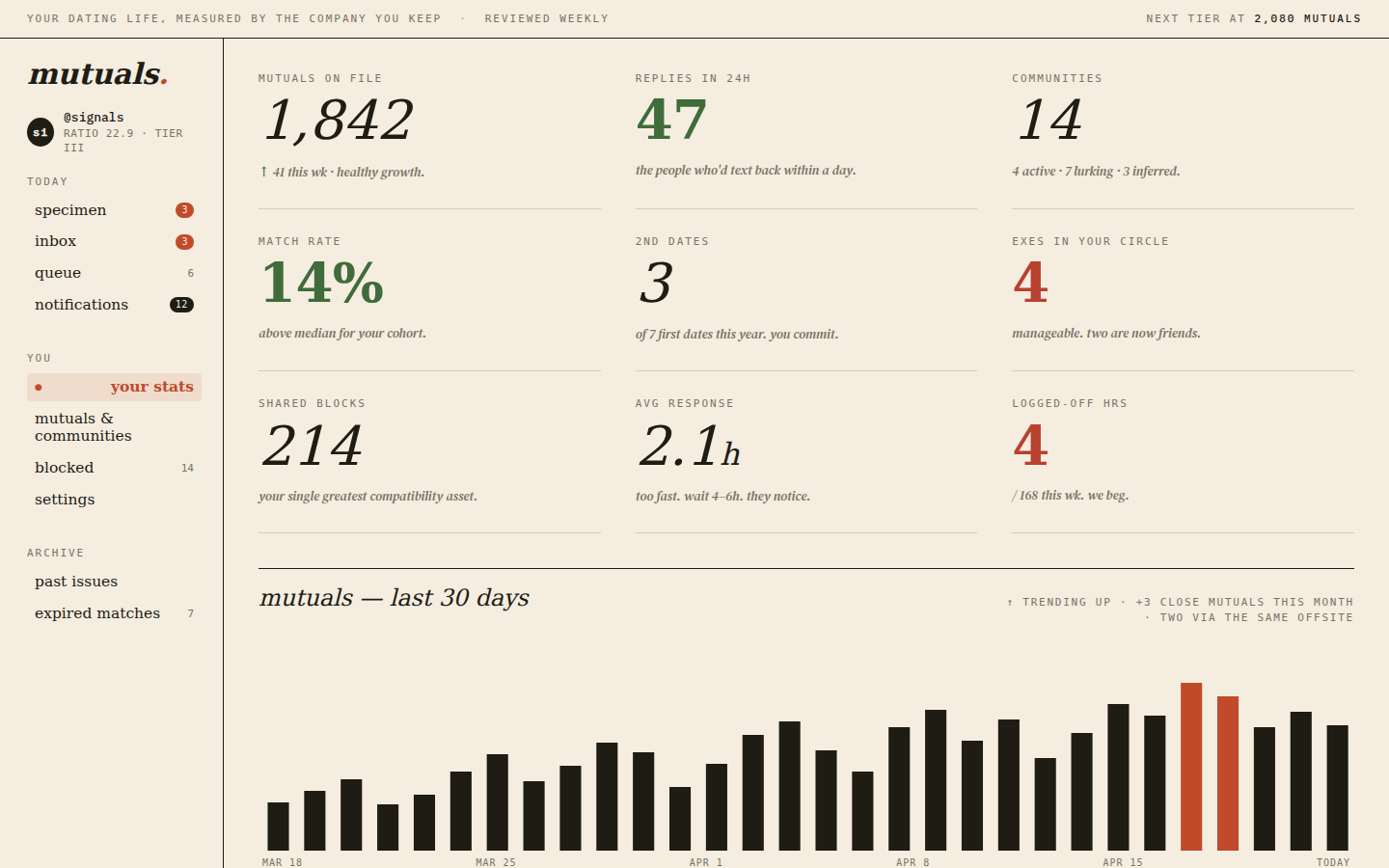
"Design a dating-site dashboard — mutuals, match rate, a 30-day trend."
|
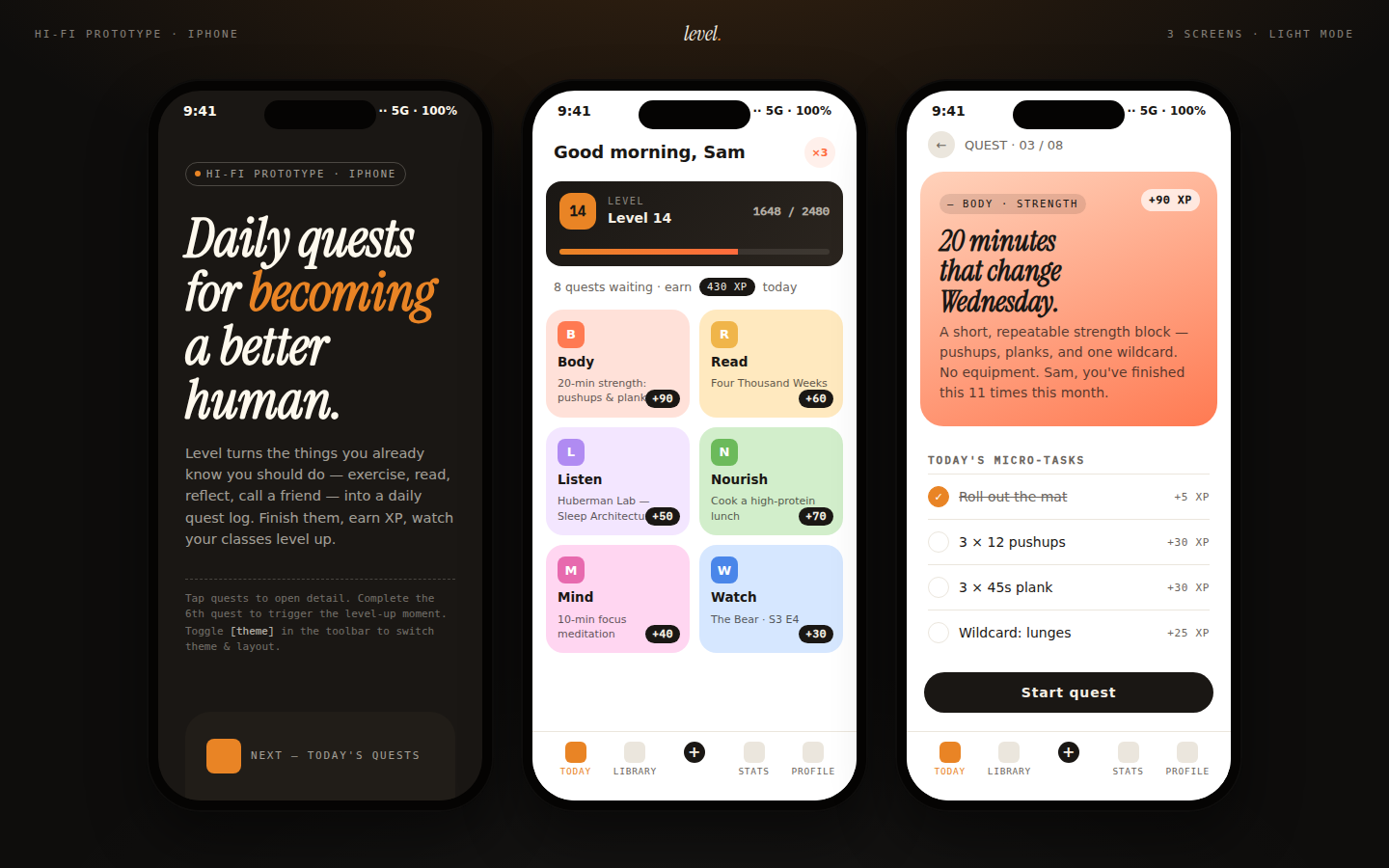
"A habit-tracking app with daily quests and XP."
|
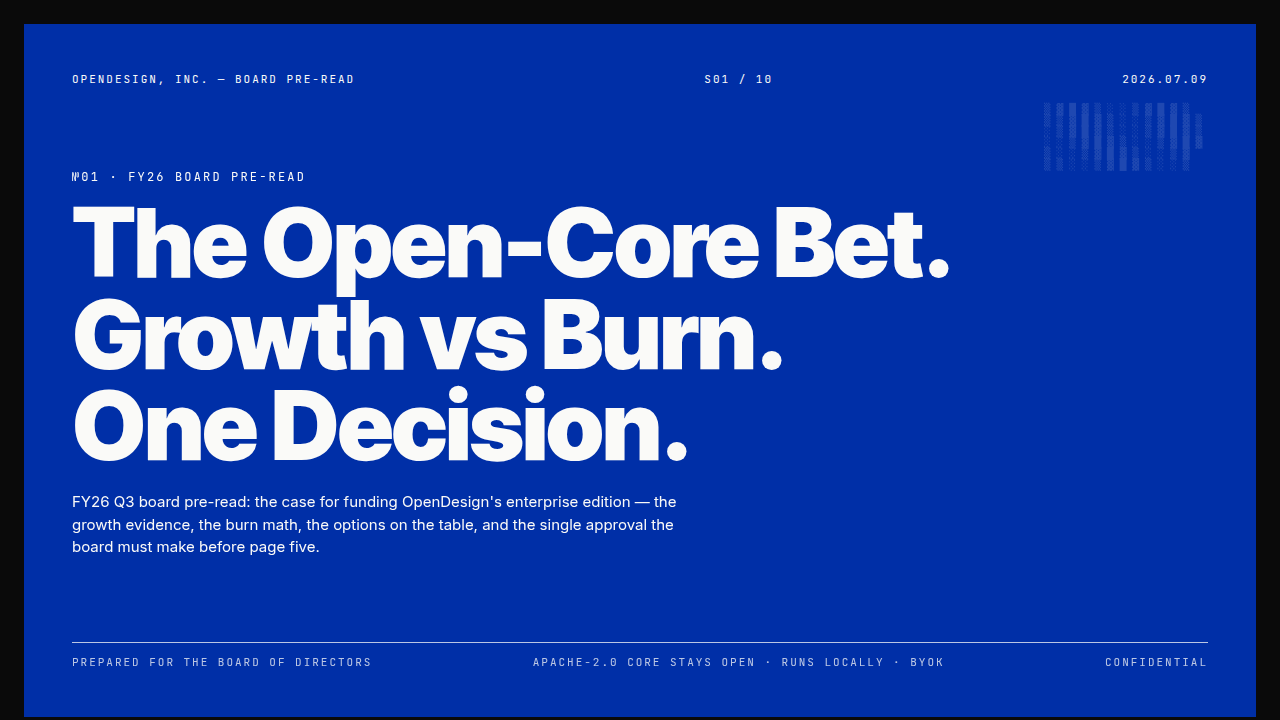
"A board-ready strategy deck, Swiss International style."
|
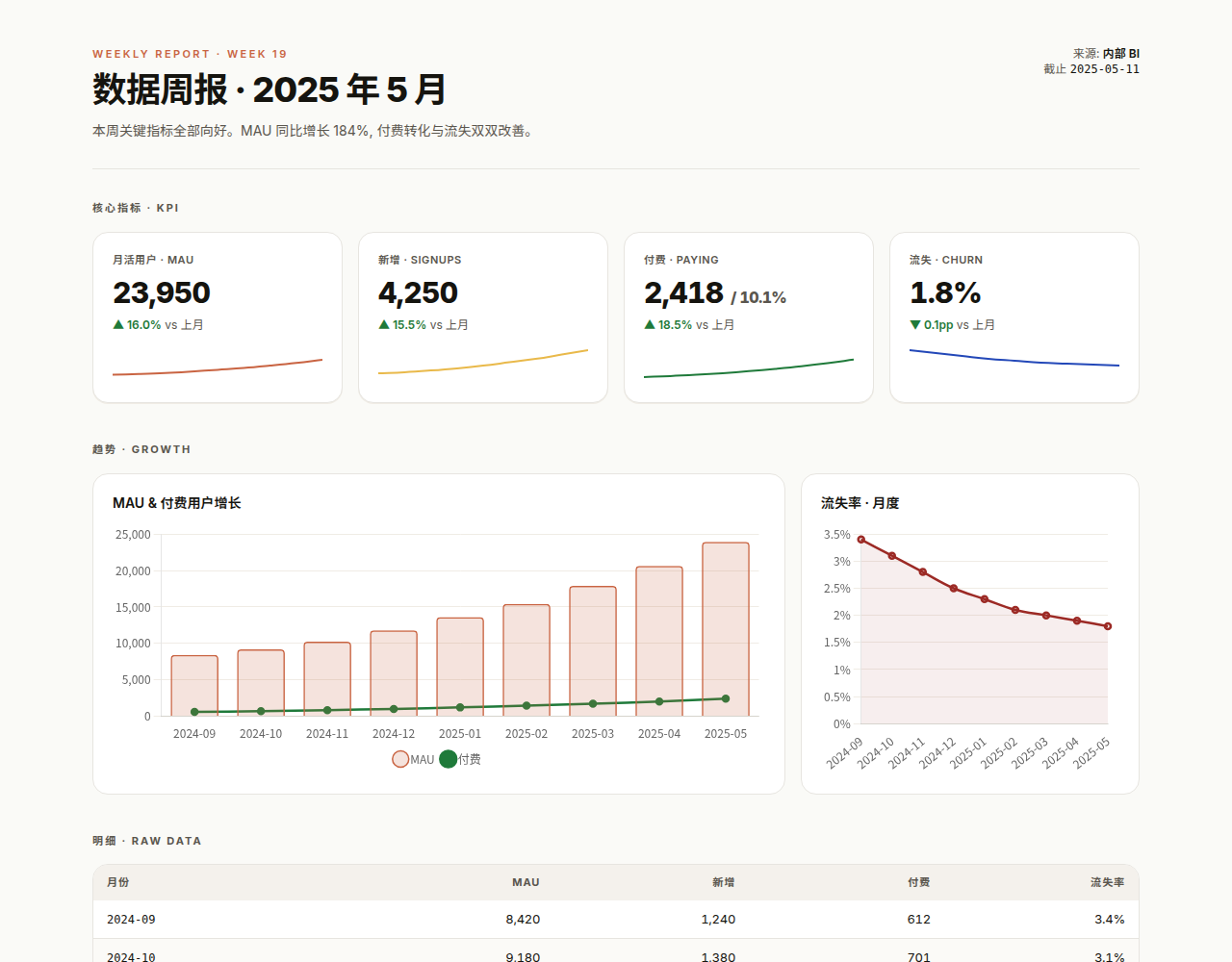
"Turn this CSV into a weekly metrics report."
|
What you get
A 277-entry skill catalog — 163 skills + 114 design templates spanning prototypes, decks, dashboards, images, video, and more. Browse with #od-skills or just ask naturally; Copilot's agent mode calls list_open_design_skills on its own.
152 brand design systems — #od-design-systems, or OpenDesign: Browse Design Systems in the Command Palette / status bar (fuzzy-searchable, grouped by ~22 categories). Picking one sets it as the workspace's active design system, so prepare_open_design_brief applies its tokens automatically from then on — say "use Starbucks" once per session, not on every request.
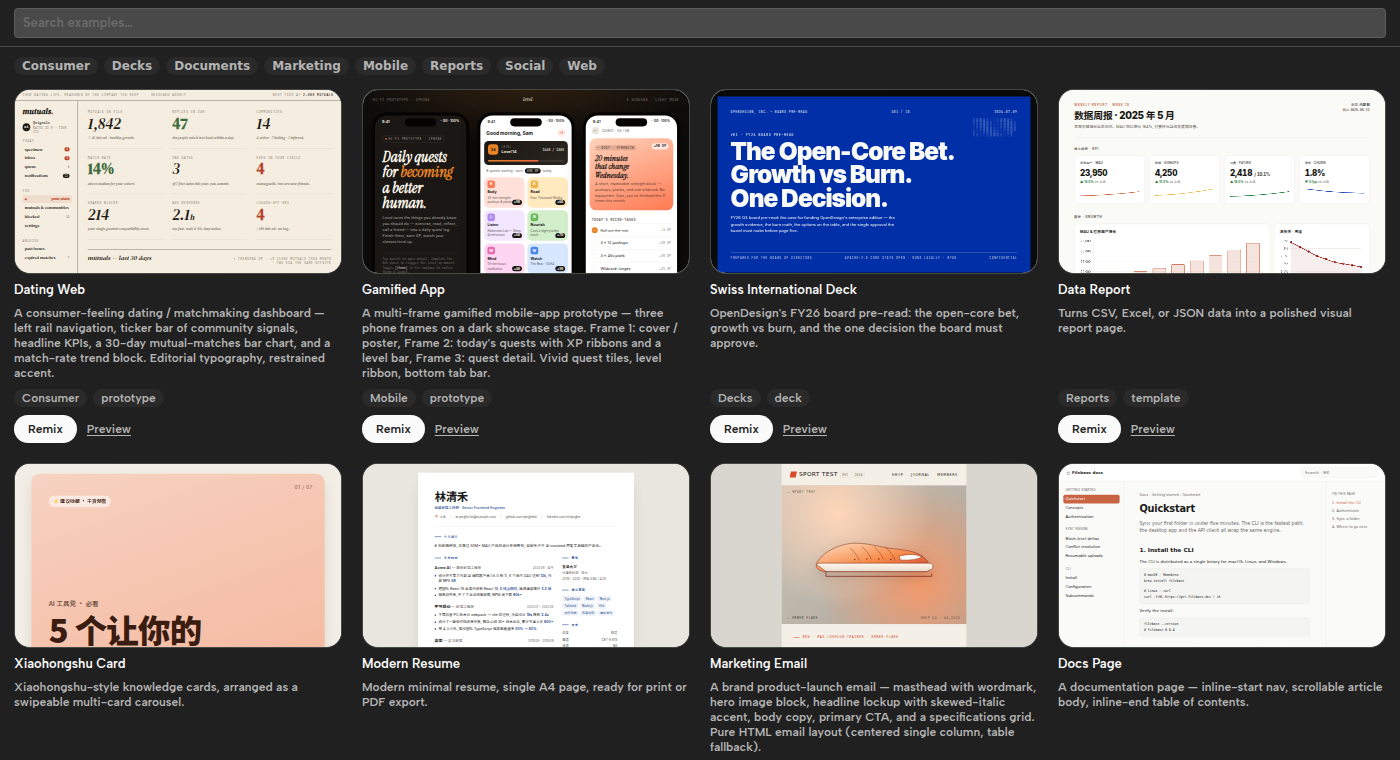
167 remixable examples, browsable as a searchable card grid with live thumbnails (above) via OpenDesign: Open Gallery Grid, or the standalone OpenDesign activity-bar icon's tree view. Picking one copies it into your workspace and tells the model to modify it, not regenerate from scratch.
23 one-click slash commands for the most-curated entries — /guizang-ppt, /data-report, /deck-swiss-international, and 20 more — plus /open-design-generate and /open-design-skills as general-purpose entry points, and /open-design-custom-design-system for inventing a brand-new one.
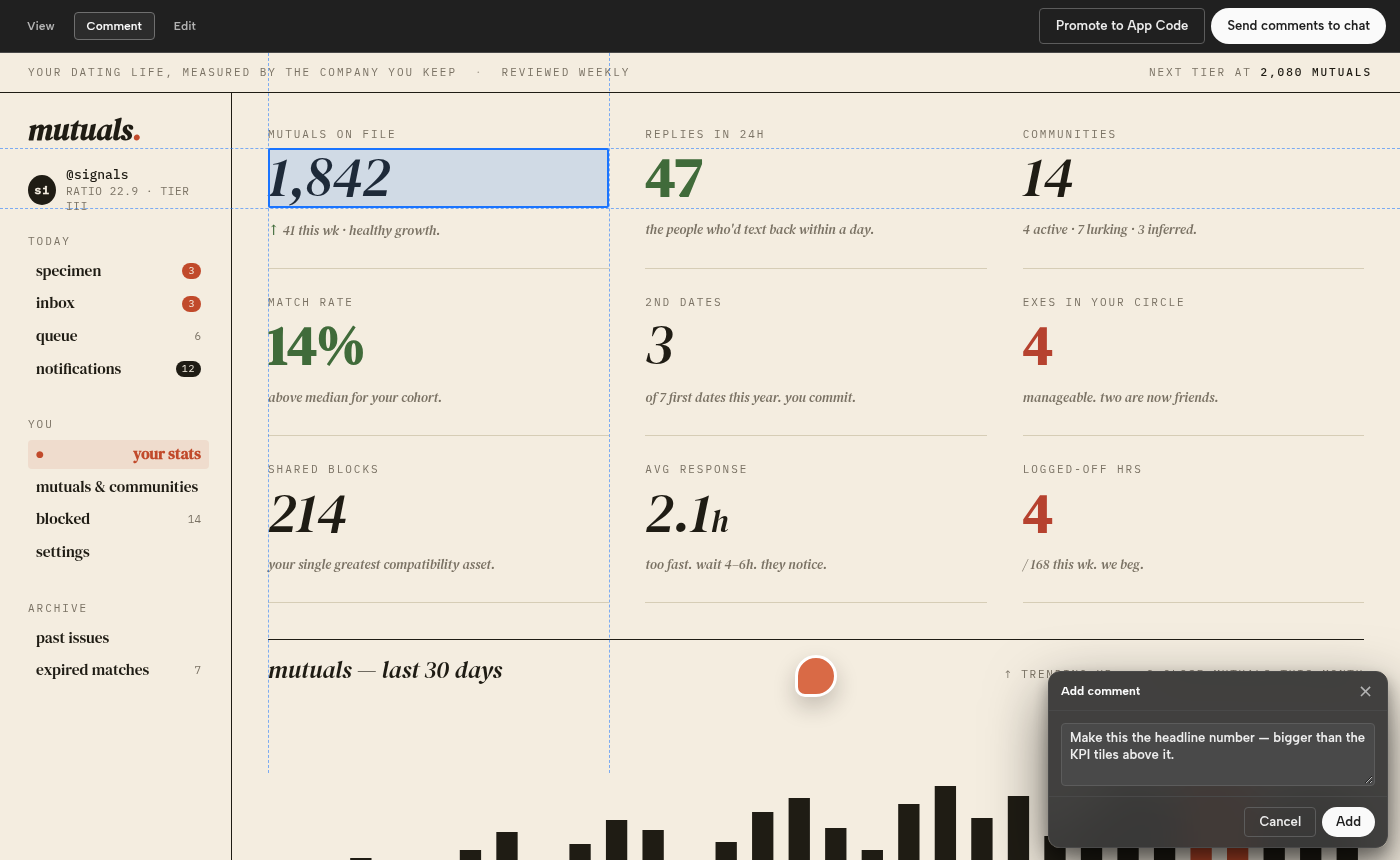
A live artifact preview for generated HTML, opening automatically with three modes:
Comment — hover to highlight, click an element to pin a note. "Send comments to chat" hands your selected notes to Copilot as a scoped edit instruction; comments persist as a plain, git-trackable <entry>.html.comments.json sidecar, never applied by a special engine:
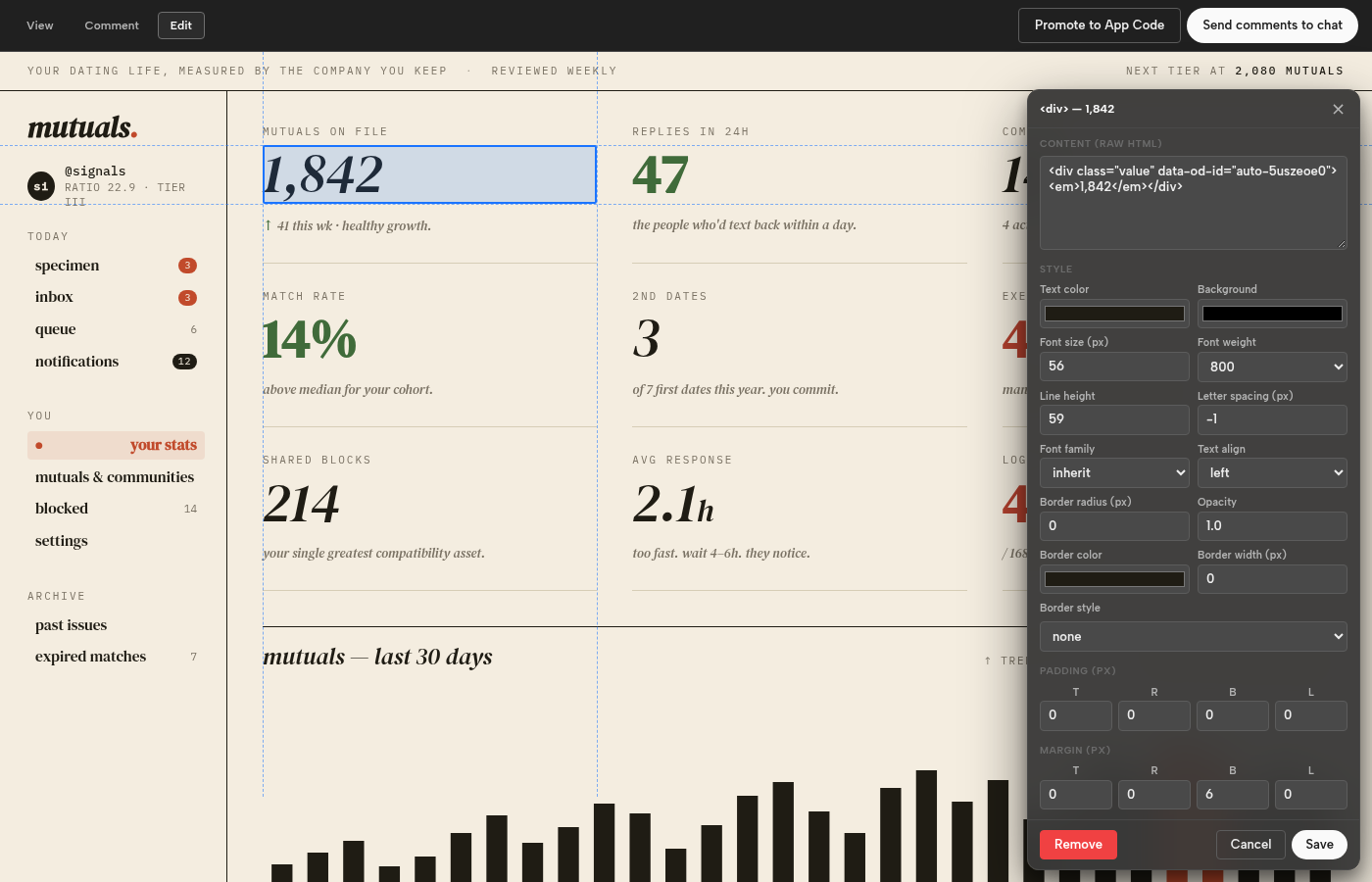
Edit (HTML only) — click an element for a panel with content fields that adapt to what you clicked (text / link href / image src+alt / raw HTML for containers) plus a curated style section (color, background, opacity, typography, border, per-side padding/margin) — written straight back to the file through a real WorkspaceEdit, so undo/redo is native:
View — just the rendered page, as-is. All three follow open-design's own actual visual design language (colors, radii, shadows, the Albert Sans variable font), not generic VS Code theming.
Custom design systems beyond the bundled 152 — invent one from a brief (create_open_design_design_system, optionally seeded from a reference URL) or deterministically import an existing one from a file, pasted content, or a GitHub repo via OpenDesign: Import Design System — no model involved in the import path, original source always preserved.
Promote to app code — once you're happy with an artifact, port_open_design_artifact_to_app (or the "Promote to App Code" button in the preview toolbar) ports it into your real, already-open app as idiomatic production code, grounded in an existing component you point it at or one it finds itself. A one-time action, not a live sync, and it deliberately doesn't wire up routing/navigation for you.
Grounds generation in your app — when the open workspace looks like a real React/Vue/Next.js/Nuxt/Svelte/Angular/Astro/Solid project, generation instructions nudge the model to check a few of its real components/conventions first, so prototypes look more like they belong there.
Requirements
Install
Search "OpenDesign Agent Kit" in the Extensions view, or install from the Marketplace.
Quick start
Open Copilot Chat in agent mode and just ask:
Make me a pitch deck for a Series A fintech startup, editorial style.
Copilot calls list_open_design_skills / list_open_design_design_systems on its own and writes the files. Or be explicit:
/guizang-ppt A 10-slide pitch deck for... — one of the 23 curated one-click commands- "Use the Starbucks design system, then build me a landing page" — sets it active, generates against it
- Click a card in OpenDesign: Open Gallery Grid to remix a real example instead of starting blank
#od-artifact to have Copilot look at what's already registered in the workspace
Settings
| Setting |
Default |
Description |
openDesign.outputDirectory |
.open-design |
Workspace-relative directory new artifacts are suggested under, e.g. .open-design/<slug>/index.html. |
openDesign.activeDesignSystemId |
(empty) |
The current active design system id. Set via the browse picker, the set_active_design_system tool, or by generating with an explicit id. |
Commands
OpenDesign: Browse Design Systems · OpenDesign: Import Design System · OpenDesign: Browse Gallery · OpenDesign: Open Gallery Grid · OpenDesign: Open Artifact Preview (also on the right-click menu for .html files) — all reachable from the Command Palette.
Under the hood
More detail than most people need, but here for the curious (and for anyone extending this).
This is a from-scratch (not literally line-for-line ported) implementation of the same mechanism open-design's own product uses. Two things carry over exactly from upstream's actual behavior: comments are never "applied" by a special engine — they're gathered into a scoped instruction block and sent into a new chat message, prefilled but unsent, and the model edits the file with its own tools like any other request; and comments persist as a plain sidecar file next to the artifact, visible and git-trackable, no database.
The edit panel is modeled on open-design's own ManualEditPanel.tsx. Deliberately not ported: upstream's flex-layout controls (direction/justify/gap/align-items), its design-token reference strip (needs a codebase-scanning index this extension doesn't have), drag-to-reposition, and its own in-panel undo/redo history — VS Code's native document undo already covers every applied edit. Known limitation: relative asset paths (<img src="https://github.com/feimacode/open-design-agent-kit/raw/HEAD/assets/x.png">) inside a previewed artifact may not resolve in the sandboxed preview iframe — the file on disk is unaffected.
Gallery and Remix
There are three ways to browse and remix the same 167-example pool, for different situations:
- QuickPick (
OpenDesign: Browse Gallery) — fastest, keyboard-driven; selecting an item remixes it directly, no separate preview/chat step.
- Tree view (the OpenDesign activity-bar icon → Gallery) — always one click away, grouped by category. Clicking an item, or its inline "Use in Chat" icon, populates Copilot Chat with a prefilled (still-editable, not-yet-sent) message naming the example — mirroring upstream open-design's own Gallery, where clicking a card populates the chat composer rather than doing anything immediately. A read-only preview and a direct Remix are both available separately via inline icons.
- Grid view (
OpenDesign: Open Gallery Grid, screenshot above) — a searchable card grid (search box + category filter chips) with a live thumbnail per card, fetched lazily as it scrolls into view and rendered straight from this extension's bundled assets into iframe.srcdoc — never through a resource fetch the webview's browser engine would have to load from a URL.
All four entry points (the tool, QuickPick, tree, grid) call the same underlying remix logic, so behavior is identical regardless of which one you use.
Visual design
The three webviews (Artifact Preview editor, Gallery grid, example preview panel) follow open-design's own actual visual design language, hand-transcribed from its real stylesheets: near-black/near-white "ink" buttons with a fully pill-shaped primary action; a lime-green brand accent (#87ea5c) reserved for active/selected states; a terracotta (#d96a46) teardrop shape for comment pins; frosted-glass floating panels; a named radius ladder from 2px to 16px; and the Albert Sans variable font (SIL OFL-licensed, vendored locally) at 600 weight. All three switch between open-design's own light/dark token sets based on VS Code's vscode-dark/vscode-light body classes, so they stay theme-aware without adopting the ambient editor theme's arbitrary colors.
Not using VS Code?
The same skill/design-system/artifact tools are available as a standalone MCP server for Claude Code, Codex, Cursor, and any other MCP-capable agent — see the main repo for the full picture, including the Claude Code plugin and Codex setup.
Content & attribution
Skills, design systems, craft rules, and examples are vendored from the official open-design repo (Apache-2.0), pinned to a tagged release — see the main repo's Content section for how the sync works, and packages/core/src/vendored/SOURCE.md for exactly what code was ported vs. rewritten.
License
MIT — see LICENSE.
| |

