This extension is not officially supported by the TAURI team and is provided as-is. It is maintained by a third party and may not receive updates or bug fixes in a timely manner. Use at your own risk.
Introduction
In TAURI® projects, it’s often difficult to quickly navigate between the frontend and the Rust backend and understand where a command is defined or called.
This extension is designed to make that navigation fast and effortless, allowing you to jump between the frontend and backend parts of the project in both directions.
As secondary features, the extension can also detect unused commands and help autocomplete command names while typing.
Features
Navigation
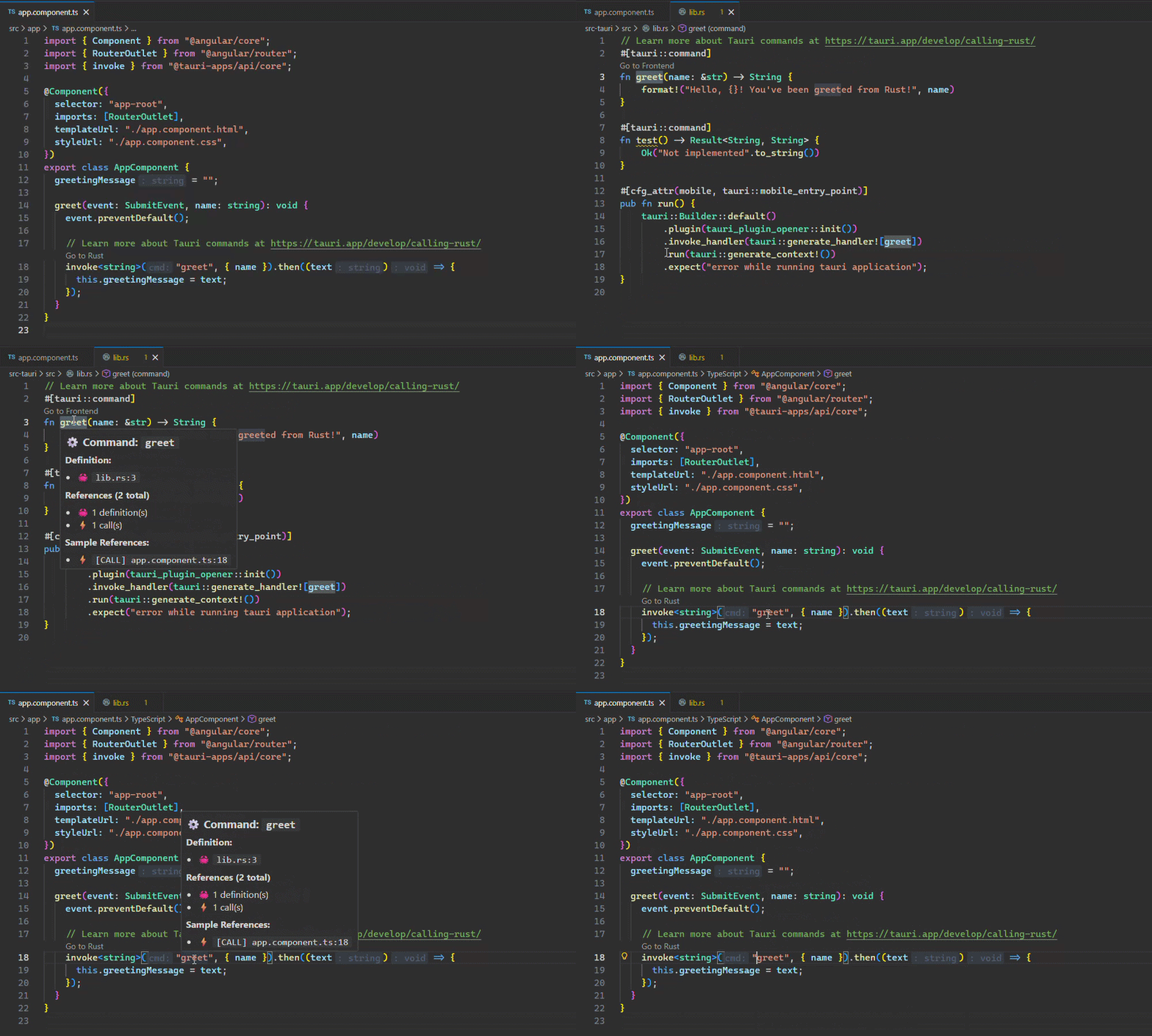
Jump from frontend invoke or emit calls directly to their Rust implementations using F12 (Go to Definition). Use Shift+F12 to find all frontend call sites from a Rust function.
|
|
Autocomplete
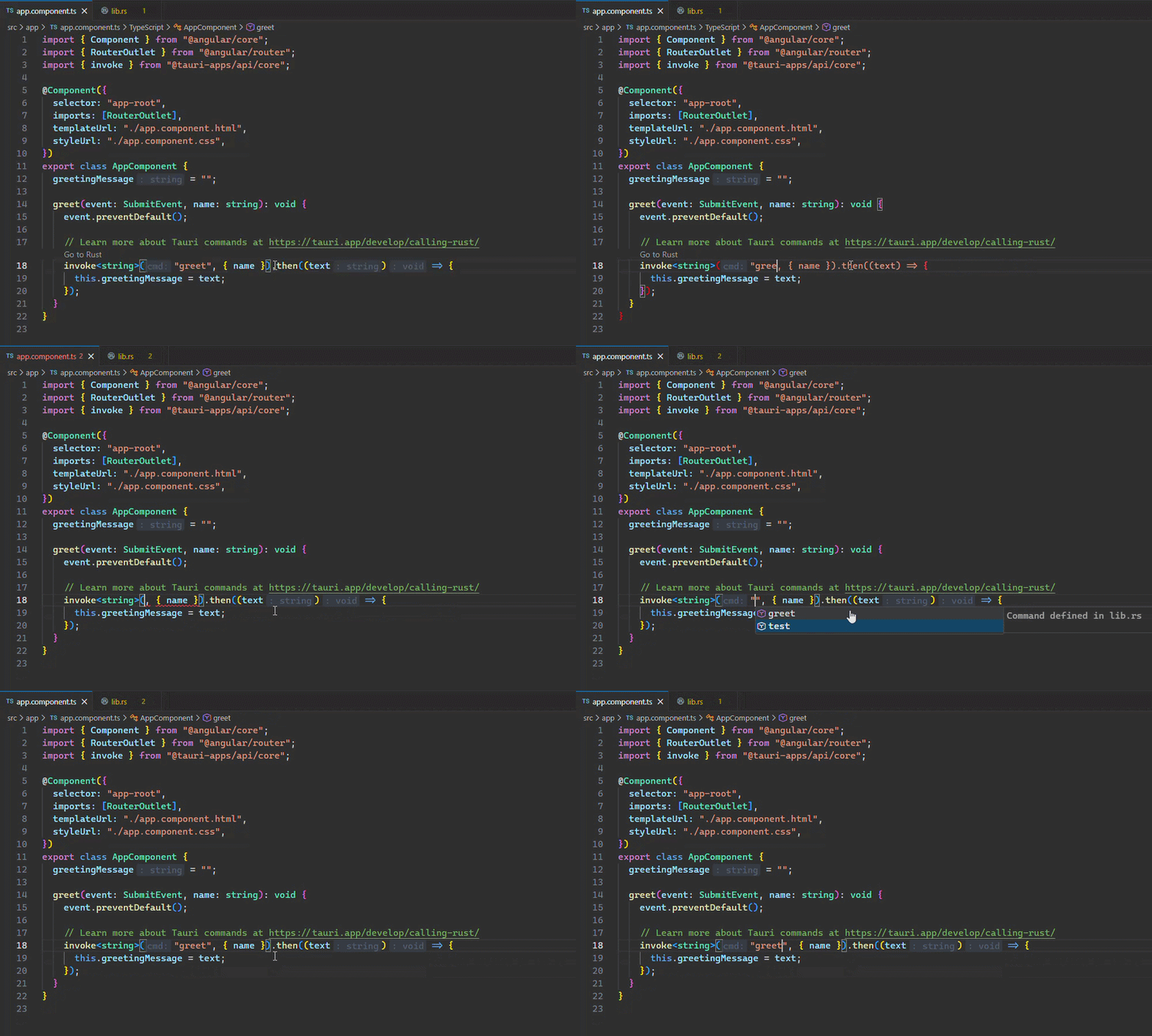
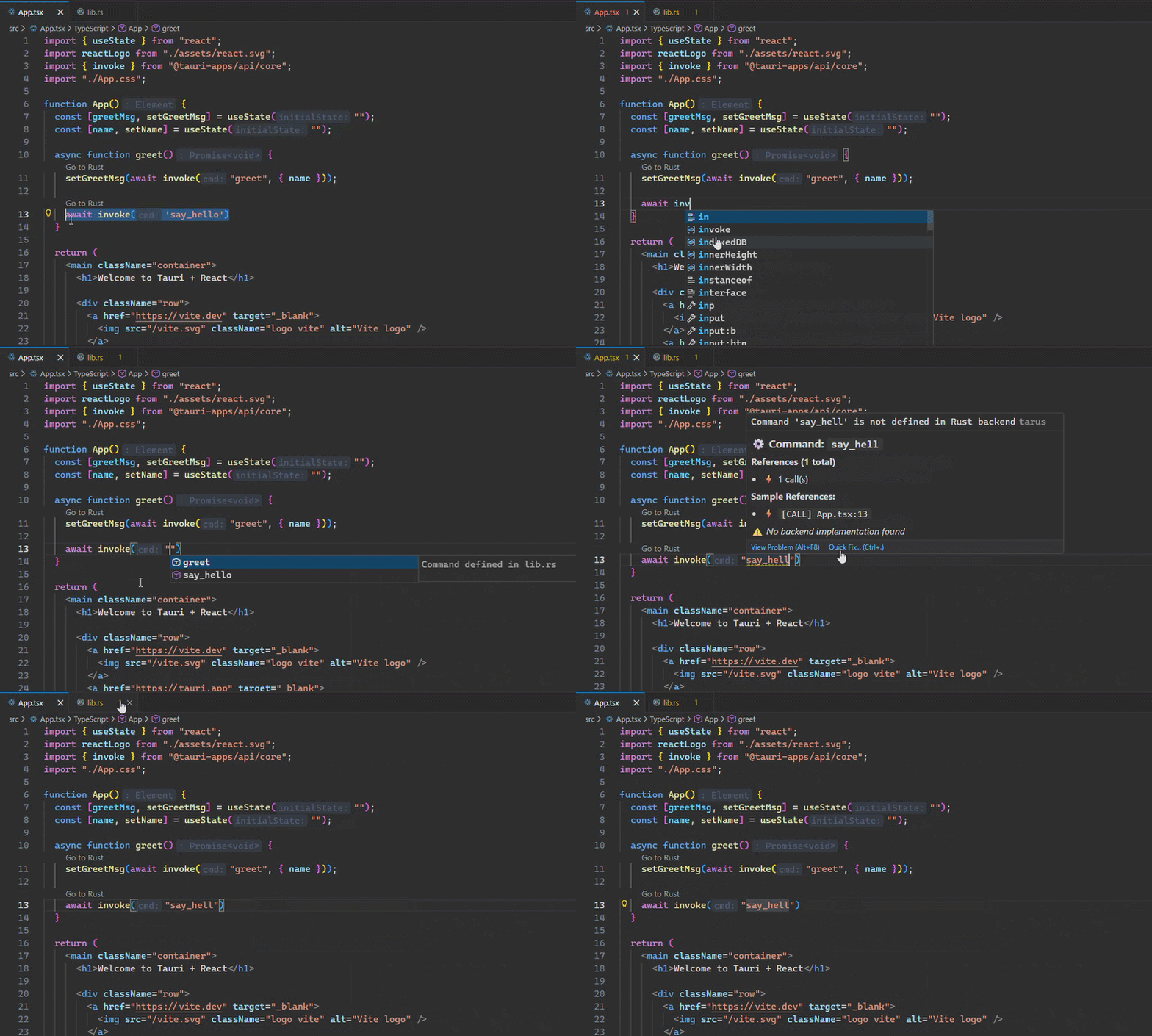
Intelligent suggestions for command and event names. suggestions appear as soon as you open a quote in invoke, emit, or listen calls.
|
|
Diagnostics
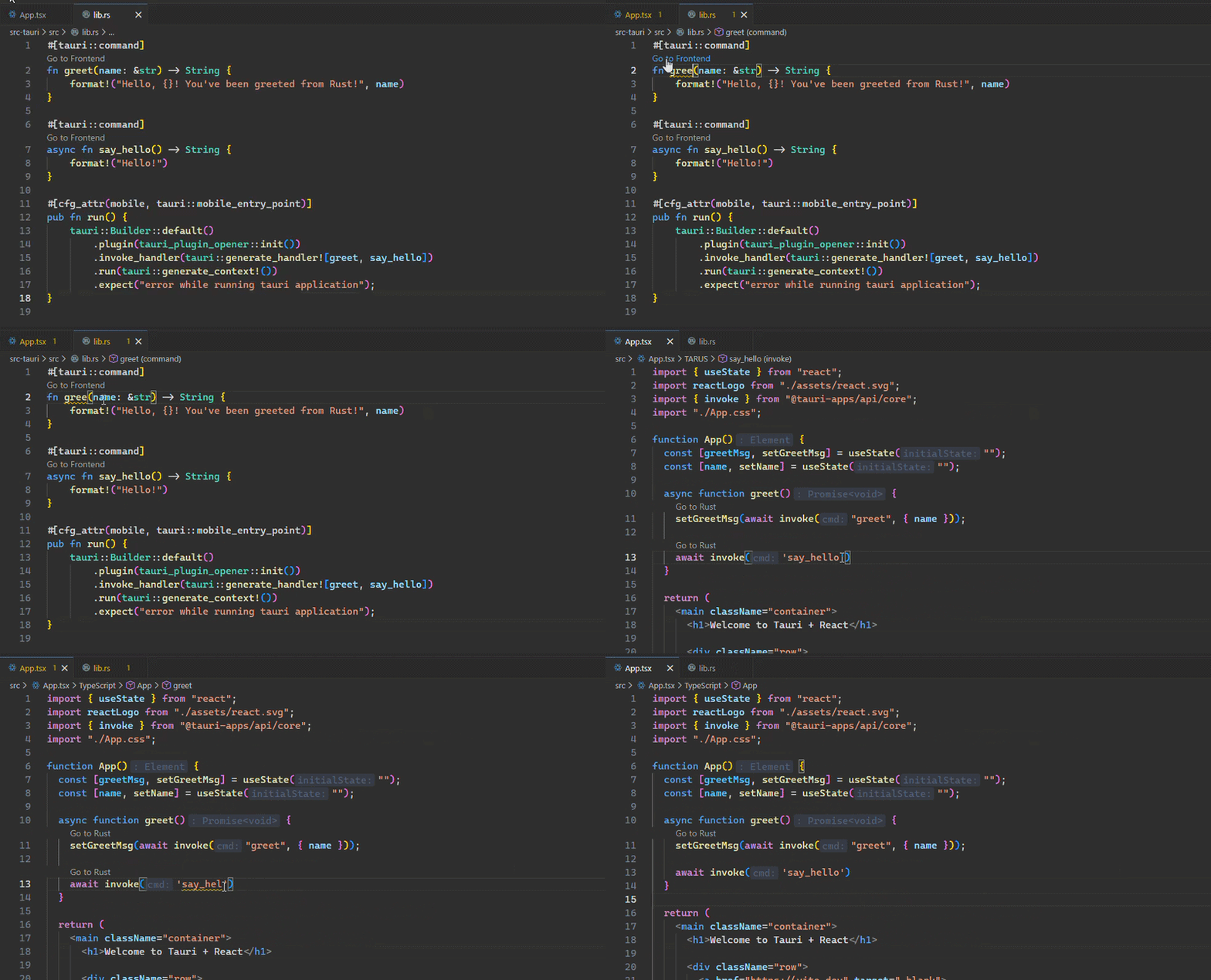
Real-time analysis to detect errors before runtime:
- Undefined Commands: Warns if a command is missing from Rust.
- Payload Validation: Detects missing or extra keys in arguments.
- Event Desync: Identifies unhandled events.
|
|
Code Actions
Efficiency tools for common tasks:
- Add Missing Types: Insert generic type parameters automatically.
- Generate Commands: Create Rust templates from call sites.
|
|
Support and Integration
Language Support
- Backend: Rust (
#[tauri::command], AppHandle::emit, Window::listen)
- Frontend: TypeScript, JavaScript, JSX, TSX
- Frameworks: React, Vue 3 (SFC), Svelte, Angular
Type Generator Support
TARUS reads generated bindings to provide structural type checking for:
- tauri-specta (both
.export() and standalone .export_to())
- specta / specta-typescript (standalone
.export_to())
- ts-rs
- tauri-typegen
Supported Features
Hybrid Type Checking: Tarus provides protection even without generated bindings:
Zero-Config (RustSource): For basic types (string, number, boolean, any, null, undefined), arrays, and unions (like Option<T> → T | null), Tarus extracts information directly from Rust source code to provide instant validation.
Full Structural Safety: For custom structs and complex interfaces, Tarus integrates with binding generators (Specta, ts-rs, Typegen) to ensure your TypeScript objects match your Rust data models exactly.
TypeScript Definitions: Full support for both export type aliases and export interface blocks.
Collection Types: Recursive support for array notation (e.g., User[], Array<User>, Vec<T> → T[]).
Rust Type Detection: For event payloads (app.emit(...)), Tarus identifies types through:
- Explicit type annotations:
let data: MyType = ...;
- Direct struct instantiation:
let data = MyType { ... };
- Expression Resolution: Correctly handles references (
&data) and parenthesized expressions.
[!IMPORTANT]
Type Inference Limitations: Tarus uses Tree-sitter for surgical AST analysis rather than being a full language compiler. It does not perform deep semantic analysis or cross-function type inference. To enable diagnostics for event payloads, the type must be explicitly declared at the emission site (e.g., via type annotation or direct struct instantiation).
Source code available on GitHub
TAURI is a trademark of The Tauri Programme within the Commons Conservancy.
| |