Documentation | Getting started | Report a bug | Contact us | Get activation key | Extension for Visual Studio 2017 or 2019
SSRS Reports Migration Wizard
A wizard-driven UI tool for migrating SSRS Report Server and Power BI Report Server content. Migrate reports, linked reports, datasets, data sources, subscriptions, roles, and schedules through a simple step-by-step interface, no scripting required. Supports command-line automation for scheduled and CI/CD-driven workflows.
Watch the full demo on YouTube
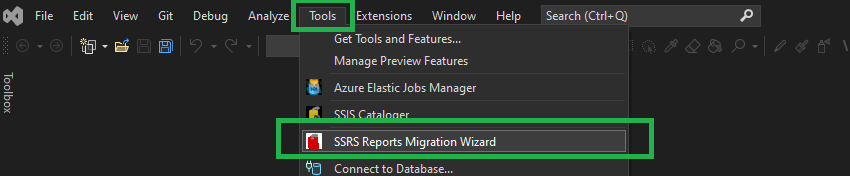
Once installed in VS 2022/2026, launch it from the Tools Menu item
Learn more about the installation options.
🆕 June 2026 Updates
- Linked Report Migration — Fully migrate linked reports, preserving parent report relationships and parameter overrides.
- Compare with Target — Generate a detailed CSV report comparing source and target catalog items before or after migration.
- Migration Script Generator — Use the new Script button on the Review screen to generate a ready-to-run command-line script from your wizard selections. Copy to clipboard or save as a
.bat file.
- Command-Line Automation (Perpetual license) — Automate migrations via CLI, Windows Task Scheduler, or CI/CD pipelines. See the Automation guide.
- General improvements and fixes.
🔧 Features
- Migrate folders, reports, linked reports, datasets, data sources
- Migrate subscriptions (standard and data-driven)
- Migrate shared schedules
- Migrate report parameters and defaults
- Migrate security roles
- Compare with Target — generate a detailed CSV report of source vs target items before or after migration
- Migration Script Generator — generate a ready-to-run command-line script directly from the wizard UI
- Command-Line Automation (Perpetual license) — schedule migrations via Task Scheduler or CI/CD pipelines
- Transfer items between servers or via a portable
.srmw project file
- Visualize SSRS object hierarchy in a user-friendly tree view
- Rename or consolidate folders during migration
- Filter and select specific items to migrate
- View, update, and manage data source credentials during migration
- Convert embedded report data sources to shared data sources
- Offline mode — use
.srmw file as an intermediate for disconnected environments
- Detailed preview and post-migration report
📦 Use Cases
- Moving reports from development to production
- Updating data sources, datasets, and reports in place (on the same server)
- Backing up reports, datasets, and subscriptions
- Migrating to a new SSRS or Power BI Report Server instance after server upgrades
- Sharing report packages across teams
- Managing Power BI Report Server (PBI RS) environments that host SSRS items
- Automating nightly or scheduled SSRS migrations using the command-line utility or Windows Task Scheduler
- Migrating linked reports while preserving parent report relationships across servers
🔐 Prerequisites
- .NET Framework 4.7.1 or later
- Access to SSRS Report Server endpoints:
http://<server>/ReportServerhttp://<server>/Reports
- Permissions:
- System User or higher on source (required for shared schedule migration)
- Publisher or higher on target
- System Administrator on target (required for shared schedule creation)
Need help with access? See Granting access
🚀 Getting Started
Visit the complete Getting started guide to learn how to:
- Select a source (SSRS server or SRMW file)
- Choose a target (SSRS server or SRMW file)
- Select objects to migrate
- Update data source credentials for the target server.
- Update file share credentials for file share subscriptions.
- Preview, validate, and execute the migration
- View post-migration reports
See Limitations for details.
📄 Latest Blog
SSRS Migration Case Study: Migrating SSRS Reports in a Disconnected Environment
Download all SSRS Reports in just a few clicks
SSRS Report Migration from one report server to another
Migrate SSRS Reports to Power BI Report Server
🆓 Free Trial
The free trial allows you to migrate the first SSRS report and its directly referenced objects (data sources, datasets) from the source to the target, enough to validate the tool works in your environment before purchasing.
📬 Feedback and Support
For issues, feature requests, or support:
📧 Email: support@azureops.org
💬 Report an issue: GitHub

