Image ViewerAn image viewer and workspace gallery with zoom, pan, rotation, flip, and same-folder navigation. Browse project images with search, filters, and flexible gallery layouts. Installation Launch VS Code Quick Open ( Ctrl+P), paste the following command, and press enter.Copied to clipboard |


Image ViewerEnglish | 中文 Use Image Viewer as your default image viewer in VS Code. Get zoom up to 800% (1600% for tiny images), click/Space zoom cycling, rotation and flipping, a navigation minimap, and same-folder image navigation. Make it the default. Browse project assets in VS Code and Cursor with a continuous image wall, folders, search, and filters. Click any screenshot to view it at full size. Video demoWatch the image wall and folder navigation in action. Quick start
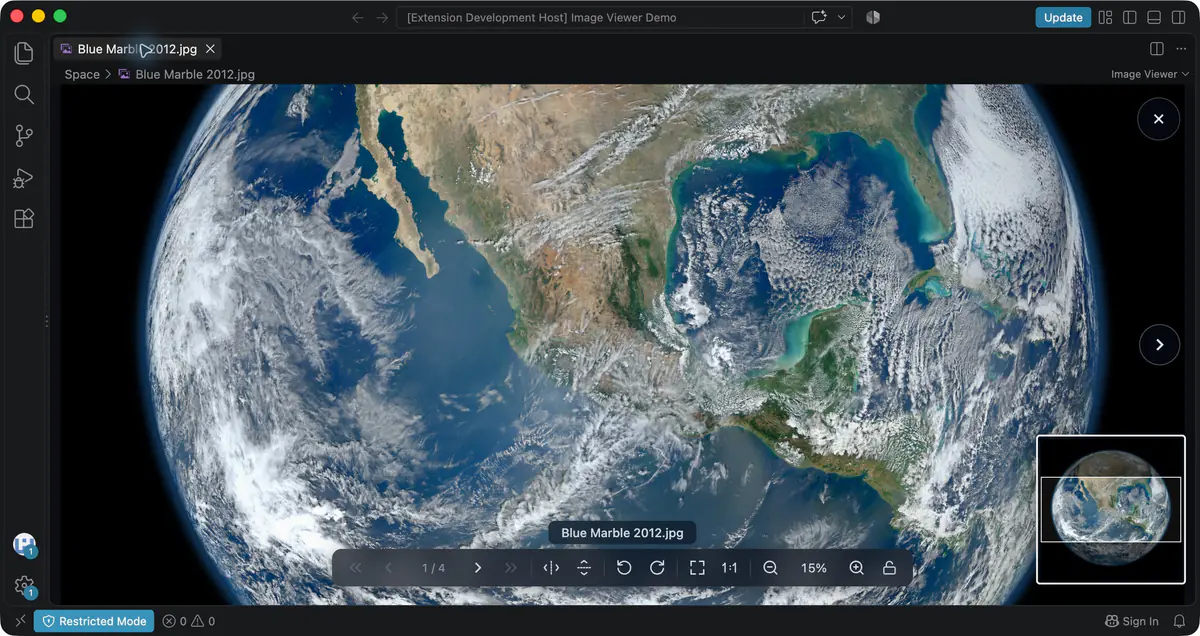
Single-image viewerZoom into details, pan with the minimap, and browse nearby images without changing the original files.
Filmstrip and adjacent-image loadingUse the filmstrip button in the preview toolbar to show or hide thumbnails. The single-image editor and gallery remember their switches independently; both default to off. The single-image strip contains only images directly in the current image's folder, excluding subfolders. Gallery strips follow the filtered and sorted sequence captured when the preview opens. Large raster images use 200px long-edge thumbnails, requested for the visible strip window with a shared limit of six generation tasks across galleries and previews. Compressed file size does not bypass this rule. SVG and browser-renderable rasters already at most 200px use their original files and may scale up in the strip. Formats requiring conversion, such as TIFF, still use generation; failures show a placeholder rather than loading the original into the strip. Unselected thumbnails retain their brightness. Adjacent-image preloading is enabled in both preview entries, independently of the filmstrip switch. It warms the previous and next image and uses up to two display slots with the component's default 600ms settle delay. Browser memory reclamation can still require decoding again, so preloading does not guarantee instant navigation. Make it the defaultRun Image Viewer: Use as Default Image Editor to open supported image files with this viewer by default. Installing or updating the extension leaves your editor choice unchanged. This command replaces the supported filename patterns in the global User
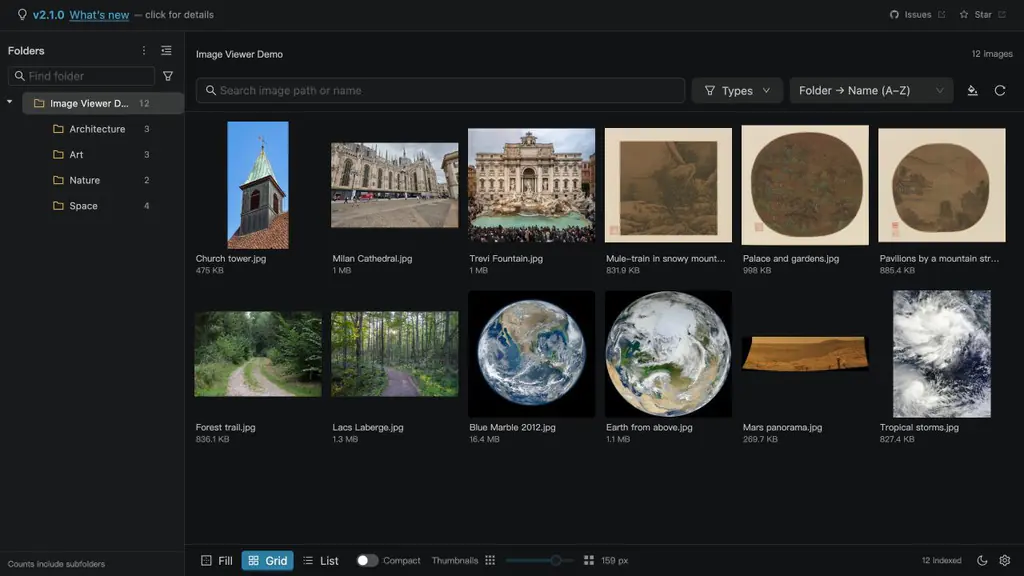
To stop using these global defaults, run Image Viewer: Remove Global Image Viewer Associations (formerly Restore VS Code's Default Image Editor), preferably before uninstalling. It removes only supported associations that still point to Image Viewer and does not restore earlier custom associations overwritten by setup. To use a previous viewer, select it through Reopen Editor With...; use Configure default editor... to make that choice persistent. Run the setup command again only when you want to enable Image Viewer defaults again. More about editor associations. Workspace galleryNew galleries start in Grid. Select a folder in the sidebar and browse one continuous image wall. Click any thumbnail to open the large-image preview. Grid and Fill support 1–20 columns, live thumbnail sizing, and a compact mode for denser browsing. Grid — see the whole image (default)Images keep their original proportions without cropping, useful for comparing portraits, landscapes, and panoramic images.
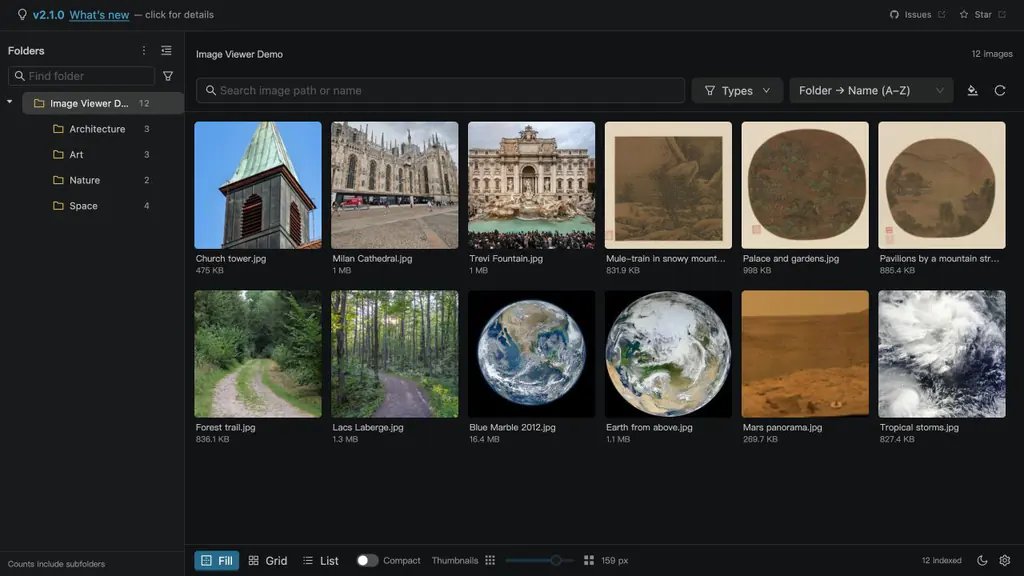
Fill — browse thumbnailsSquare thumbnails fill the wall, making it easy to scan many images at once.
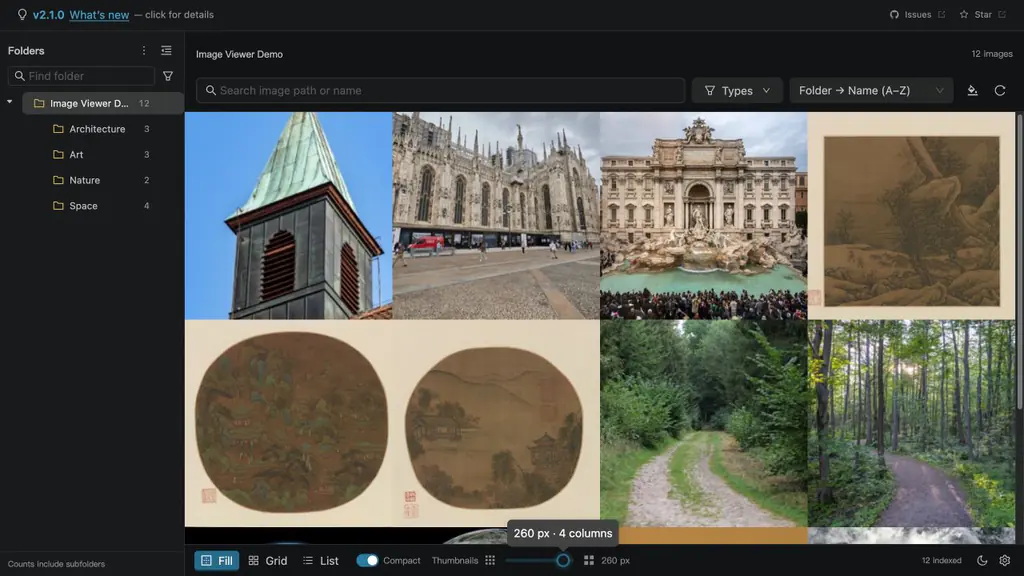
Compact and thumbnail sizeTurn on Compact in the bottom toolbar. In Grid/Fill, it removes thumbnail gaps and the always-visible file names and sizes; hover to see a file name. Fill + Compact creates a seamless image wall, fitting more images on screen at the same column count. Drag the Thumbnails slider to adjust 1–20 columns: right makes images larger with fewer columns; left fits more, smaller thumbnails. The tooltip shows the current pixel size and column count. Below, the six-column Fill example is changed to four columns + Compact.
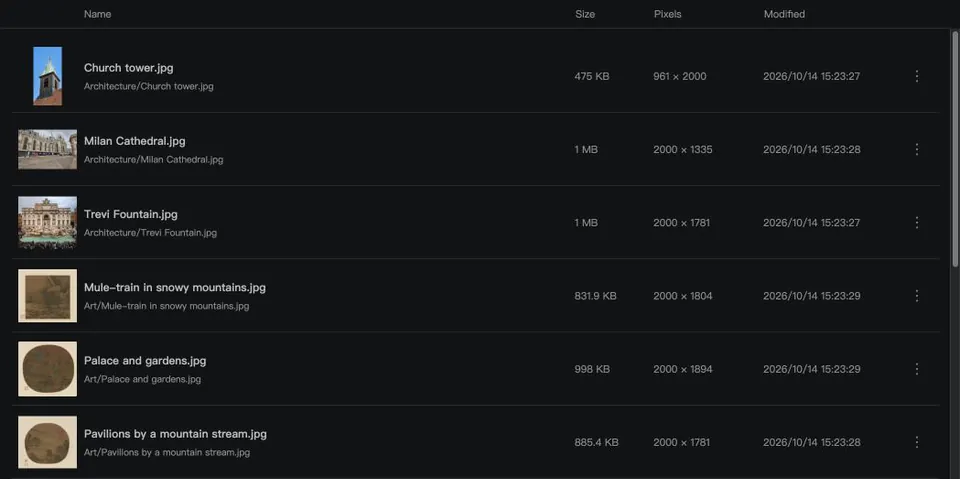
List — inspect file informationView the file name, relative path, size, dimensions, and modified time alongside each thumbnail.
Screenshot credits and licenses. ThemesClick the theme button beside the bottom-right gear to cycle between Follow, Light, and Dark.
Choose a thumbnail background separately: none, checkerboard for transparency, or a solid color. Open from ExplorerRight-click a folder or file → View Images 🌄. The sidebar shows the project root and reveals your target. Images are highlighted in the wall and opened in the large-image preview; other files locate their containing folder. Empty folders fall back to the nearest ancestor with images, then the project root. Closing the preview returns to the located thumbnail. Explorer entries in the same project reuse one gallery tab; different workspace roots have separate tabs. The gallery automatically updates images, folder nodes, and counts about 3 seconds after file changes stop, including copied, renamed, or deleted folders. Changes during a scan are checked again after it finishes; hidden tabs refresh when shown. Current filters and browsing position are retained where possible, and an open large-image preview keeps its current session. Empty folders remain hidden. Paths excluded by VS Code's Find and organize images
Folder search and Include/ExcludeType part of a folder name into Find folder in the left sidebar. Matching is case-insensitive; matching folders and their ancestors remain visible, with the tree expanded to reveal them. Click a result to show its images. Clear the search to restore the full tree. Expand the filter button beside Find folder to set folders to include and folders to exclude. Include limits the gallery to selected folder trees; Exclude skips unwanted folders, such as build output. Folder search works within these rules, and can also be combined with the image name/path search and Types filter above the wall. Use project-relative folder paths or Glob patterns (wildcard expressions). Enter one rule per line; press Enter or Apply to use the rules, and Shift+Enter to add a line.
Glob supports Use Image folders → Include subfolders to choose whether the wall shows the selected folder's descendants. This is independent of Include/Exclude scan rules. Performance and requirements
Gallery thumbnails use pixel dimensions to choose between the original and a generated thumbnail, regardless of compressed file size. Generated thumbnails with alpha use lossy WebP (Q78, effort 2) with lossless transparency; images without alpha use JPEG. Full-size previews use the originals. Generation failures show a retry placeholder instead of loading the full original. Large BMP/ICO thumbnails may be unavailable on platforms whose decoder does not support them; full-image viewing remains separate. Cache cleanup is automatic. For manual gallery cleanup, run Image Viewer: Clean Gallery WebView Image Cache. Cache details. Image formatsThe gallery and image-editor entry recognize these extensions:
Keyboard shortcutsInside the single-image viewer or gallery preview, click the circled question-mark button (View keyboard shortcuts) in the toolbar,
or press
Pan only works when the zoomed image overflows the viewport. Ctrl/⌘/Shift + arrow keys are left to the host. Numpad keys retain physical identity with NumLock off. Unless listed above, Ctrl/⌘/Alt combinations remain available to the host; Ctrl/⌘+Space does not run the zoom cycle. Esc does not exit VS Code window fullscreen: use F, the fullscreen button, or the native host shortcut. No video, deletion, EXIF, or selection shortcuts are added to entries without those features; filmstrip and flip controls keep their buttons without invented bindings. Feedback
|