Skip to content
| Marketplace
Sign in
Visual Studio Code>Programming Languages>Wurst language supportNew to Visual Studio Code? Get it now.
Wurst language support

Wurst language support

peterzeller

|
3,967 installs
| (4) | Free
Modern WurstScript development and Warcraft III map tooling for Visual Studio Code.
Installation
Launch VS Code Quick Open (Ctrl+P), paste the following command, and press enter.
Copied to clipboard
More Info

WurstScript for Visual Studio Code

Modern Wurst and Jass development for Warcraft III. Write typed WurstScript, compile to Jass or Lua, and build, test, inspect, and run maps without leaving VS Code.

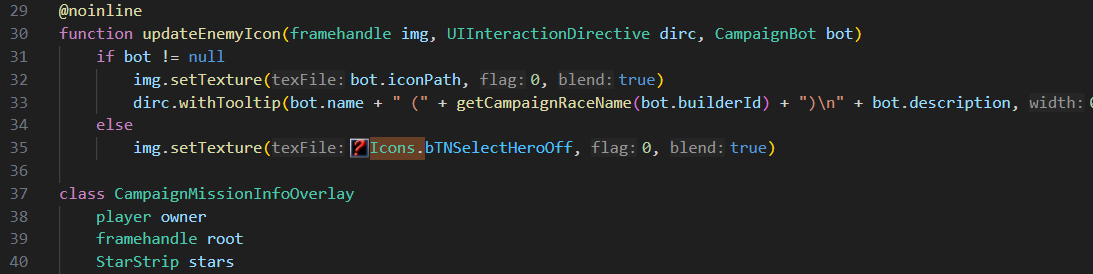
WurstScript code with inlay hints and an inline asset preview

One extension, complete setup

The extension installs and updates the Wurst compiler, bundled Java runtime, and Grill CLI automatically. No separate Java or compiler setup is needed.

  1. Open an existing project folder containing wurst.build, or run Wurst: New Wurst Project.
  2. Accept the installation prompt.
  3. Open a .wurst file and use the play button to build and run your map.

Installation and updates are managed under ~/.wurst. Updates are coordinated across VS Code windows, reuse prepared downloads when retrying, and detect Wurst processes that are locking installation files.

Supported on Windows, macOS, and Linux, with x64 and Arm64 builds where available. NixOS and custom environments can provide Java through wurst.javaExecutable.

Language intelligence

  • Context-aware completion with types, parameters, and documentation
  • Integrated JassDoc for Warcraft III natives and their Wurst wrappers
  • Live diagnostics, inlay hints, signature help, hovers, and quick fixes
  • Go to definition, find references, symbol rename, breadcrumbs, and Outline view
  • File and workspace symbol search
  • Syntax highlighting for Wurst, Jurst/Jass, WTS, FDF, TOC, and MDL
  • @compiletime gutter markers and workspace-wide quick-fix support
  • Clickable asset paths, CodeLens actions, hover previews, and inline icons in source files

WurstScript itself provides packages, classes, closures, extension methods, compile-time code, unit testing, dependency management, and a large WC3-focused standard library. The same source can target Jass or Lua.

Warcraft III inside VS Code

Opening a supported Warcraft III file selects a dedicated viewer or editor:

Area Formats and actions
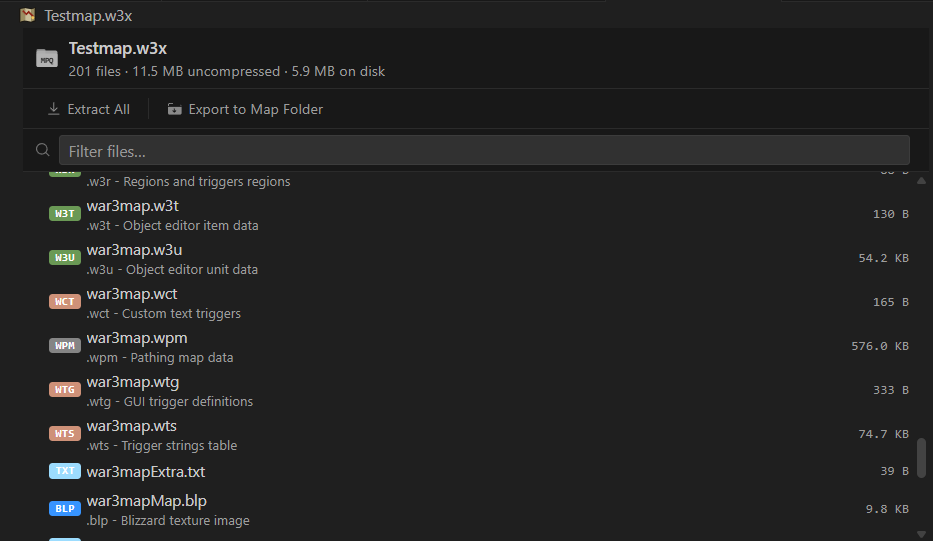
Map archives Browse .w3x/.w3m MPQ contents, open entries, extract files, or export a folder-mode map
Object data Inspect and edit .w3u, .w3t, .w3a, .w3b, .w3d, .w3h, and .w3q
Map information Safely edit supported .w3i fields while preserving untouched binary data
Map structures Inspect .doo, .wpm, .wtg, and .wct files
Other map data Preview .mmp, .shd, .w3c, .w3r, .w3e, .w3s, .w3l, .w3o, and .imp
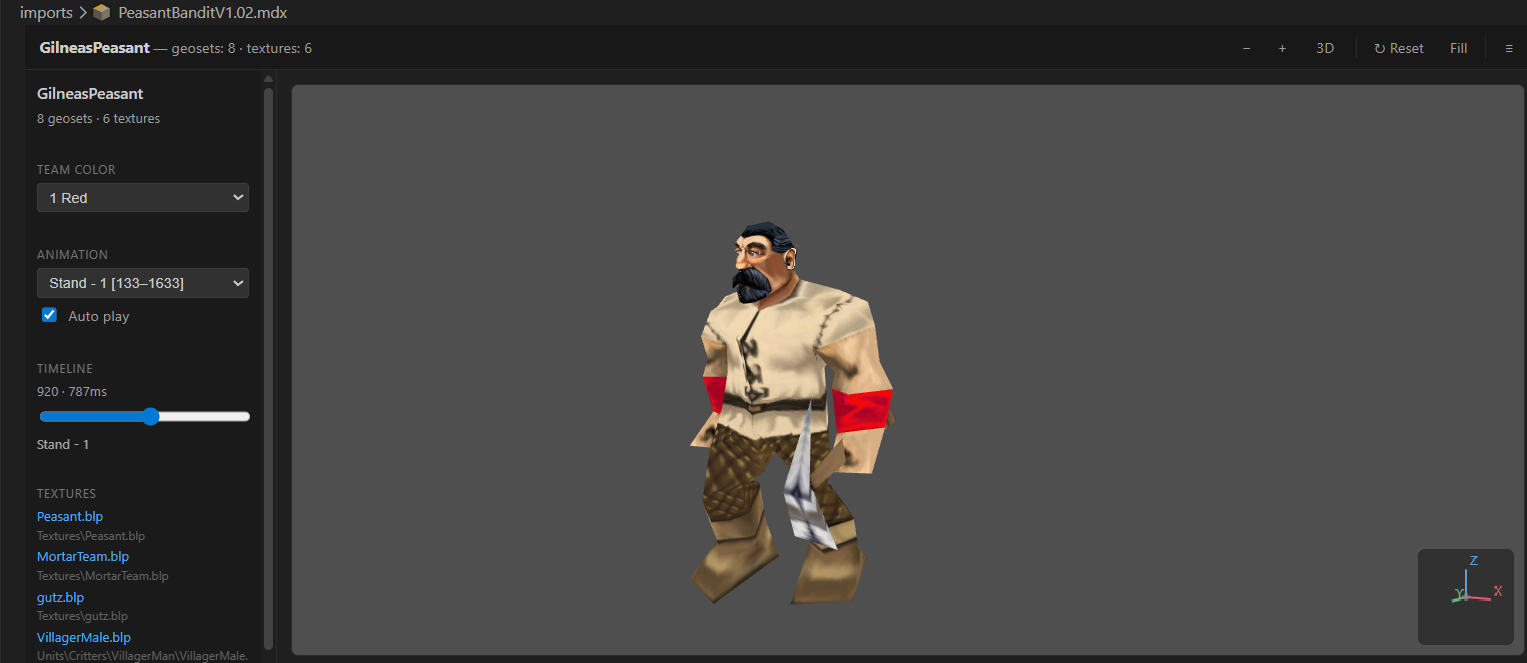
Images and models Preview .blp, .dds, .tga, .mdx, and .mdl with 3D animation and team-color controls
Audio Play .mp3, .wav, .ogg, and .flac assets

Packed .w3x/.w3m maps and Reforged folder-mode maps can both be selected, built, and run. The MPQ viewer can export an existing archive as a version-control-friendly map folder.

Browse and extract a Warcraft III MPQ map

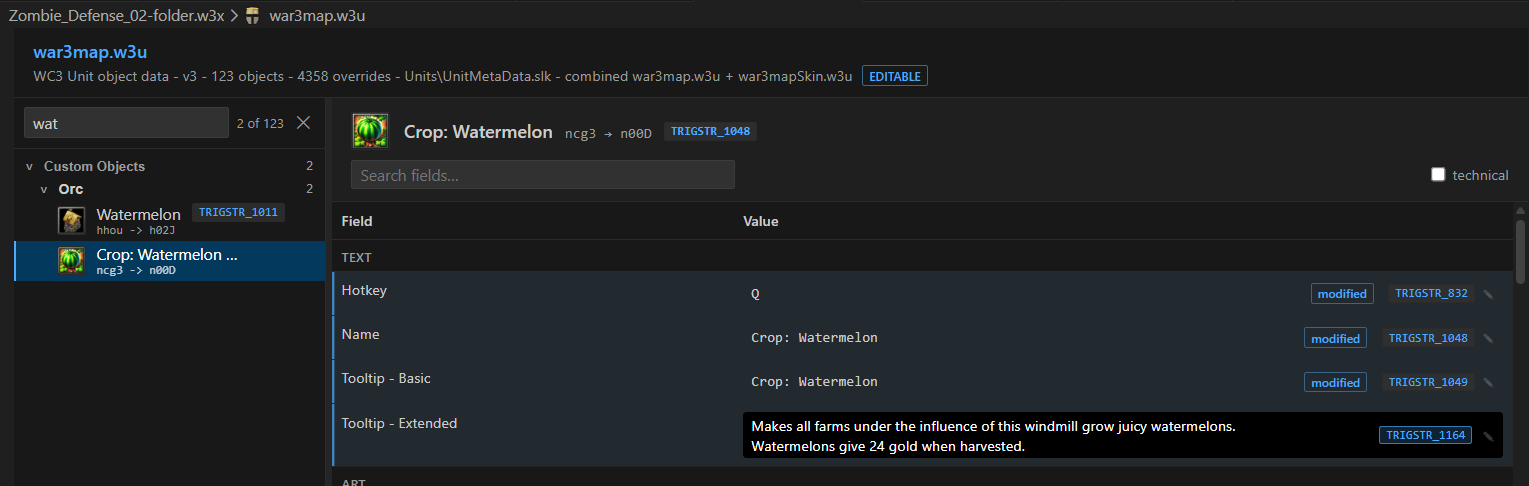
Object-data editors resolve rawcodes, game metadata, icons, base values, and trigger strings while keeping custom overrides editable.

Edit Warcraft III unit object data

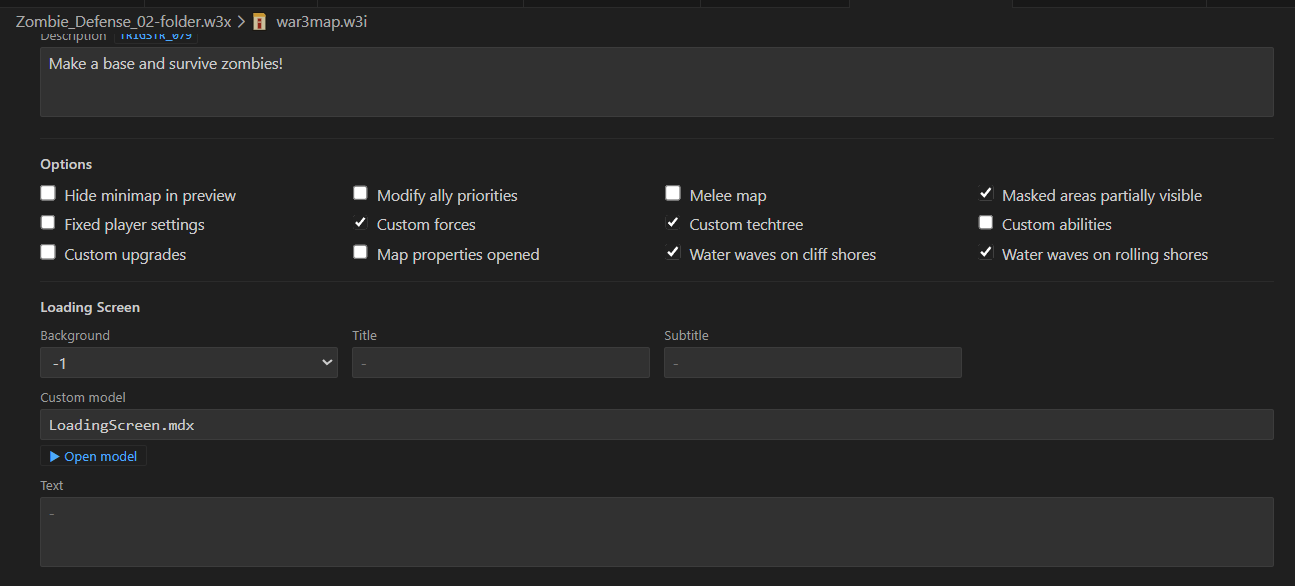
The .w3i editor exposes supported map-information fields while preserving the remainder of the binary file unchanged.

Edit Warcraft III map information

The experimental Wurst: Preview Map Terrain command renders terrain, cliffs, water, doodads, units, and start locations from an exploded map.

Installed-game assets

The extension reads stock Warcraft III data directly from either Reforged CASC storage or legacy MPQ archives. Asset browsers and previews can resolve:

  • World Editor names, metadata, rawcodes, and localized WESTRING labels
  • Unit, item, ability, destructable, doodad, buff, and upgrade icons
  • Reforged skin data, models, textures, and terrain art
  • Project assets across map folders, imports, the workspace, caches, and game data

This powers searchable object catalogs, inline command-button icons, texture hovers, and models with their dependent textures.

Preview an animated Warcraft III model and its textures

Build, test, and run

Search for Wurst in the Command Palette to:

  • Create, install, update, or repair a Wurst project
  • Build and run .w3x/.w3m maps or map folders
  • Run all tests, the current file's tests, or the test under the cursor
  • Start and update maps with Jass Hot Code Reload
  • Configure the Warcraft III executable and launch arguments
  • Inspect logs or stop stale Wurst language-server processes

Configuration

Most projects need no custom settings. Common overrides are wurst.wc3path, wurst.gameExePath, wurst.wc3RunArgs, wurst.mapDocumentPath, wurst.javaExecutable, and the Jass Hot Code Reload settings. Search for Wurst in VS Code Settings for the complete list.

For projects edited primarily by agents, enable wurst.leanEditor to disable automatic asset thumbnails and asset CodeLens scans. Hover previews and explicit asset commands remain available. Empty files stay untouched by default; Wurst: Insert Package Header inserts a header on request, and wurst.autoPackageHeader restores automatic insertion when opening an empty document.

Asset CodeLens commands resolve on demand, and asset links defer filesystem lookups until resolution. Large scans yield to edits and cancellation. The language client delays opening hidden documents on the server until they become visible or an edit or request needs them; briefly opened, unedited files can avoid an open/close cycle entirely. Compilers supporting build-status notifications preserve this deferral during startup and automatic restarts too. Older compilers retain the initial-build readiness probe, which synchronizes pending documents.

Wurst: Prepare AGENTS.md Update downloads the current WurstSetup template on demand and opens a diff against the project's guide. Copy Agent Prompt provides instructions for reconciling changes with local compiler documentation and project-specific rules. Guides created by the extension retain their original template as a comparison baseline; customized guides without a baseline get a conservative reconciliation prompt. Reviewing an update never overwrites AGENTS.md or advances the baseline.

Wurst: Copy Diagnostics produces a bounded report with repeated-error summaries. Routine inline-preview tracing is available at Debug level in the Wurst Inline Icons log channel.

Learn WurstScript

  • Installation and quick start
  • Beginner guide
  • Language manual
  • Documentation and tutorials
  • WurstScript on GitHub
  • Community Discord

Report extension problems in the wurst4vscode issue tracker.

Extension development

Install a current Node.js LTS release, clone the repository, and run npm install. Open it in VS Code and press F5 to launch an Extension Development Host.

Before submitting a change:

npm test
npx tsc -p . --noEmit
npm run vscode:prepublish

For compiler/client startup changes, build the compiler with gradlew shadowJar in its de.peeeq.wurstscript directory, then run node scripts/test-lsp-readiness.js <path-to-wurstscript.jar> here. This opt-in JSON-RPC test covers progress, clients without progress UI, legacy readiness, failed builds, and deferred unsaved buffers. It requires Java 25 on PATH (or WURST_LSP_TEST_JAVA).

  • Contact us
  • Jobs
  • Privacy
  • Manage cookies
  • Terms of use
  • Trademarks
  • Your Privacy Choices
  • Consumer Health Privacy
© 2026 Microsoft