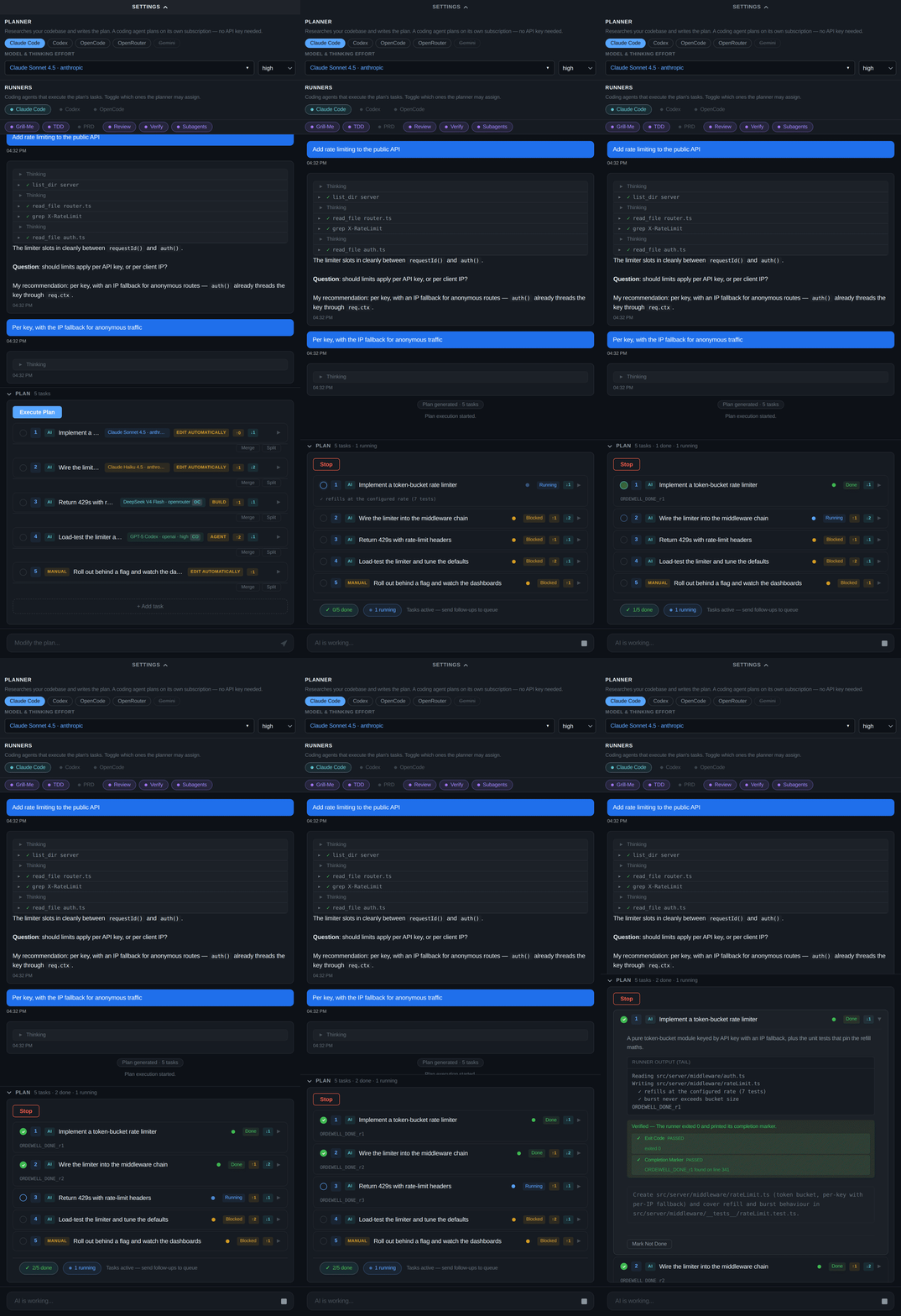
Turn one goal into an ordered plan of coding-agent tasks — each with its own
runner, model and mode — then execute and verify it.
What it does
A plan you can rewrite before a token is spent. Every task carries a
runner, model, thinking effort and mode. Change any of them, add or remove
tasks, rewire dependencies — without losing completed work or round-tripping
the AI.
A planner that talks back. Planning is one continuous chat. It researches
your workspace read-only, asks when your goal is vague, and its final message
is the plan. Reads run in parallel; anything reaching outside the workspace
asks once; commands that would write are refused outright.
The right model per task. One portfolio decision across the whole plan — a
security refactor and a README update don't deserve the same model — shown to
you before anything runs.
Verdicts from evidence. A task completes only when its unique completion
marker appears in the runner's output. The model is never the tie-breaker.
No extra API key required. Claude Code, Codex or OpenCode can be the
planner, strictly read-only, on the subscription you already hold.
Getting started
Install the extension.
Open the Ordewell panel from the activity bar.
Pick a planner in the planner bar — Claude Code, Codex or OpenCode plans on a
subscription you already have. To plan with an API key instead, set
ordewell.openAiApiKey (OpenRouter) or ordewell.apiKey (Gemini) in
settings, or export OPENROUTER_API_KEY / GEMINI_API_KEY.
Type a goal.
Every runner you want to execute tasks — Claude Code, Codex, OpenCode — needs to
be installed and on your PATH. If one is greyed out right after you installed
it, reload the window: a GUI-launched extension host holds the PATH it started
with.
Also available
The same project ships a CLI and a full-screen terminal UI: