
Luno Code: AI Coding Agent, Chat & Remote ControlAI coding agent for VS Code: generates code from natural language, runs terminal commands, and edits multi-file projects behind an approval gate you control. Chat & Agent modes, image/PDF/file attachments, SSH remote execution, and a Telegram mini-app to drive the agent from your phone. Powered by C Installation Launch VS Code Quick Open ( Ctrl+P), paste the following command, and press enter.Copied to clipboard |


Luno Code: AI Coding Agent, Chat & Remote ControlOne flat-rate key. Claude, GPT & Gemini. An agent that does the work — and asks before it touches anything. Website · Install · Models · Docs · Support 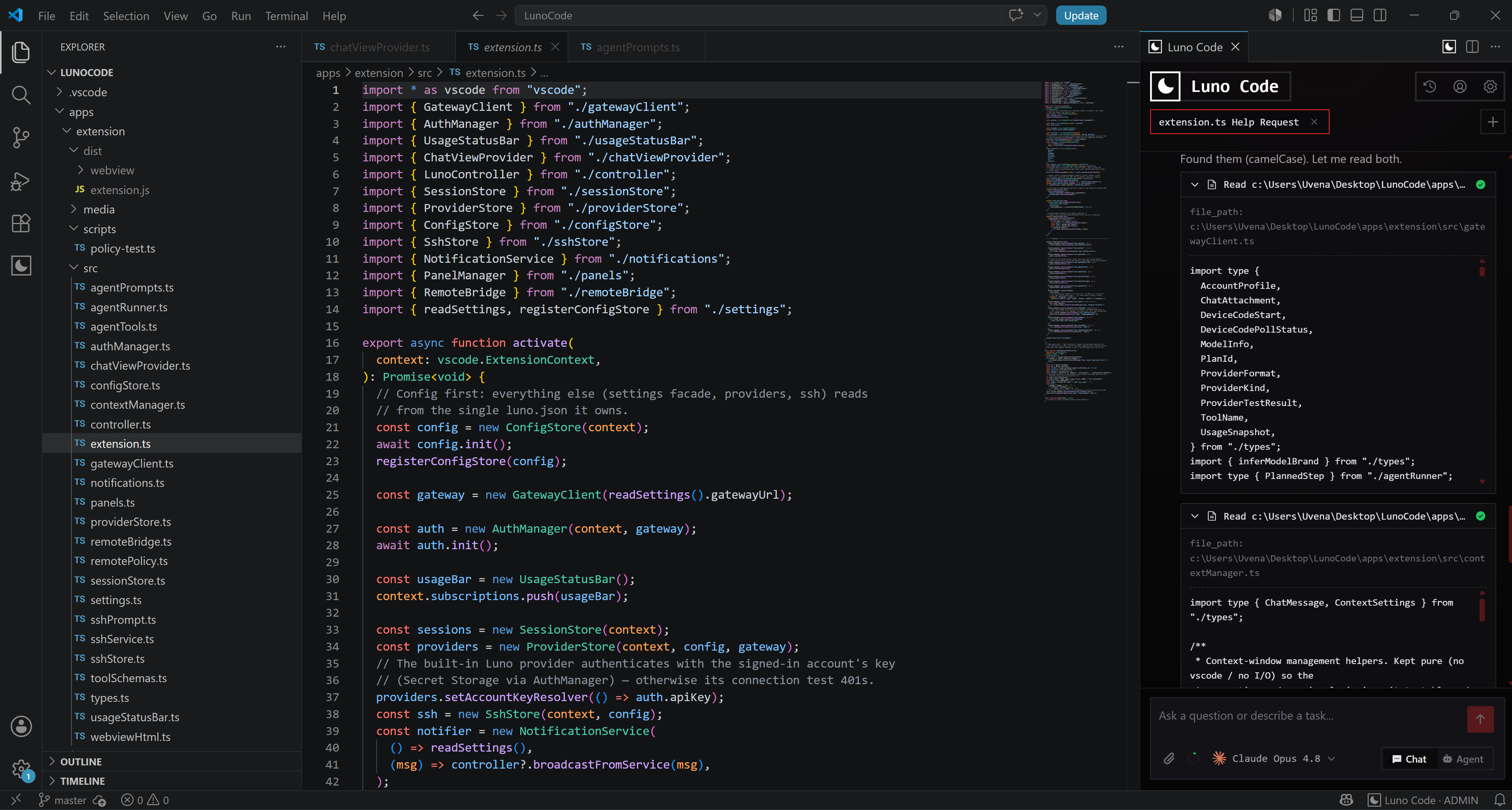
What is Luno Code?Luno Code is an open-source AI coding agent that lives in your VS Code sidebar. Describe what you want in plain language — it reads your codebase, writes and edits files, runs terminal commands, and shows every step in a chronological feed as it happens. Mutating actions pass through an approval gate you control, from "ask me every time" to a trusted-command allow-list. One Luno key covers Claude (Anthropic), GPT (OpenAI) and Gemini (Google) at a flat rate, with a live usage meter in the status bar and a prompts-not-logged guarantee. Key Features
Luno Remote — drive the agent from your phonePair your phone once and control the same agent from a Telegram mini-app. It's not a cut-down chat: you get the full chronological feed streaming live, tap to approve or reject tool calls, send follow-up prompts, and watch commands and diffs land on your workstation in real time. Start a refactor at your desk, approve the risky step from the kitchen — the session is the same on both ends, reconnecting cleanly if either side drops. Get Started
Everything else — approval mode, auto-approve lists, context management, display scale, language, SSH servers, and Telegram remote — lives in the in-app Settings tab, with JSON export/import for team setups. PrivacyYour prompts are not logged by the Luno gateway. Attachments ride the request and are never written to disk server-side. SSH credentials and your API key live in the OS keychain via VS Code Secret Storage. ContributingLuno Code is open source and contributions are welcome — issues, ideas, and pull requests. Fork the repository, open a PR, and join us. Thanks to everyone helping make Luno Code better: Resources
LicenseMIT © 2026 Luno Code. Free to use, modify, and distribute — keep the copyright notice. |