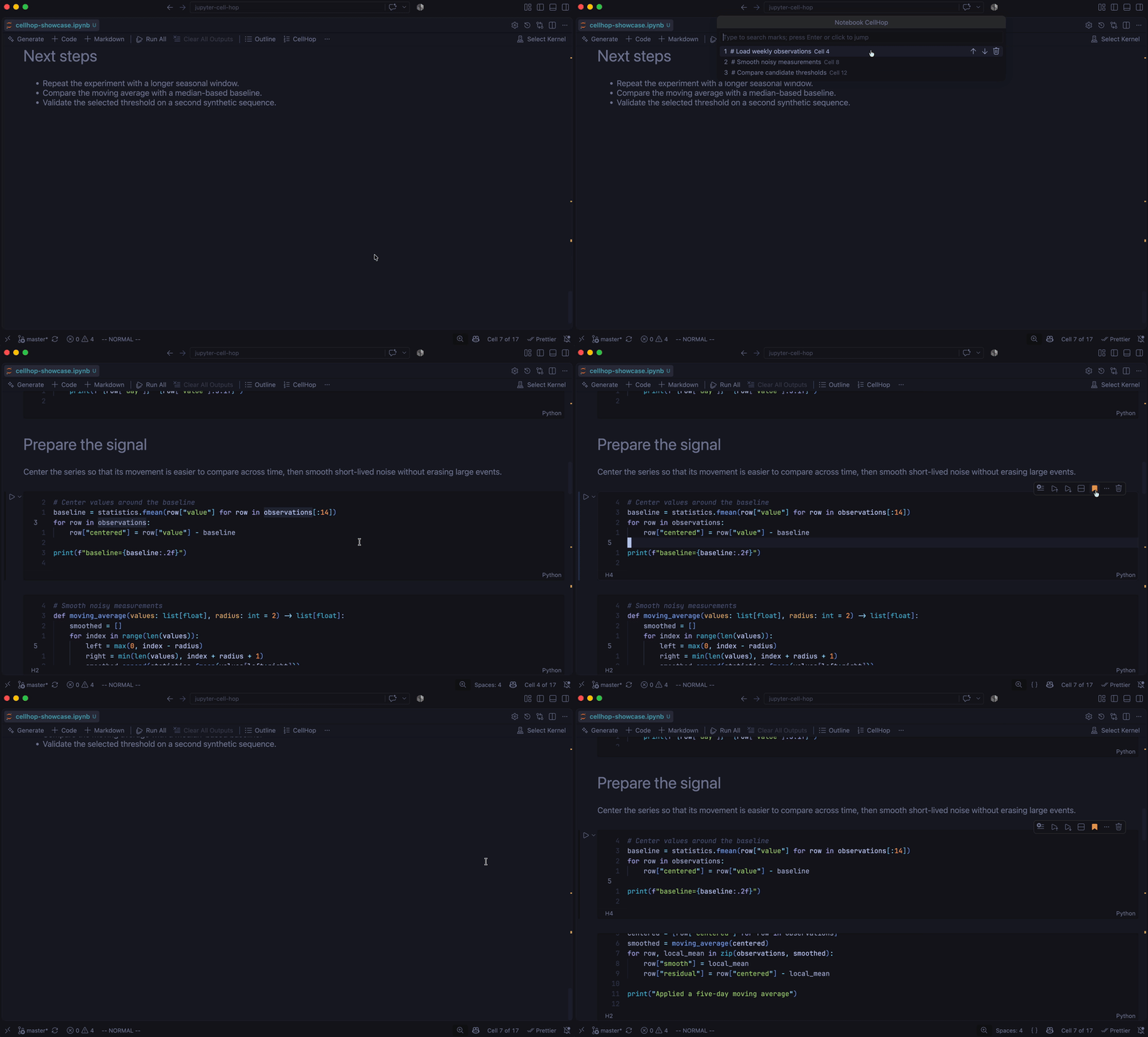
Notebook CellHopMark the Jupyter notebook cells you are actively working on and jump back to them instantly. Every notebook has its own small, ordered CellHop list, so your navigation stays focused on the notebook in front of you.
Highlights
Quick start
The same actions are available from Notebook CellHop in the cell toolbar's
Navigator and marks panelOpen CellHop Navigator opens the floating, searchable mark list. Each row has buttons to move the mark up, move it down, or remove it. Reordering a mark changes its slot number. Open Marks Panel opens the persistent CellHop Marks view. Click a row to jump to that cell, or use its inline trash action to remove it. When a marked cell is selected or reached with previous/next navigation, the corresponding panel row is selected as well. The notebook toolbar has a CellHop list button immediately after Outline that opens this panel. VS Code does not let an extension choose the Secondary Sidebar as a view's initial location; drag CellHop Marks there once and VS Code will remember the placement. Commands and keyboard shortcutsAll user-facing commands appear in the Command Palette under Notebook CellHop:
CellHop contributes one default shortcut:
All other commands are intentionally left available for custom keybindings. For example: AppearanceSet Notebook CellHop: Marked Button Color to Orange, Yellow, Red, Green, Blue, or Purple. Orange is the default. Cell identity and persistenceWhile a notebook is open, CellHop binds a mark to the notebook cell document itself. For recovery after reopening, it stores the Jupyter cell ID when available, a normalized content fingerprint, the approximate position, and neighboring-cell fingerprints. Editing the contents of a marked cell while the notebook is open refreshes that recovery record. This state is stored externally by VS Code. CellHop never writes marks into the
Requirements
DevelopmentPress Notebook CellHop is inspired by ThePrimeagen's Harpoon for Neovim. License |