Skip to content
| Marketplace
Sign in
Visual Studio Code>Data Science>Parquetly - Parquet Viewer and EditorNew to Visual Studio Code? Get it now.
Parquetly - Parquet Viewer and Editor

Parquetly - Parquet Viewer and Editor

Barathvignesh J K

|
7 installs
| (0) | Free
Parquet viewer and editor for VS Code. Open .parquet, .pq and .parq files as a fast, searchable, sortable, editable data table with charts and SQL-style filters.
Installation
Launch VS Code Quick Open (Ctrl+P), paste the following command, and press enter.
Copied to clipboard
More Info

Parquetly

Open .parquet / .pq / .parq files in VS Code as a fast, searchable, editable, plottable table — no Python, no notebook, no conversion step.

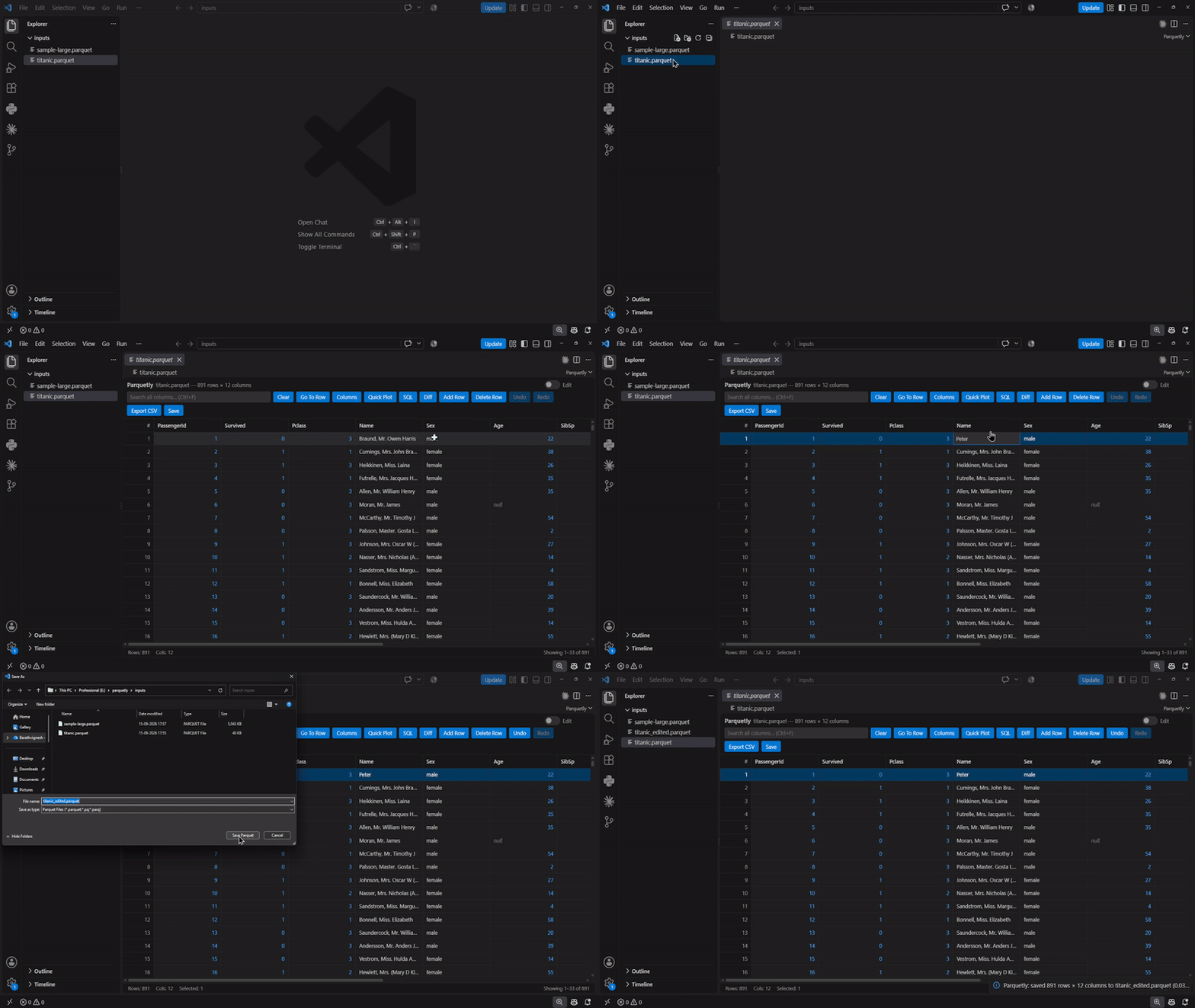
Viewing a parquet file in VS Code

What makes it different

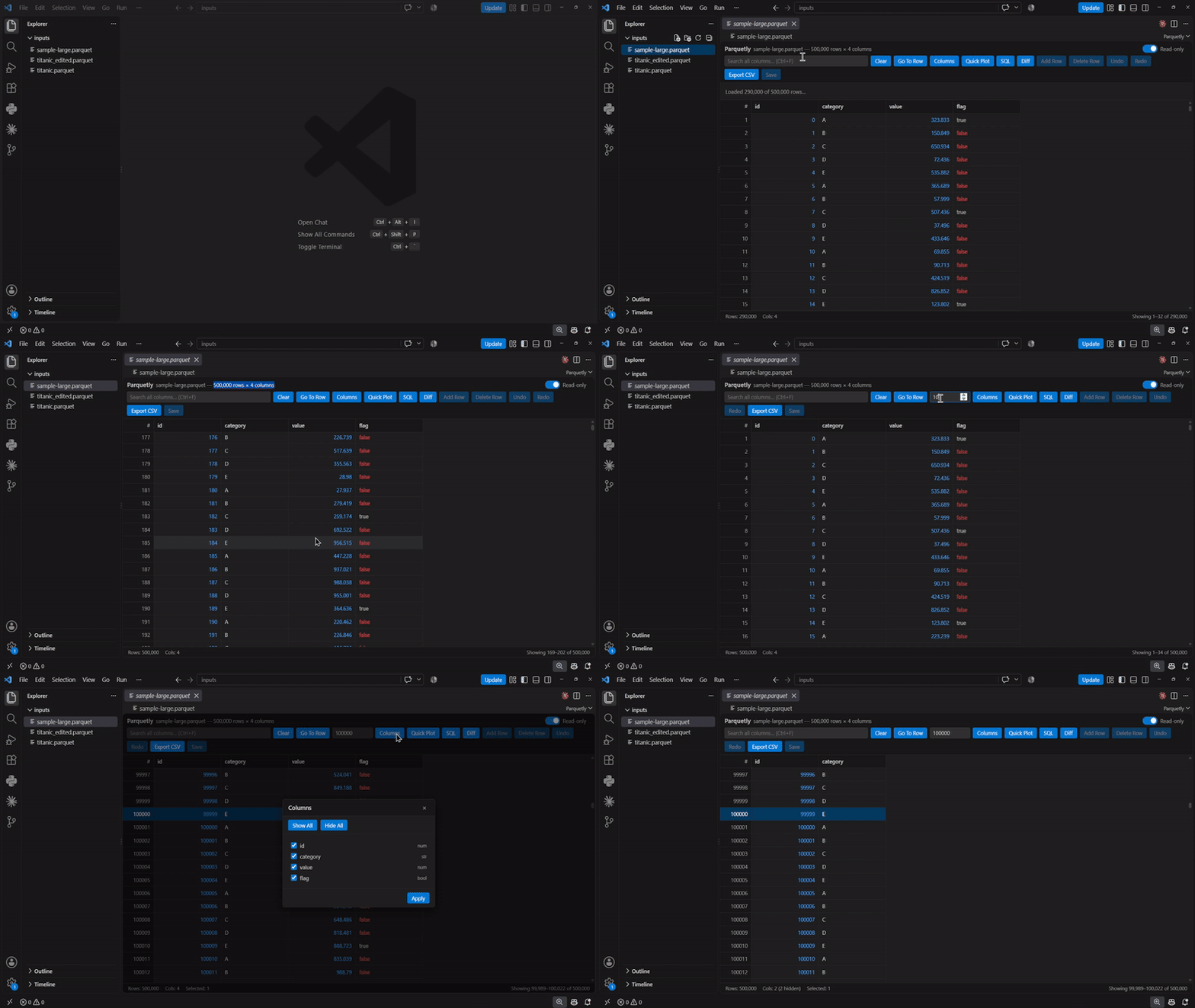
It opens files that other viewers choke on. Rows are streamed out of the file in batches of 10,000 and rendered through a virtual-scrolled grid, so only the rows you can actually see exist in the DOM. A half-million-row file opens without freezing the window.

Opening a large parquet file

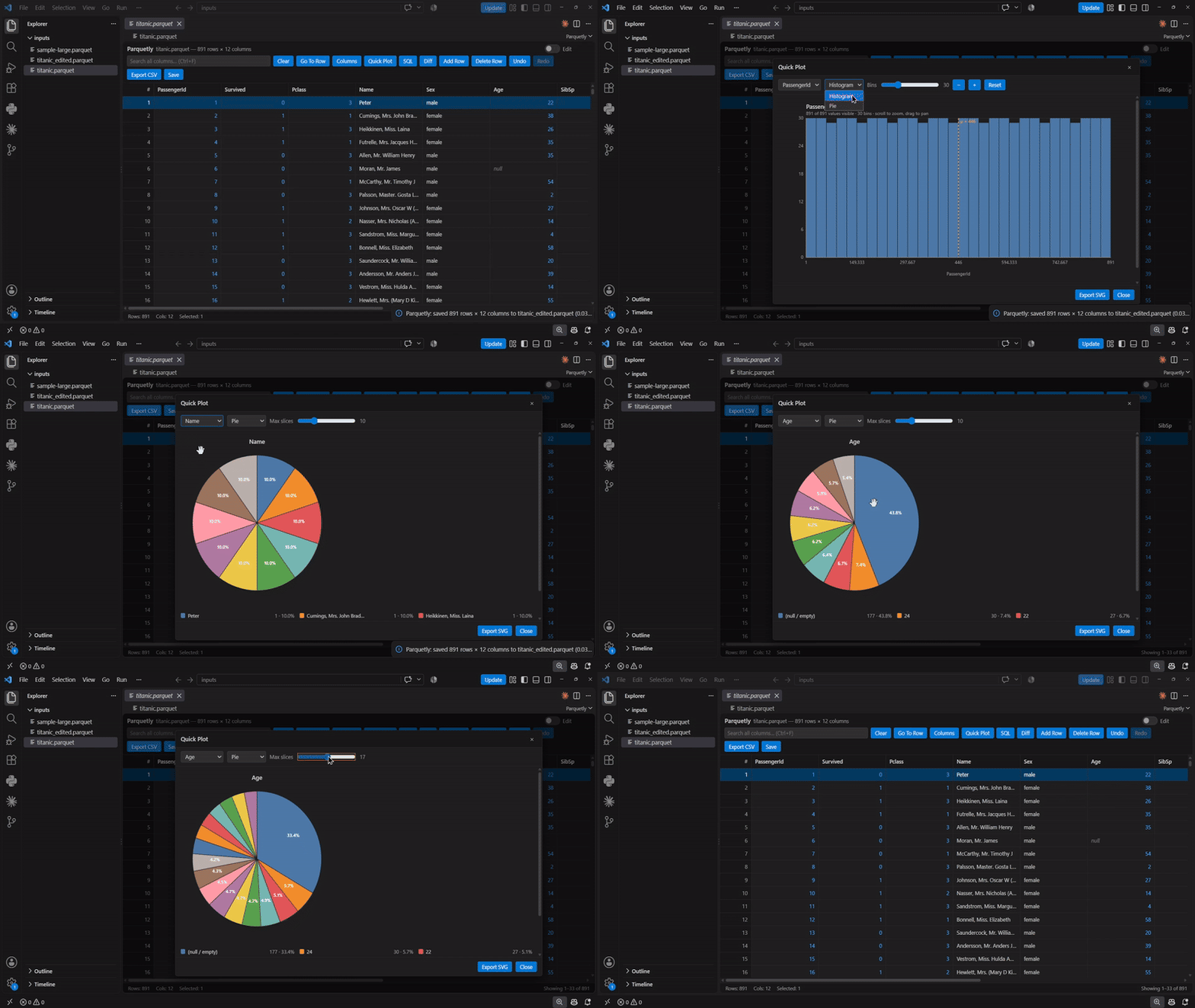
You can plot a column without leaving the editor. Right-click any column header → Plot. Histograms and pie charts are drawn as hand-built inline SVG — there is no chart library in the bundle — with a bins slider, a dashed mean line, mouse-wheel zoom, click-drag panning, and a live Count / Min / Max / Mean / Median / StdDev bar that recomputes over whatever range you have zoomed into. Plots always run over the rows currently visible after your filters, so filtering the table re-plots the chart.

Plotting a column

It writes real Parquet back out. Edit cells inline, then Save — column types are taken from the source file, so an INT64 column comes back as INT64 rather than widened to a double.

It has no dependencies you can see. The whole UI is vanilla JS and VS Code theme tokens: no grid library, no chart library, no web fonts. It follows your active light, dark, or high-contrast theme automatically.

Features

  • Virtual-scrolled grid — fixed 28px rows, only the visible window is in the DOM.
  • Read / Edit mode toggle — every data-mutating control is disabled while read-only, so you cannot change a file you only meant to look at.
  • Search — live substring filter across all visible columns. Ctrl+Click a cell to filter by that exact value.
  • Sort — click a header to sort ascending, click again for descending. Nulls sort last.
  • Column tools — right-click a header to sort, filter by unique values, view column stats, plot the column, copy it, or hide it. Drag a header's right edge to resize.
  • Columns panel — show/hide any column.
  • Quick Plot — histograms and pie charts as inline SVG, exportable as .svg.
  • SQL bar — a deliberately small WHERE / ORDER BY / LIMIT grammar that filters the rows already in memory. Not real SQL (see below).
  • Diff — compare the open file against a second parquet file by column name.
  • Editing — double-click a cell to edit inline with automatic type detection, add / duplicate / delete rows, and undo/redo up to 50 steps.
  • Save as Parquet — writes a real Parquet file, preserving the source column types.
  • Export CSV — all rows, the filtered rows, or just the selected rows.

Usage

Open any .parquet, .pq, or .parq file the way you would open any other file — double-click it in the Explorer. Parquetly is the default editor for those extensions.

Or run Parquetly: Open Parquet File from the Command Palette (Ctrl+Shift+P) to pick a file from anywhere on disk.

The file opens read-only. Flip the Read / Edit toggle in the toolbar to enable editing — double-click a cell to change it, and use the row buttons to add, duplicate, or delete rows.

To go back to plain text or another viewer for one file: right-click it in the Explorer → Open With….

Keyboard shortcuts

These are scoped to the webview — they work while the table has focus and intentionally do not appear in the VS Code Keyboard Shortcuts UI, so they never collide with your own bindings.

Shortcut Action
Ctrl+F Focus the search box
Ctrl+G Toggle Go To Row
Ctrl+Q Toggle the SQL bar
Ctrl+C Copy selected rows as TSV
Ctrl+Z / Ctrl+Y Undo / redo
Delete Delete selected rows
Escape Close a menu or panel, or cancel a cell edit
Enter / Escape / Tab While editing a cell: commit / cancel / commit and move right

Row selection: click to select, Ctrl+Click the row number to toggle, Shift+Click to select a range. Ctrl+Click on a data cell filters by that cell's value instead.

The SQL bar is not SQL

It is a small regex grammar over the rows already loaded in the webview:

WHERE Age > 30 AND Sex = 'female' ORDER BY Fare DESC LIMIT 100

LIMIT is stripped first, then ORDER BY, and whatever follows WHERE is split on a single level of AND / OR — there are no parentheses and no operator precedence. Supported comparisons are =, !=, <>, >, <, >=, <=, LIKE, NOT LIKE, IS NULL, IS NOT NULL, and IN (a,b,c). Parse errors surface as a VS Code notification.

A header sort is applied before the SQL bar, so ORDER BY wins and LIMIT takes the top N of the visible order.

Saving

Save writes a real Parquet file. It opens a save dialog pre-filled with <original-name>_edited.parquet, so the file you opened is never overwritten unless you explicitly choose to.

Column types are taken from the source file, so a round trip is lossless — an INT64 column comes back as INT64, not widened to a double. If an edit no longer fits its original type (say you type text into an integer column), only that column widens, and the notification tells you which ones and to what.

Export CSV remains separate, and can export all rows, the filtered rows, or just the selected rows.

Issues and source

github.com/barathjk/parquetly — build and test instructions are in CONTRIBUTING.md.

MIT licensed.

  • Contact us
  • Jobs
  • Privacy
  • Manage cookies
  • Terms of use
  • Trademarks
  • Your Privacy Choices
  • Consumer Health Privacy
© 2026 Microsoft