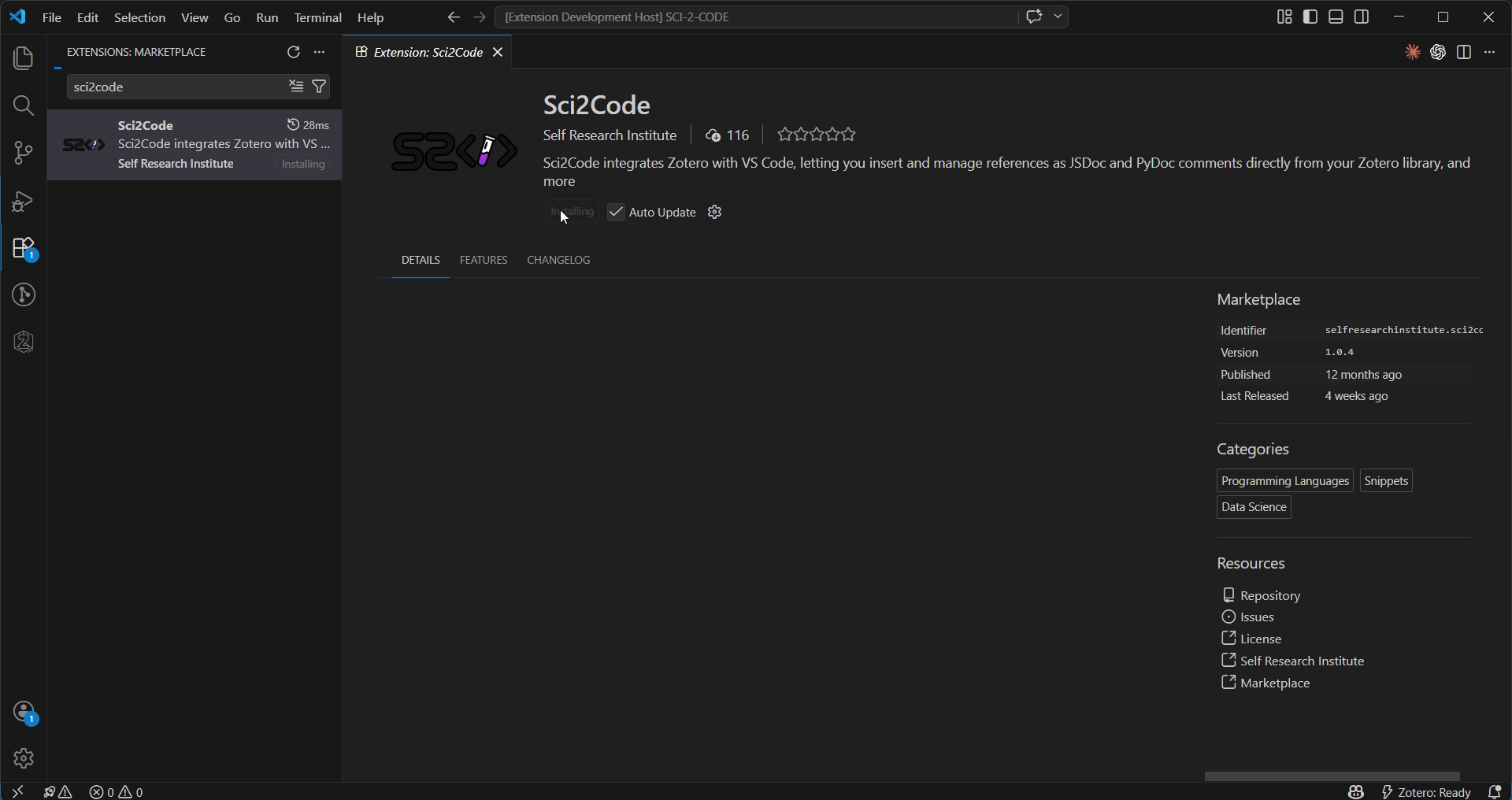
Sci2CodeSci2Code integrates Zotero with VS Code, letting you insert and manage references as JSDoc and PyDoc comments directly from your Zotero library, and more Installation Launch VS Code Quick Open ( Ctrl+P), paste the following command, and press enter.Copied to clipboard |

Sci2Code
Integrate your Zotero library directly into your Research and Development workflow.
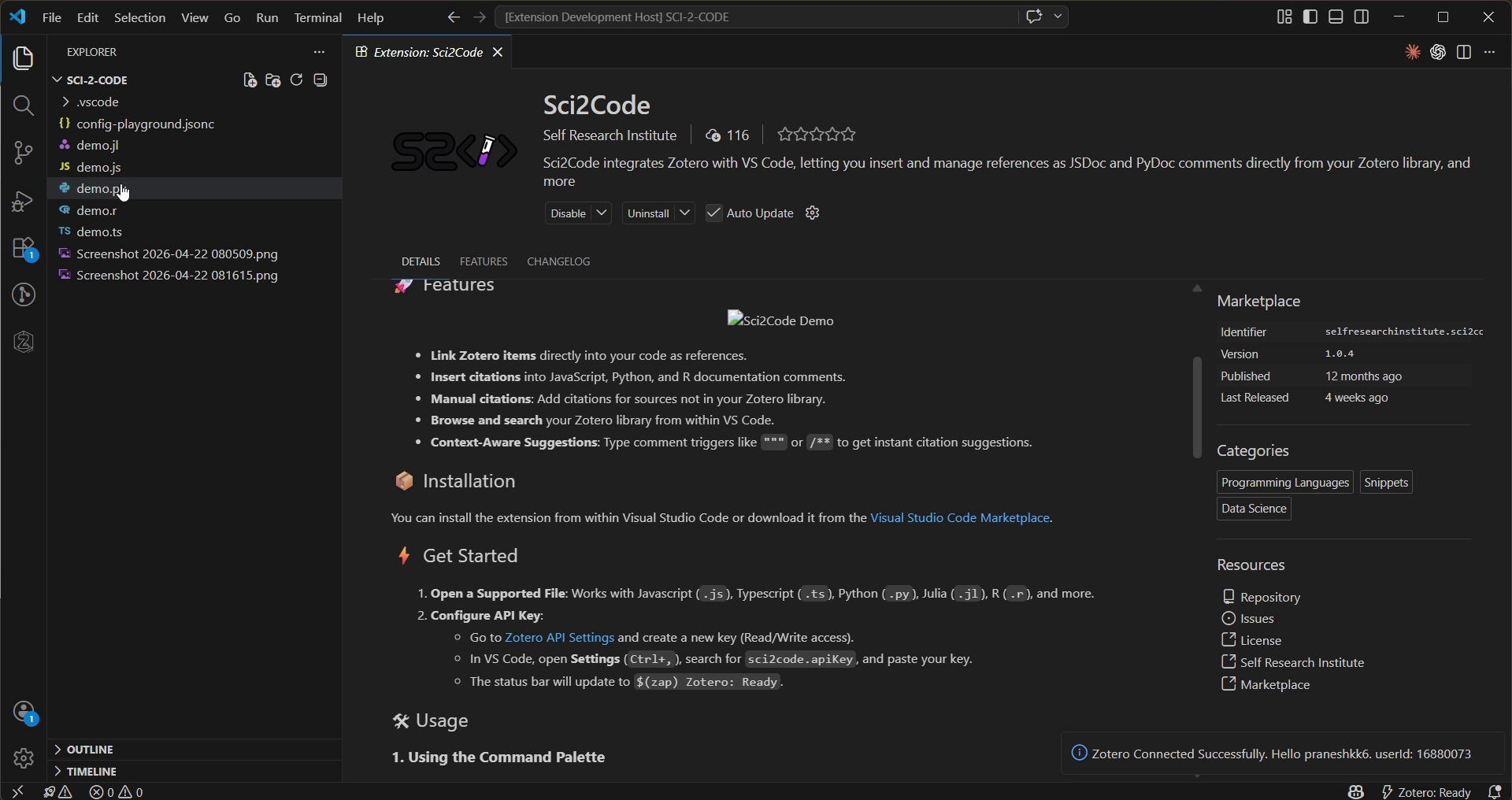
Sci2Code bridges the gap between your research library and your code. Seamlessly integrate Zotero, your trusted reference manager, directly into Visual Studio Code. Easily link academic articles, papers, and other resources from your Zotero library as inline citations in your code using JSDoc, PyDoc, and other documentation standards. 🚀 Features
▶ Watch the full HD demo (MP4)
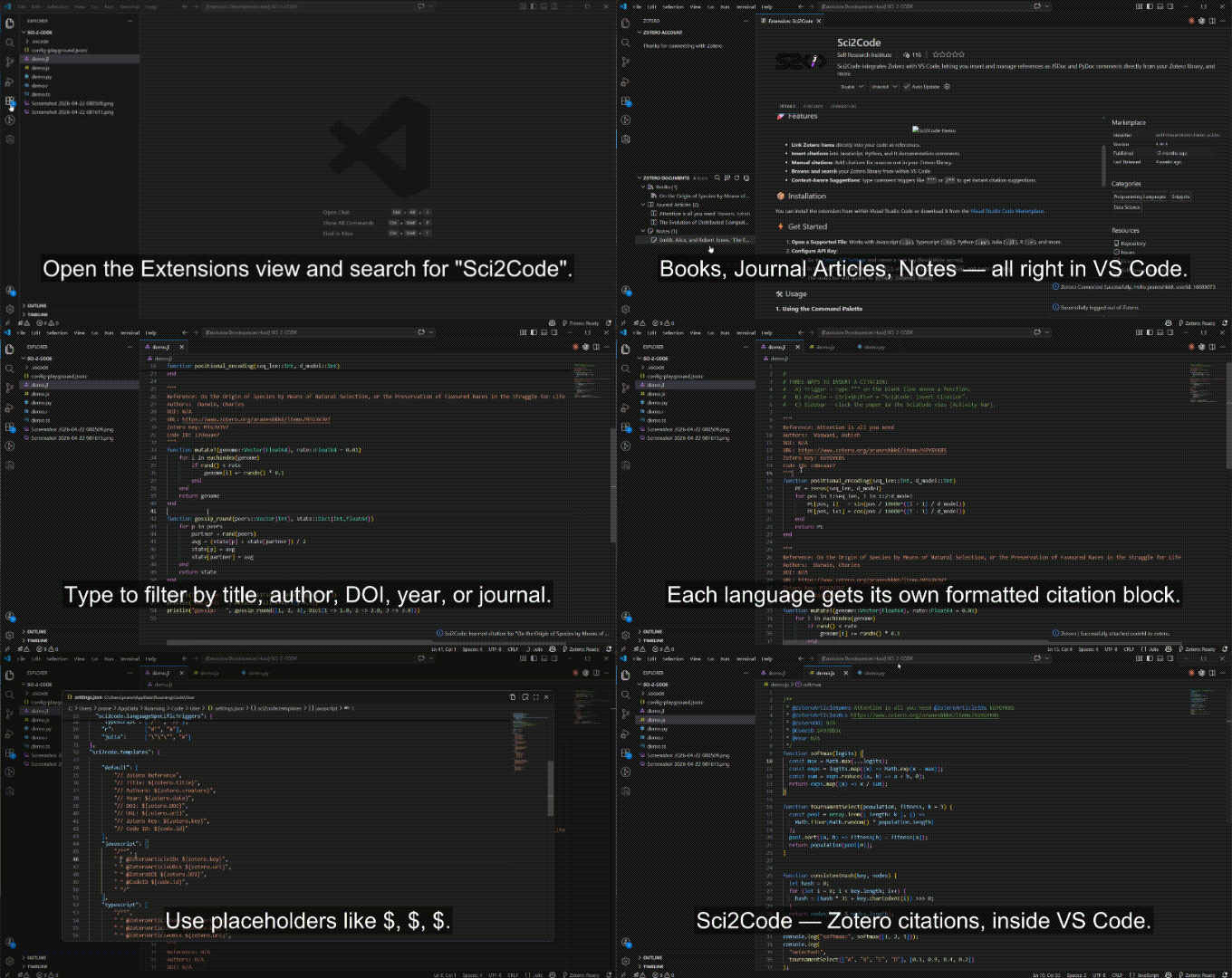
🖼 ScreenshotsA step-by-step walkthrough of what Sci2Code looks like in action. 1. Install from the VS Code Marketplace
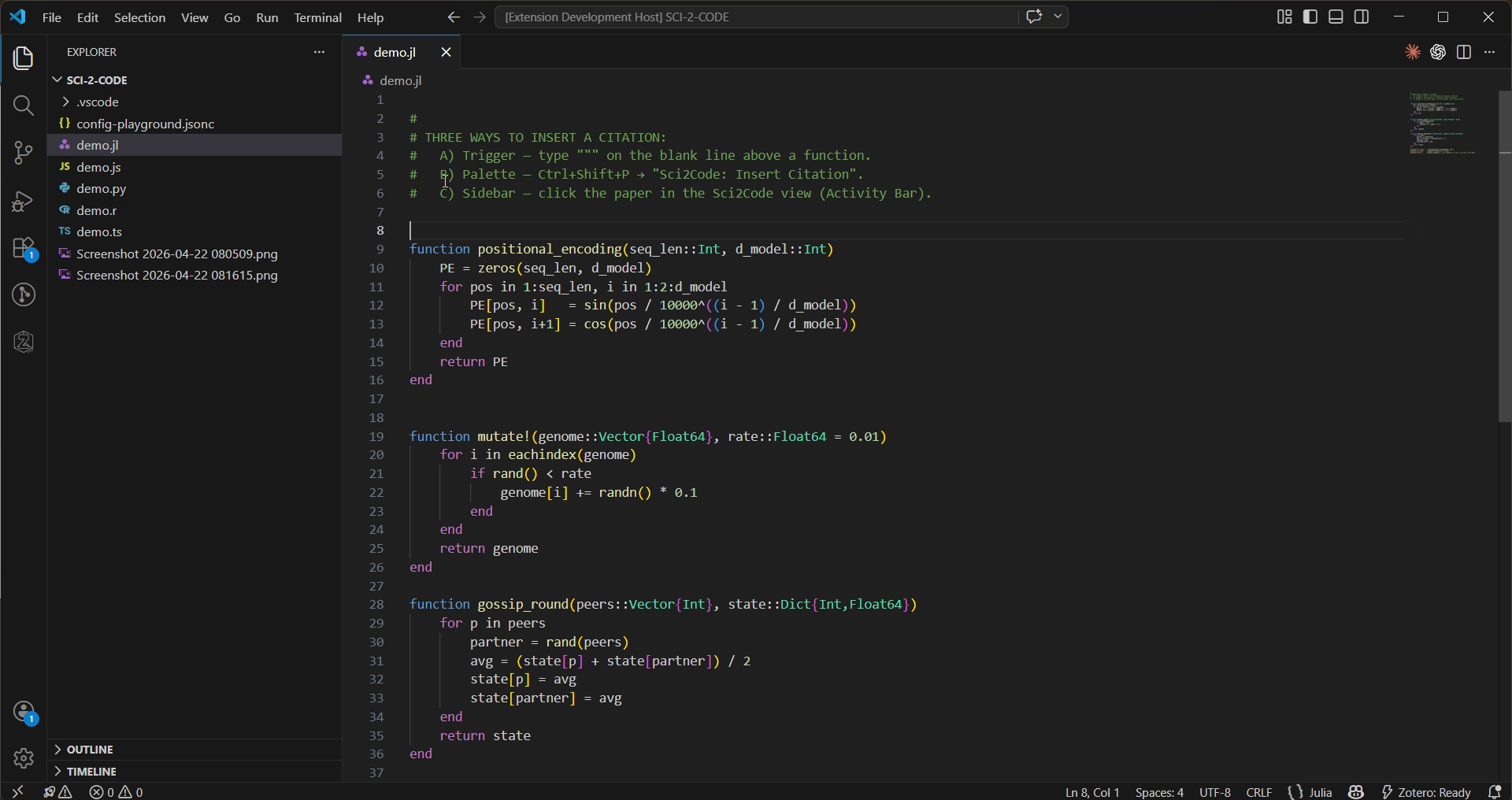
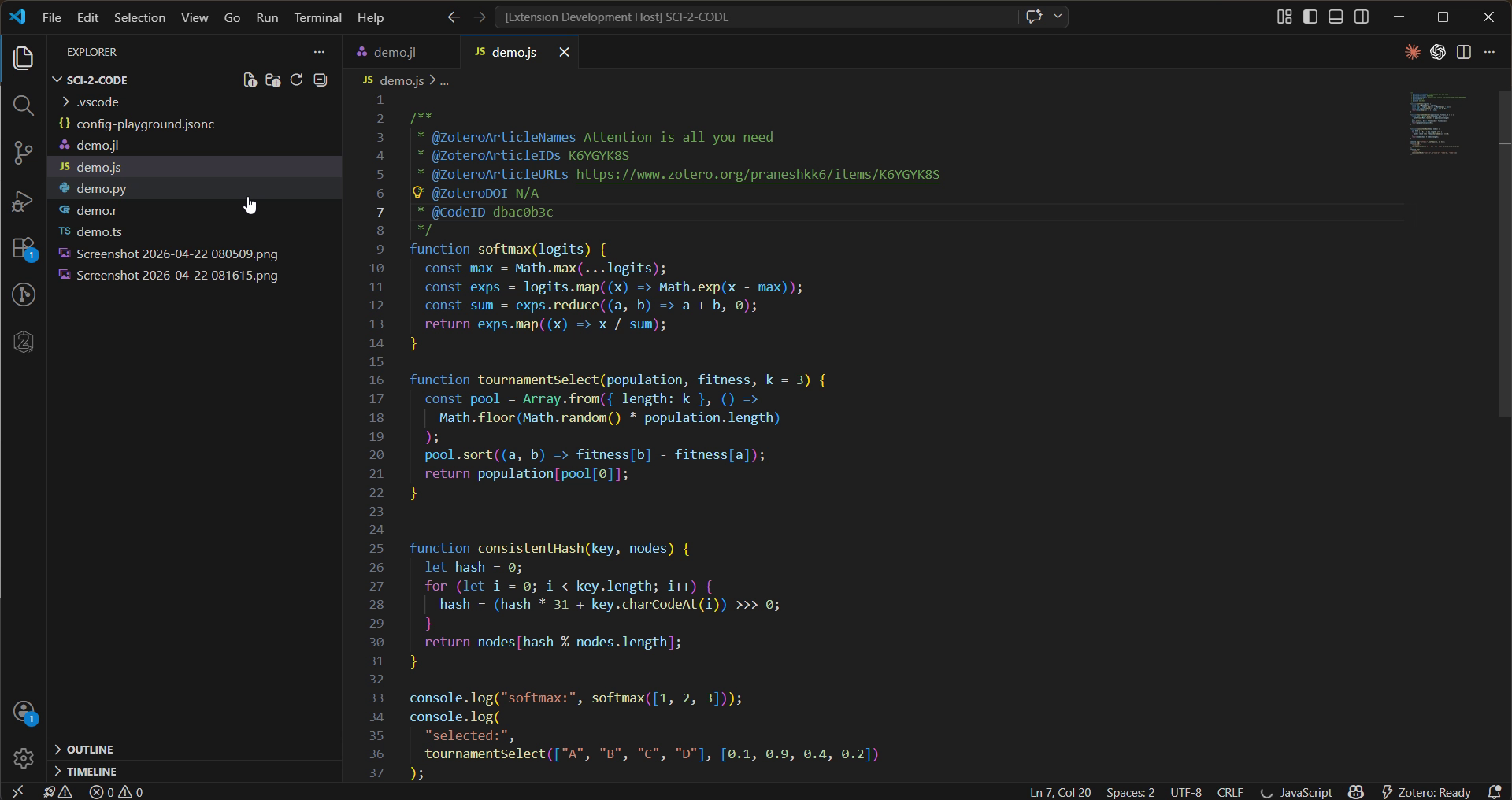
2. Works across Python, JS/TS, R, Julia and more
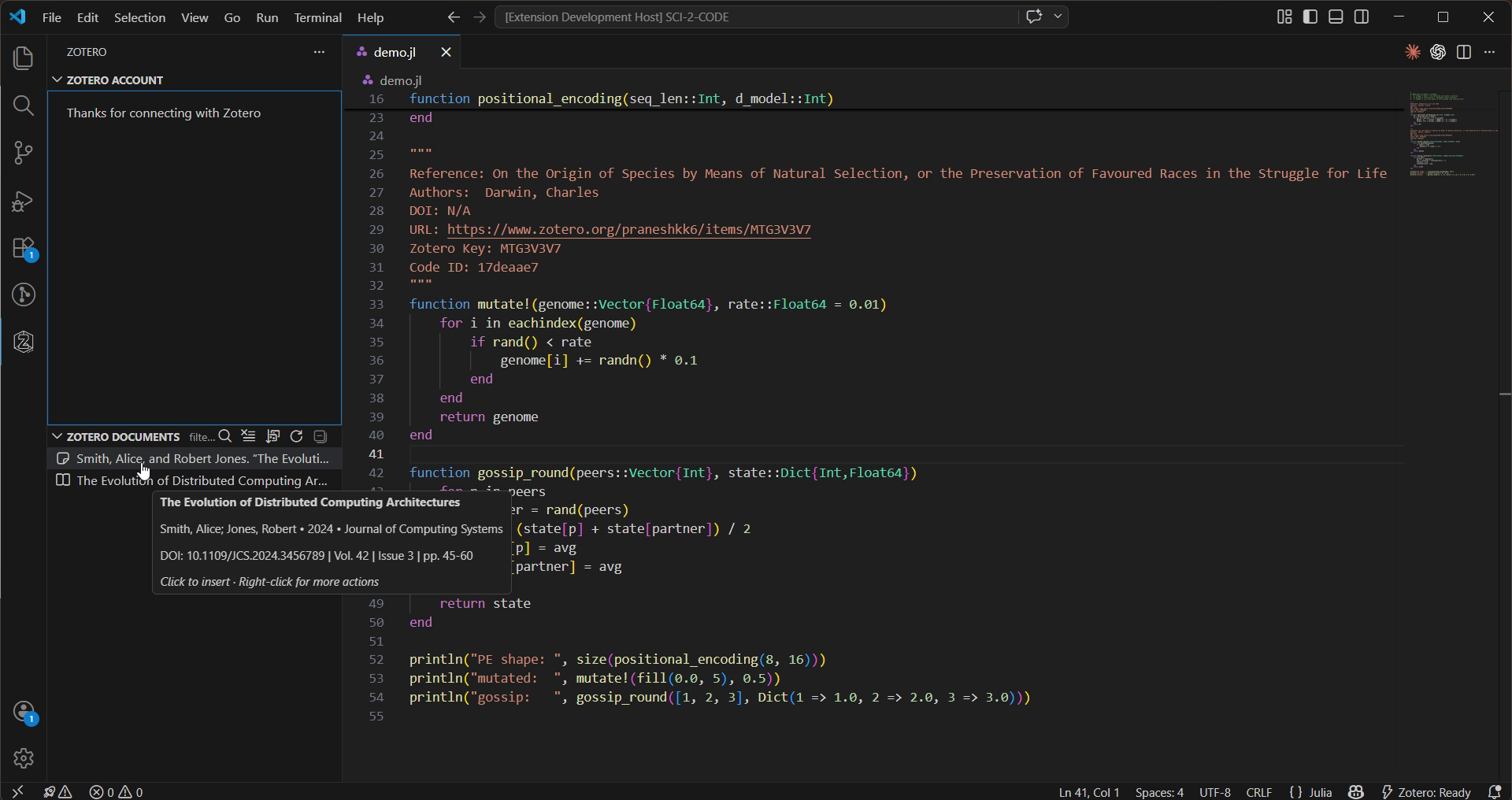
3. Your Zotero library, right in the sidebar
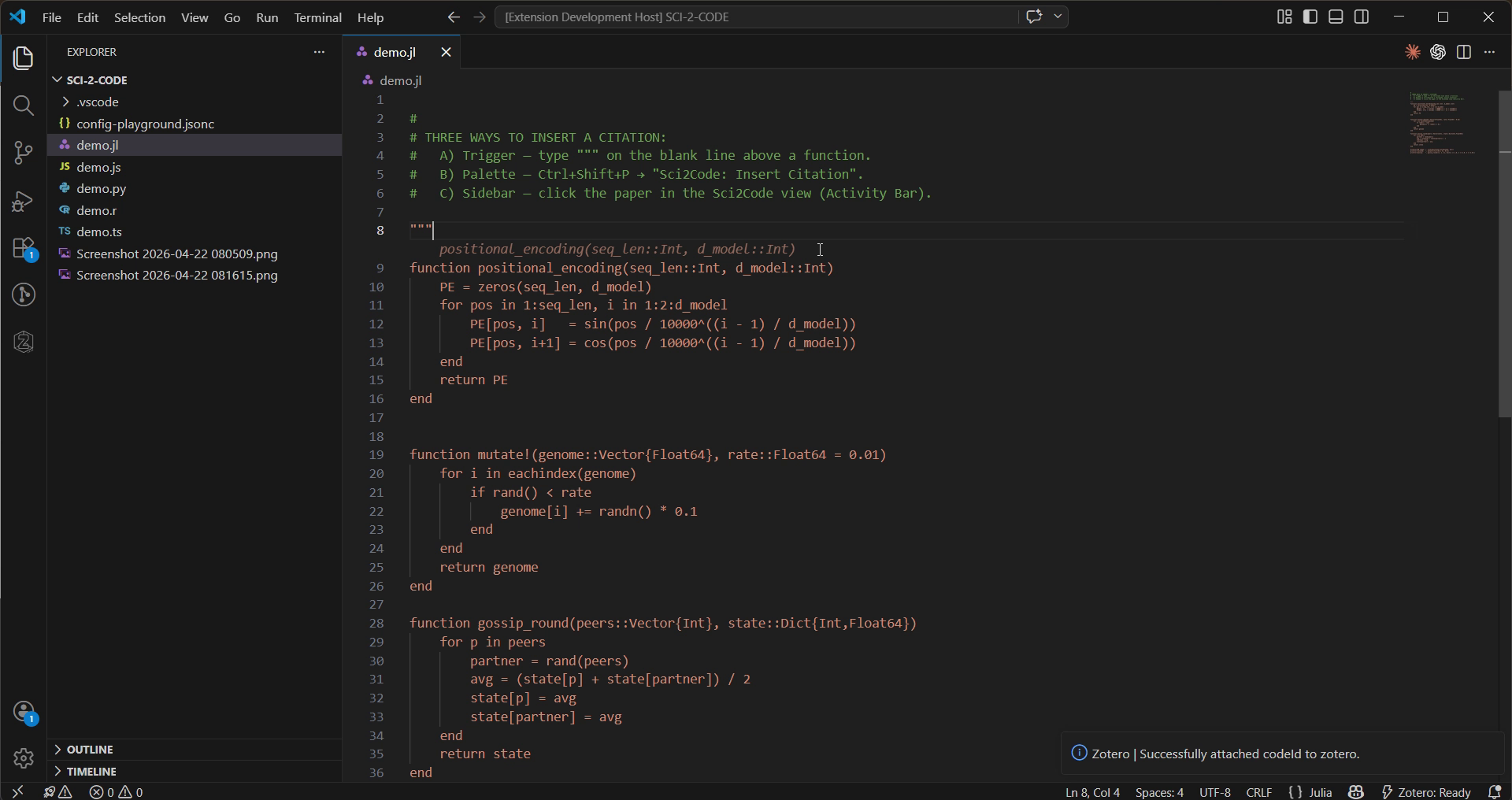
4. Type a comment trigger → QuickPick opens
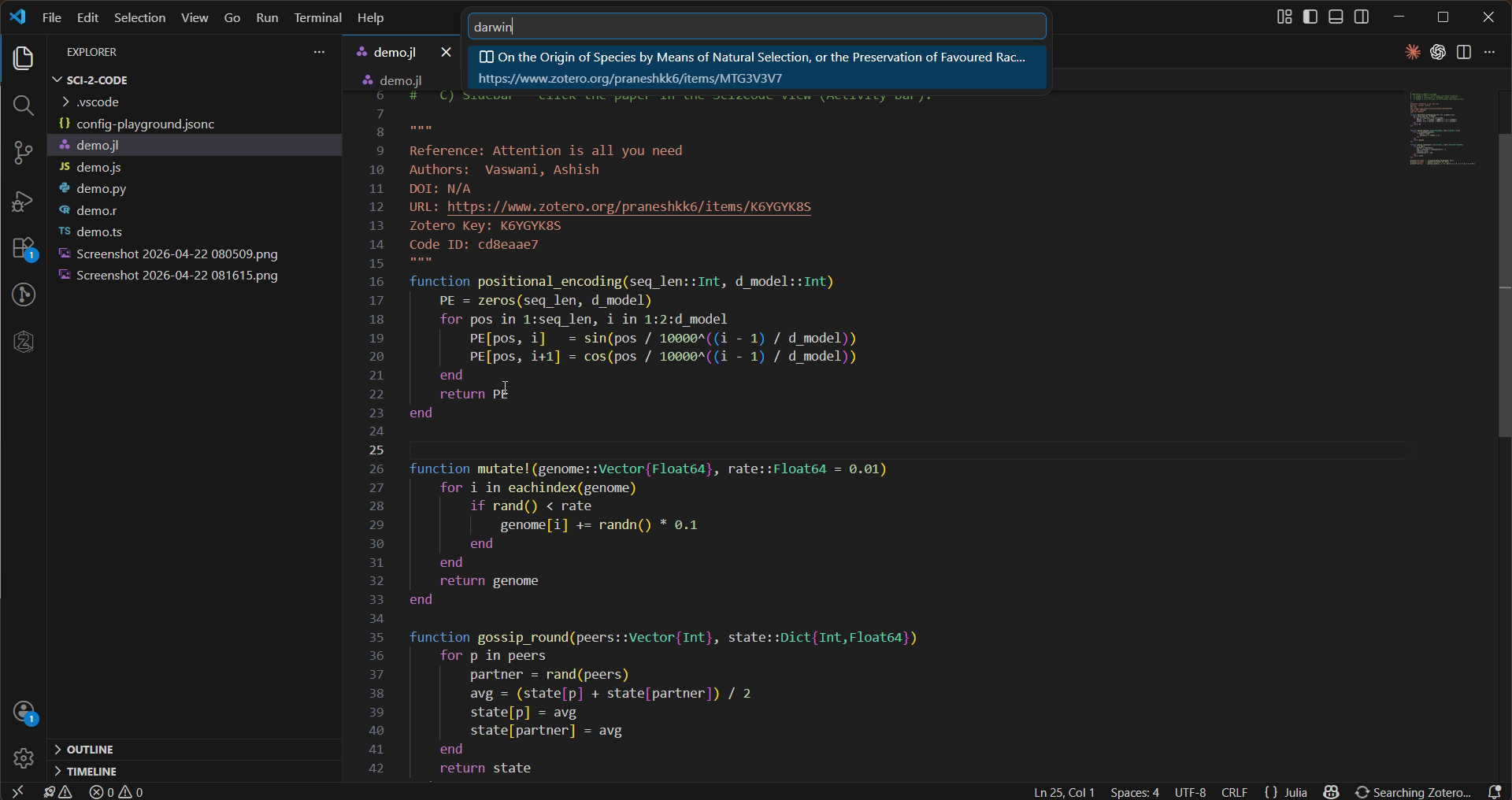
5. Pick a reference — citation is inserted
6. Or insert via the Command Palette
7. Or single-click from the sidebar
8. Multi-language templates out of the box
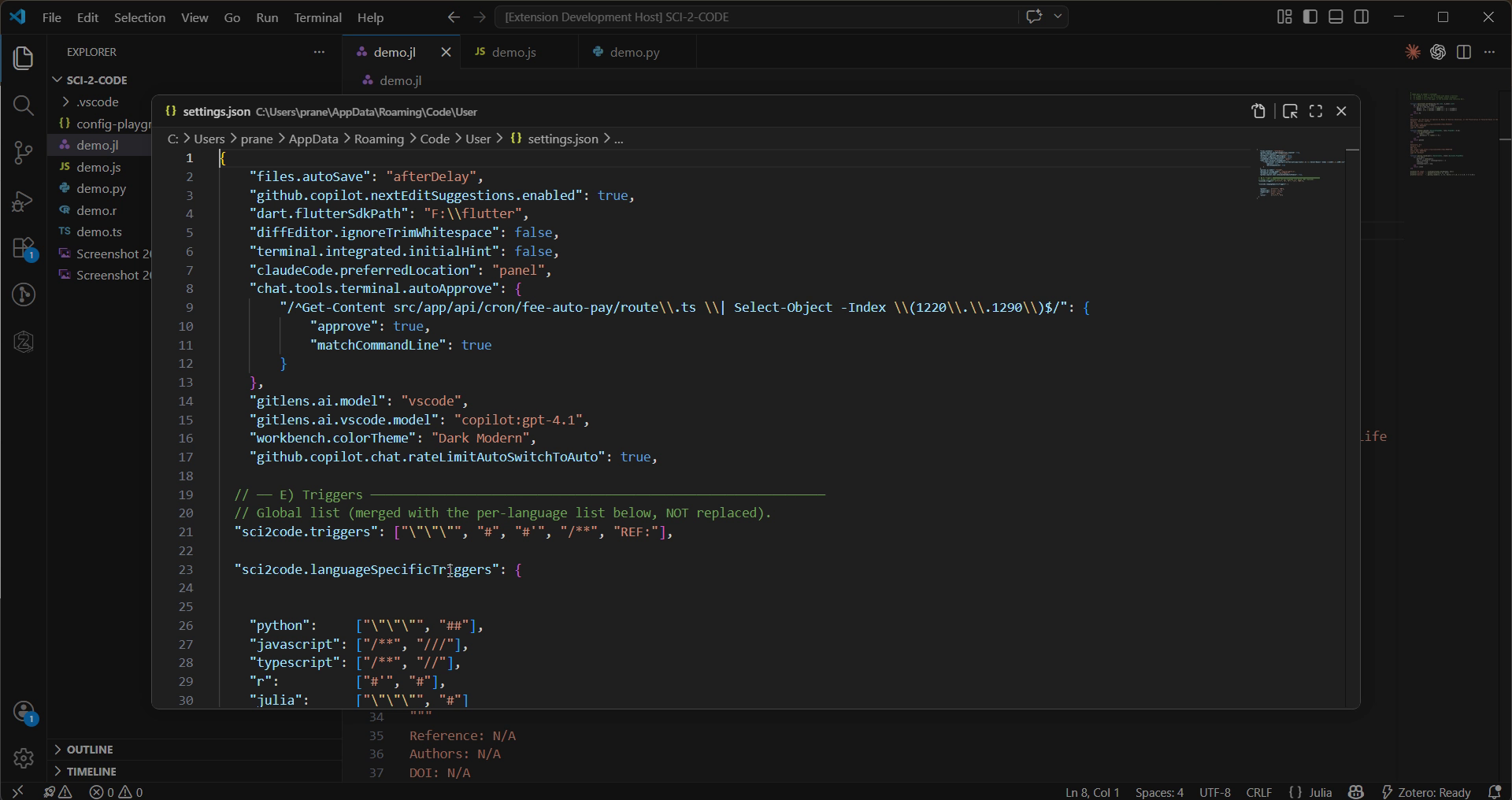
9. Configure everything from the Settings UI
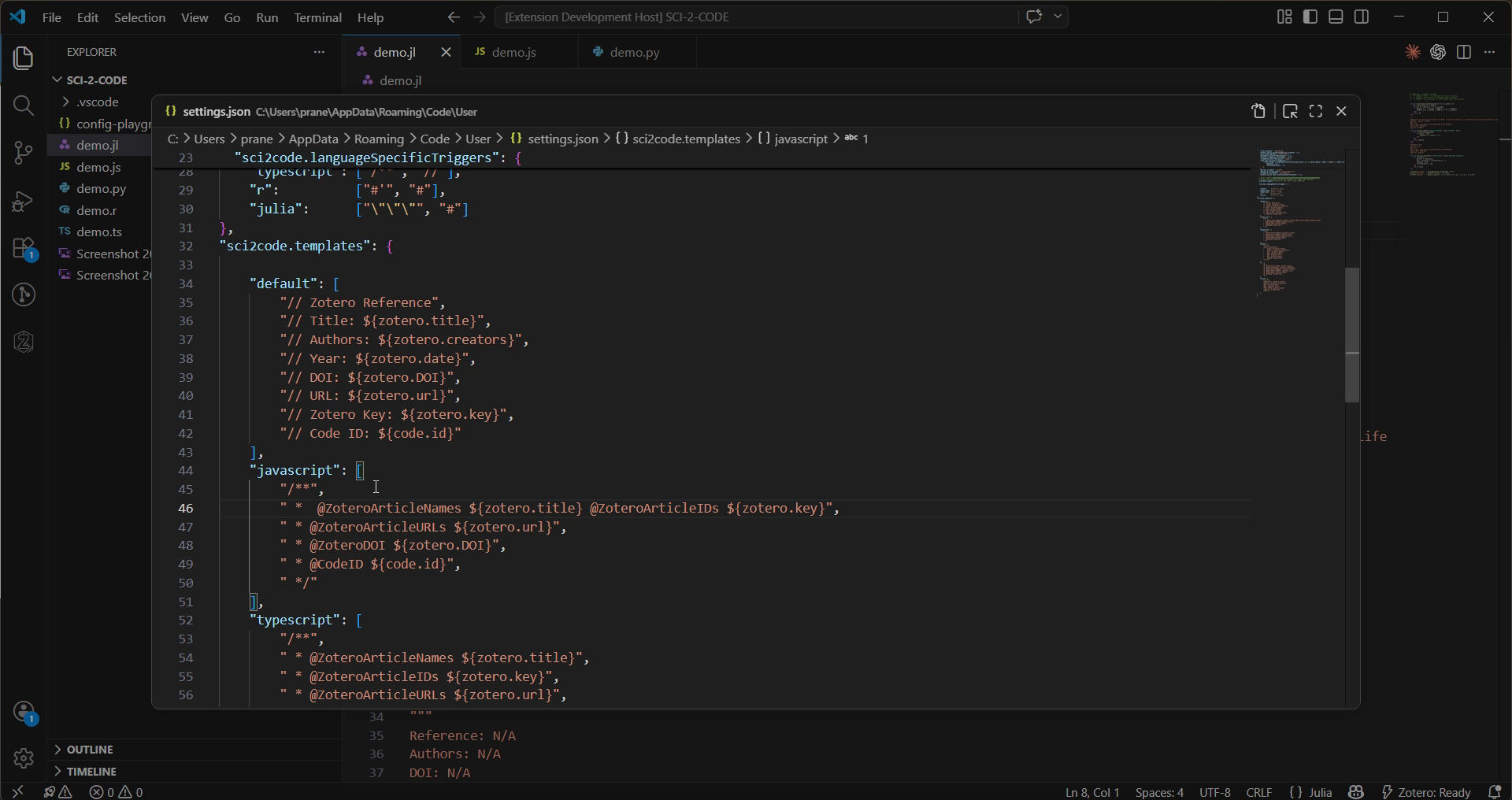
10. Define your own citation template
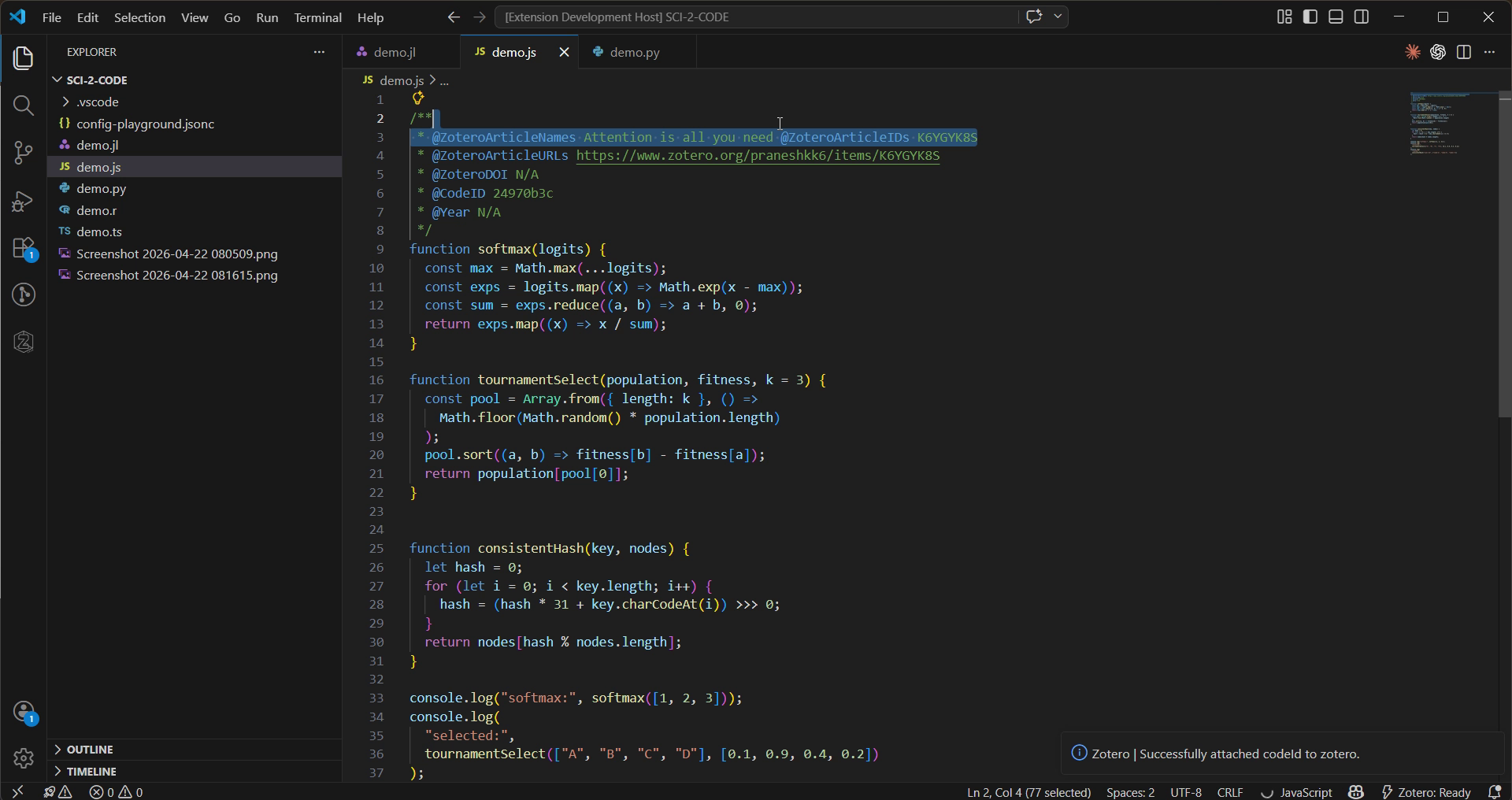
11. See your custom template in the inserted block
📦 InstallationYou can install the extension from within Visual Studio Code or download it from the Visual Studio Code Marketplace. ⚡ Get Started
🛠 Usage1. Using the Command Palette
2. Manual CitationsIf you need to cite a source that's not in your Zotero library:
Tip: Manual citation is also available as the first option when using "Insert Zotero Citation". 3. Using the Zotero Sidebar
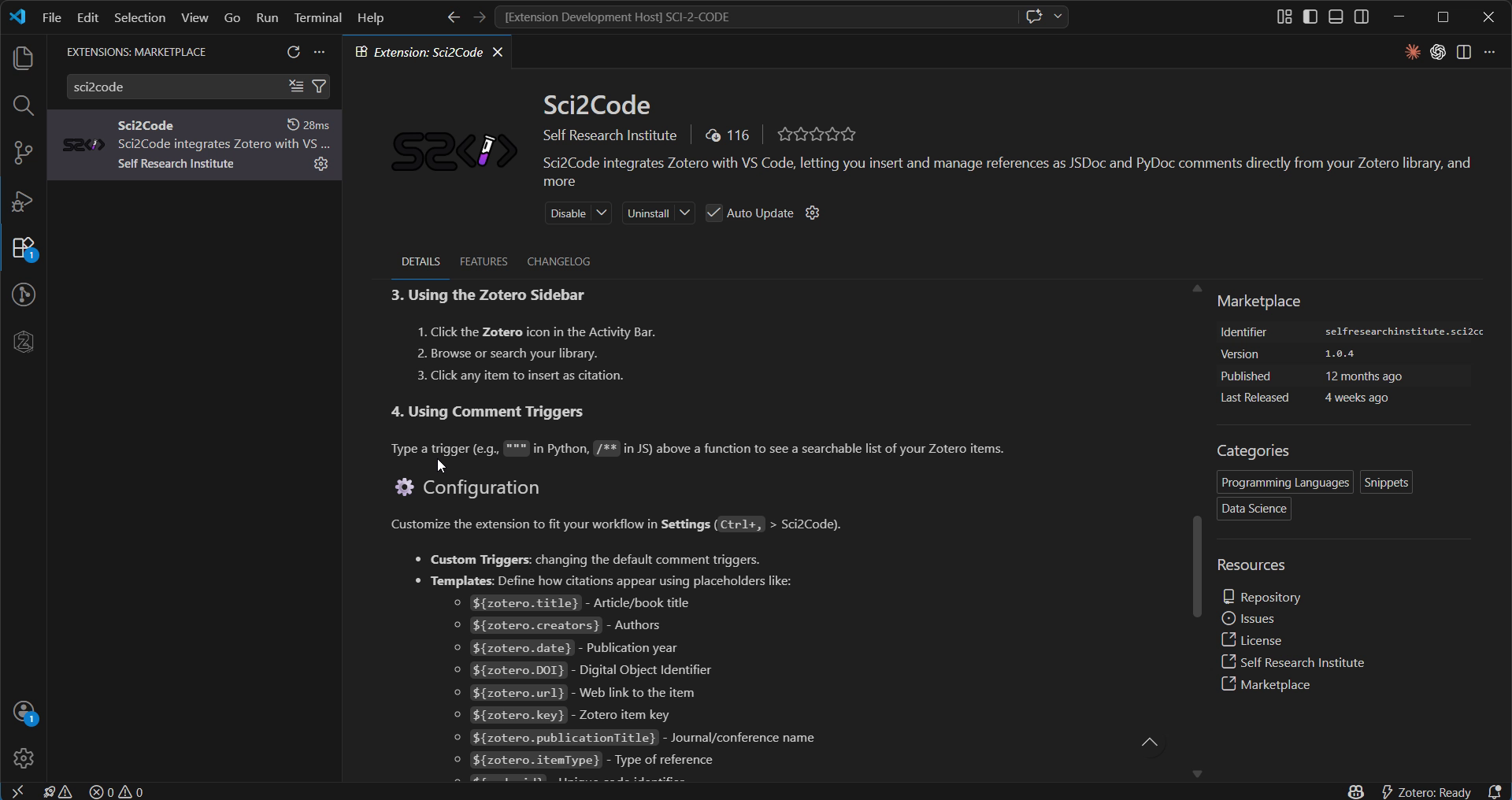
4. Using Comment TriggersType a trigger (e.g., 5. Generating a BibliographyOnce you've cited a few sources in your code, turn them into a reference list:
Sci2Code only includes items it can match back to your Zotero library, so the list always stays in sync with what's actually cited. ⚙️ ConfigurationCustomize the extension to fit your workflow in Settings (
Example Template Customization🤝 ContributingWe welcome contributions! Please see our Contributing Guide for details on how to set up your development environment, run tests, and open Pull Requests. This project follows a Code of Conduct and Governance Model. 📄 LicenseThis project is licensed under the GNU AGPL-3.0 License. 📬 ContactIf you encounter issues or have feature requests, please Open an Issue or contact The Self Research Institute at support@selfresearch.org. |