A VS Code extension that automatically converts Dart concrete classes into an abstract interface and a corresponding implementation class — helping you write cleaner, more maintainable Flutter and Dart code following clean architecture principles.
Features
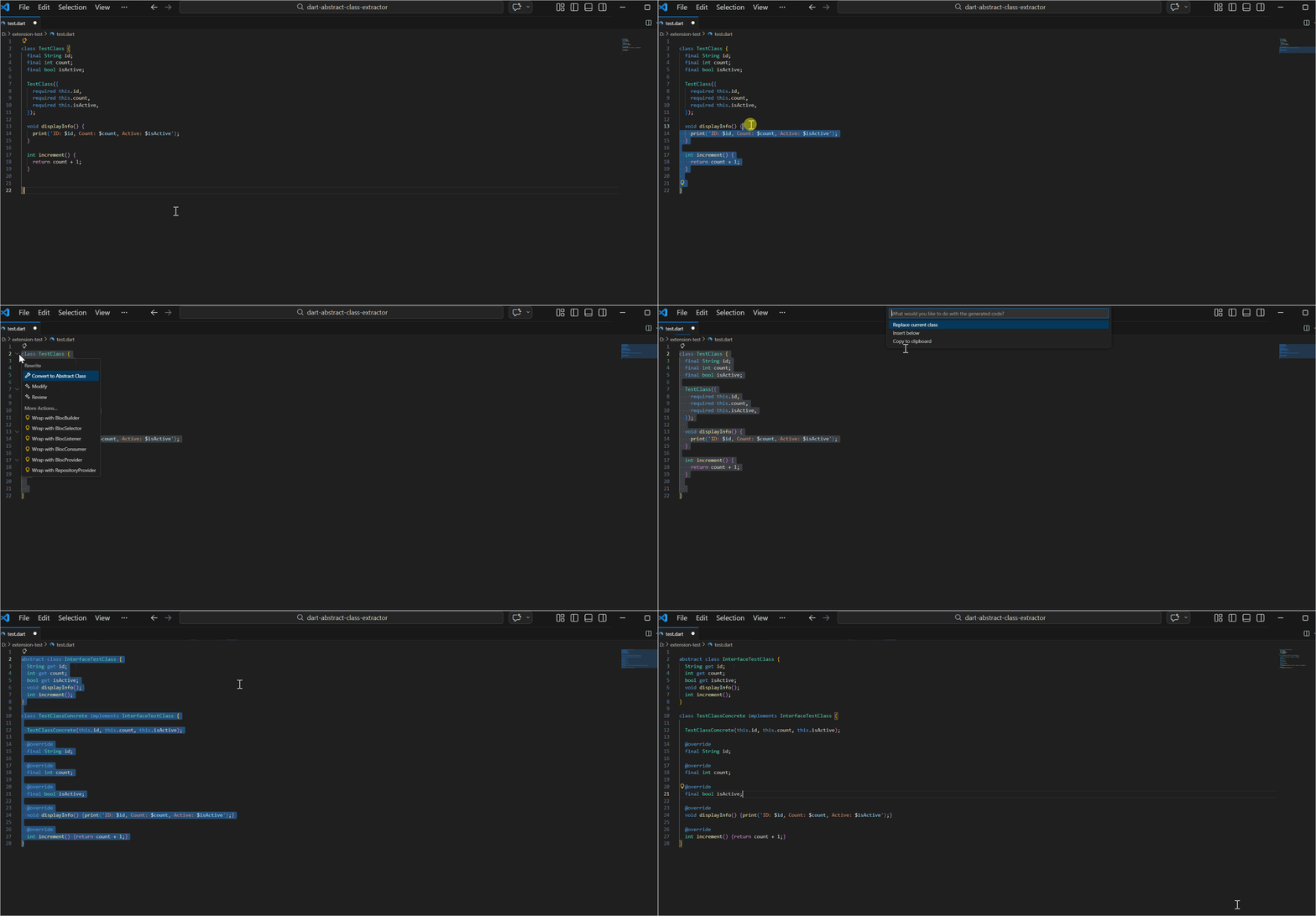
Convert Any Dart Class in Seconds
Select any Dart class, run the command, and the extension generates:
- An abstract interface class (
IClassName) with getters for all public properties and abstract method signatures
- A concrete implementation class (
ClassNameImpl) that implements the interface, preserving all original method bodies
How to use:
Option A — Quick Fix:
- Open a
.dart file in VS Code
- Highlight the class name or anywhere inside the class
- Press
Ctrl+. (Cmd+. on macOS) to open the Quick Fix menu
- Select
Convert to Abstract Class
Option B — Command Palette:
- Open a
.dart file in VS Code
- Place your cursor inside the class you want to convert
- Open the Command Palette (
Cmd+Shift+P / Ctrl+Shift+P)
- Run
Dart: Convert to Abstract Class
- The generated interface and implementation are inserted directly into your editor
Example — input:
class UserRepository {
  final String baseUrl;

  UserRepository({required this.baseUrl});

  Future<User> getUser(String id) async {
    final response = await http.get('$baseUrl/users/$id');
    return User.fromJson(response.body);
  }

  Future<void> deleteUser(String id) async {
    await http.delete('$baseUrl/users/$id');
  }
}
Example — output:
abstract class IUserRepository {
  String get baseUrl;

  Future<User> getUser(String id);
  Future<void> deleteUser(String id);
}

class UserRepositoryImpl implements IUserRepository {
  @override
  final String baseUrl;

  UserRepositoryImpl({required this.baseUrl});

  @override
  Future<User> getUser(String id) async {
    final response = await http.get('$baseUrl/users/$id');
    return User.fromJson(response.body);
  }

  @override
  Future<void> deleteUser(String id) async {
    await http.delete('$baseUrl/users/$id');
  }
}
- ✅ Public properties → abstract getters in the interface
- ✅ Public methods → abstract signatures in the interface
- ✅ Original method bodies preserved in the implementation
- ✅
@override annotations added automatically
- ✅ Constructor generated from properties
- ✅ Private members (
_) are correctly excluded from the interface
- ⚠️ Classes with private fields or setters show a warning — unsupported members are omitted from the output
Requirements
- VS Code
^1.109.0
- A Dart or Flutter project (the extension activates automatically on
.dart files)
- No additional dependencies or SDK setup required — the extension works purely with source text
Extension Settings
This extension contributes the following settings, accessible via File → Preferences → Settings and searching for Dart Abstract Class Extractor:
| Setting |
Default |
Description |
dartAbstractClassExtractor.interfacePrefix |
"I" |
Prefix applied to the generated interface name. For example "I" produces IUserService. |
dartAbstractClassExtractor.implementationSuffix |
"Impl" |
Suffix applied to the generated implementation name. For example "Impl" produces UserServiceImpl. |
Example — custom naming:
If you prefer a different convention, such as Abstract prefix and Service suffix:
// settings.json
{
  "dartAbstractClassExtractor.interfacePrefix": "Abstract",
  "dartAbstractClassExtractor.implementationSuffix": "Service"
}
This would generate AbstractUserRepository and UserRepositoryService instead of the defaults.
Known Issues
- Mixins and
extends relationships are not carried over to the generated classes — the output focuses on the interface contract only
- Classes that rely heavily on private mutable state (private fields + setters) will generate a warning and those members will be omitted — consider refactoring to use public
final fields before extracting
Release Notes
0.6.10
Improved handling of unsupported class members — private fields and setters are now correctly excluded from both the abstract interface and the implementation class. A warning is displayed when the extension detects these members so you know what was omitted.
0.5.1
Fixed a directory path issue on macOS — the extension was incorrectly resolving paths in certain directory configurations, causing failures when the workspace or binary path contained spaces or symlinks. Path resolution is now handled correctly across all standard macOS directory structures. No changes to functionality.
0.4.1
Fixed Windows compatibility — ast_extractor.exe previously failed on some Windows machines due to a binary architecture mismatch. The extension now bundles separate platform-specific binaries for Windows and macOS, and automatically selects the correct one at runtime. No changes to functionality.
0.3.0
Improved distribution — switched to a compiled standalone executable for AST extraction. Users no longer need the Dart SDK installed to run the extension. ast_extractor is now bundled directly with the extension and maintains full support for fields, getters, methods, constructors, async/stream functions, and nested generics.
0.2.0
Major update — migrated parsing from TypeScript + regex to the Dart Analyzer AST for significantly more accurate and stable results. Adds getter generation for fields and computed properties, @override annotations and constructor initialization in implementation classes, and full support for async methods, streams, and nested generics.
0.1.0
Initial release — convert concrete Dart classes to an abstract interface and implementation, preserving method bodies, supporting block-body and arrow-function methods, and automatically excluding private members.
Development
Running Tests
npm run compile
npm test
CI
All pull requests to main must pass the test suite before merging. The CI pipeline:
- Compiles the Dart AST extractor binary on Windows and macOS
- Runs the full TypeScript test suite against the compiled binary