Intel HEX & S-record Image AuditRecomputes every checksum in a .hex/.s19 firmware image and flags bad records, overlaps, gaps, missing EOF and unaligned pages before the image reaches the programmer. Installation Launch VS Code Quick Open ( Ctrl+P), paste the following command, and press enter.Copied to clipboard |

Intel HEX & S-record Image Audit
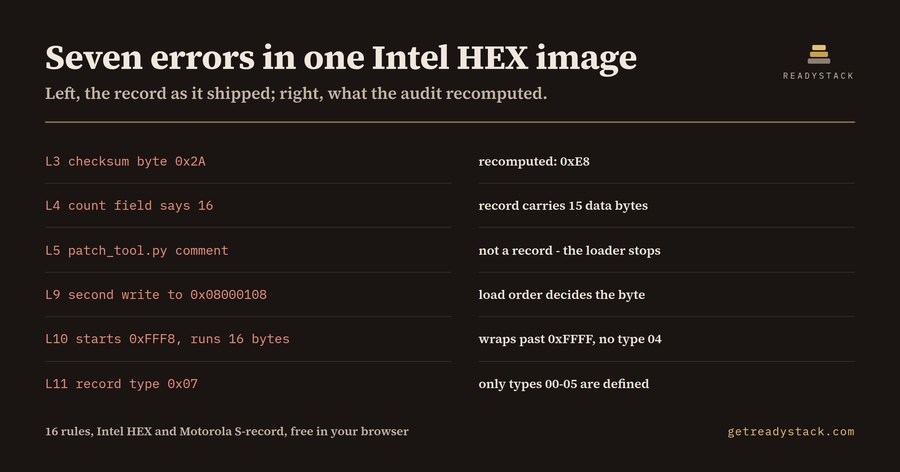
A firmware image is the one artefact in the build that nobody re-reads. It gets merged with a bootloader, hand-patched at the last minute, regenerated by a script or an AI-written patch, mailed to a contract manufacturer — and every one of those steps can leave behind a record whose checksum no longer matches its own bytes. The programmer at the flashing station is where you find out. This extension recomputes them. Open any What it checksRecord integrity — the two's-complement checksum of every Intel HEX record and the Structure — a missing or malformed Address space — every absolute address the image writes is mapped, honouring type 02 and type 04 extended-address records. From that map it reports overlapping records (two records writing the same absolute byte, where the flashed value depends on the load order of the tool), unwritten gaps between blocks, data records that run past Example outputThe 14-line sample image shipped with this extension ( Free and licensedAuditing one image is free and complete — all 16 checks, no key, nothing truncated, in the editor or in the browser. The licence covers a different job: auditing every image in a build output folder in one pass and exporting a dated Markdown audit report you keep as release evidence. Since 11 September 2026 the EU Cyber Resilience Act's reporting obligations for products with digital elements are in force, and a dated, per-image audit record is the kind of thing a technical documentation file is made of. $29 once, one licence key per person or team seat, 7-day full refund. Yardstick: embedded firmware contract work is commonly billed at $90–$150 an hour — one hour of it costs more than this licence. Free in your browser, running the same 16 rules: https://getreadystack.com/tools/hex-image-audit Commands
Format notesIntel HEX record types |