EUDI Wallet Request Lint (OpenID4VP)Lint OpenID4VP presentation requests against the EU Digital Identity Wallet relying-party rules: registered client_id, a stated purpose, minimised claims, encrypted response, live registration. Installation Launch VS Code Quick Open ( Ctrl+P), paste the following command, and press enter.Copied to clipboard |

EUDI Wallet Request Lint (OpenID4VP)
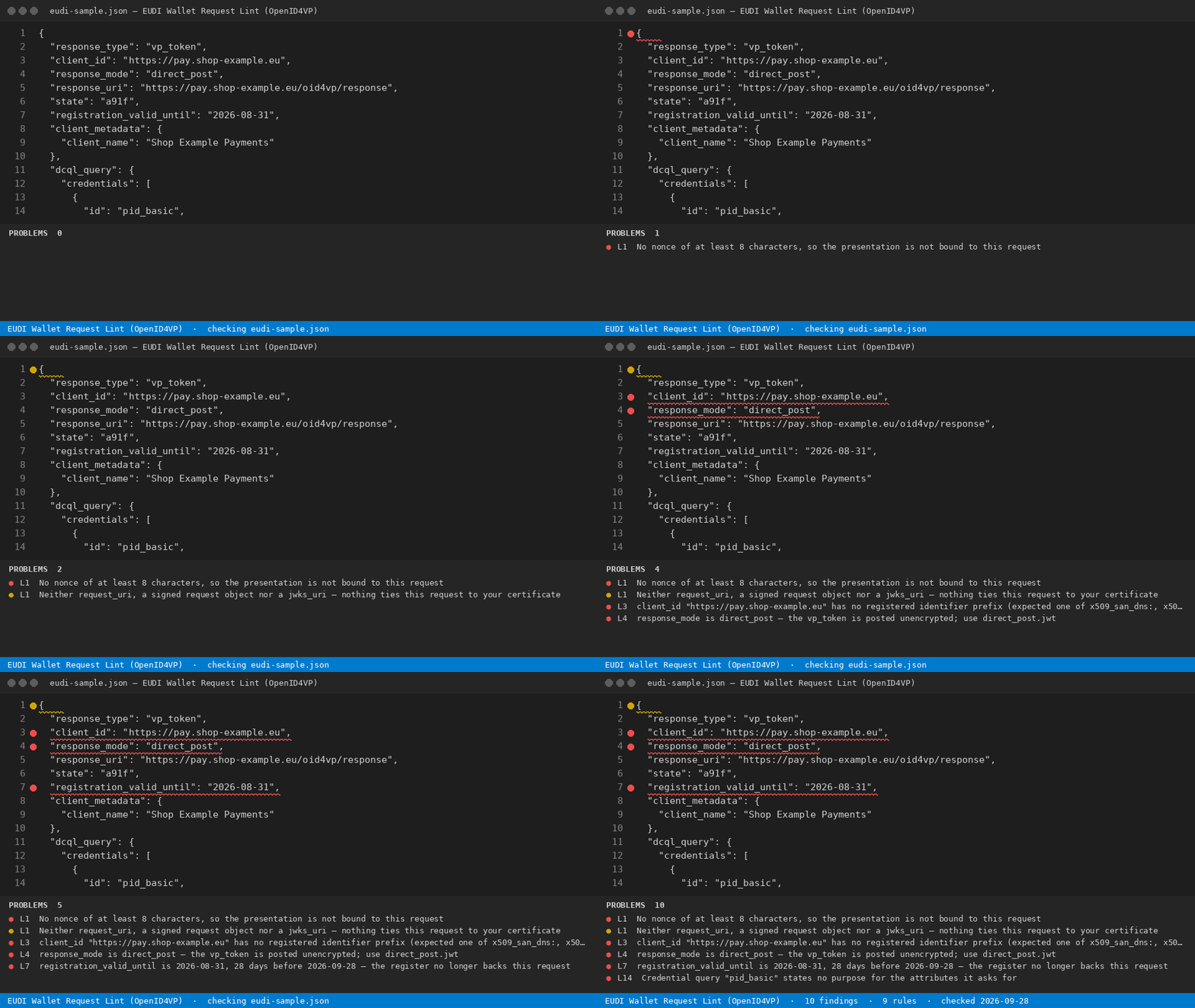
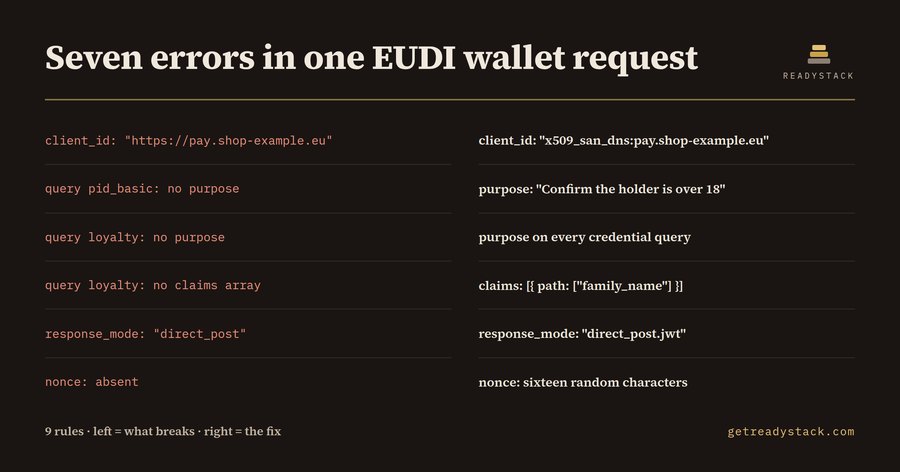
Reads an OpenID4VP presentation request — the JSON your service sends to a user's EU Digital Identity Wallet — and reports every place it does not match the relying-party rules that start applying on 2026-12-24. Nine rules. On the request shipped in The nine rules
Why a date matters hereRegulation (EU) 2024/1183 entered into force on 2024-05-20. Implementing Regulation (EU) 2025/848, which creates the national registers of wallet relying parties, applies from 2026-12-24 — the same date by which every Member State must offer at least one wallet. A request that names attributes your registration does not carry is a request a conformant wallet can refuse, and the fix lives in your JSON, not in the register.
Free and fullFree: lint one request file and read every finding with the article behind it — that job finishes without a key. Full version: scan every request file in the workspace in one pass and export a dated relying-party evidence report you keep. Measure: $29 once is less than one hour of a European contract identity engineer, which is what reading Implementing Regulation (EU) 2025/848 and the ARF against one request set costs in time. Use
Not coveredThe linter reads the request document. It does not fetch your LicenceMIT. See LICENSE.txt. |