 | .NET EOL & CRA Support Window GateReads a .csproj or global.json and dates every target framework against Microsoft's published end-of-support day, then against the support period you promise buyers. Installation Launch VS Code Quick Open ( Ctrl+P), paste the following command, and press enter.Copied to clipboard |

.NET EOL & CRA Support Window Gate
Hub: https://getreadystack.com/tools/dotnet-eol-support-gate Open a The yardstick this usesThe dates are not opinions. They come from the .NET release lifecycle:
The second questionThe EU Cyber Resilience Act (Regulation (EU) 2024/2847) entered into force on 2024-12-10. Its vulnerability-reporting duties apply from 2026-09-11 and the rest applies from 2027-12-11. Article 13(8) makes the manufacturer determine a support period and hold it for at least 5 years unless the expected use is shorter. A support period is a patching promise, and a patching promise on a runtime that stops being patched is not a promise anyone can keep. So the gate does the subtraction nobody does by hand. Give it the day you place the product on the
market and the number of years you are promising, and it reports the months of overhang: with a
5-year period starting 2026-12-01, a Declare the period in the project file and the gate uses your number instead of the 5-year floor: What it reads
The 10 checks
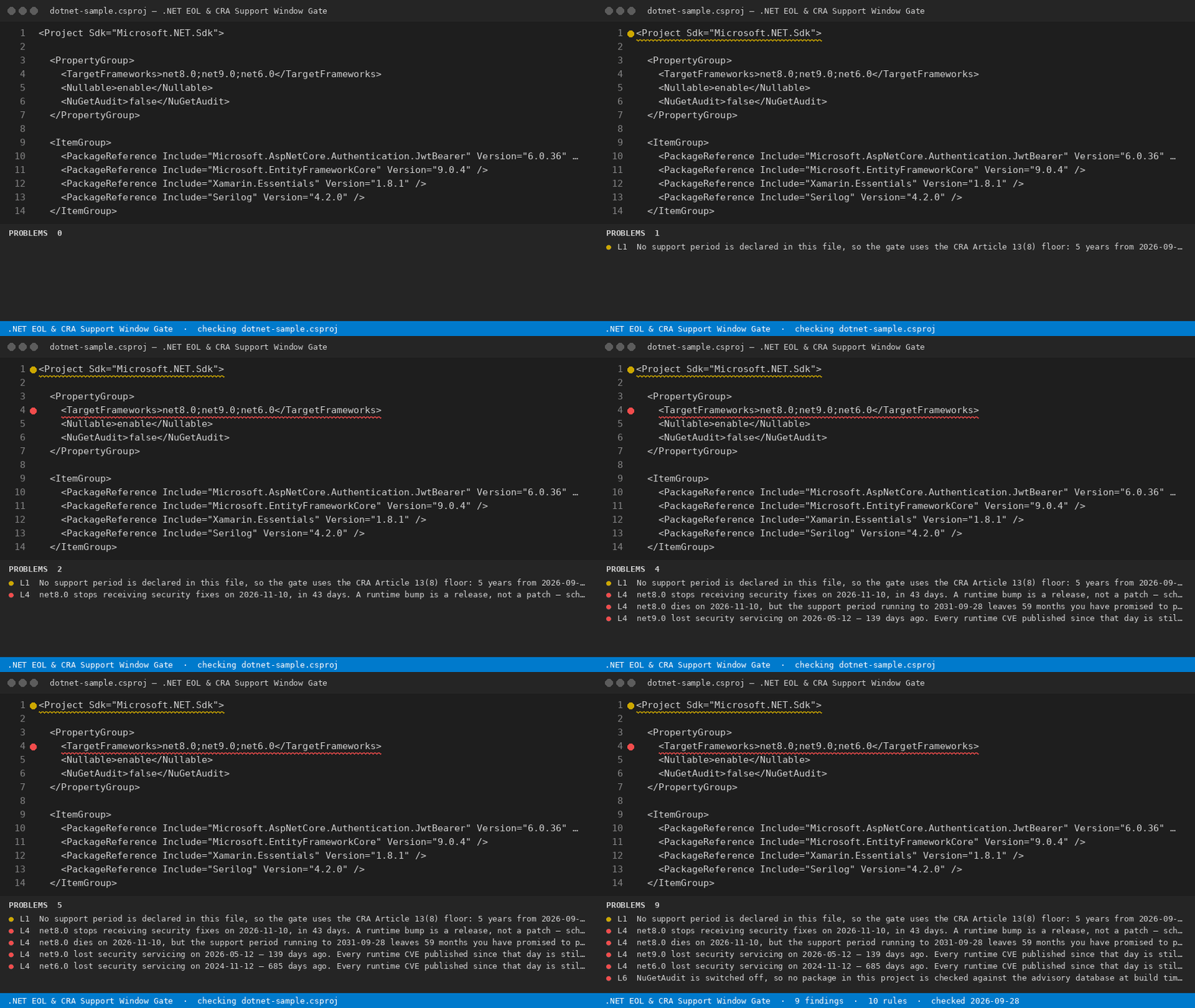
Each finding carries the level, the line number, the rule id and the date arithmetic behind it. The bundled dirty fixture returns 9 findings from those 10 rules; the clean fixture returns none. Free and licensedDating the file in front of you is free and needs no key: open the file, run the command, read every date. The workspace sweep — every project file in the solution in one pass, written out as a dated support-window evidence file you keep — is the licensed part, and the panel asks for a key at the moment you ask for it: $29 once, one licence key per person or team seat — the workspace sweep and its evidence file. LicenceMIT for the extension source. The .NET lifecycle dates are facts published by Microsoft; the CRA article references are from the published regulation text. |