JSON to Object Converter
A VSCode extension that converts JSON to type definitions for various programming languages.
Demo
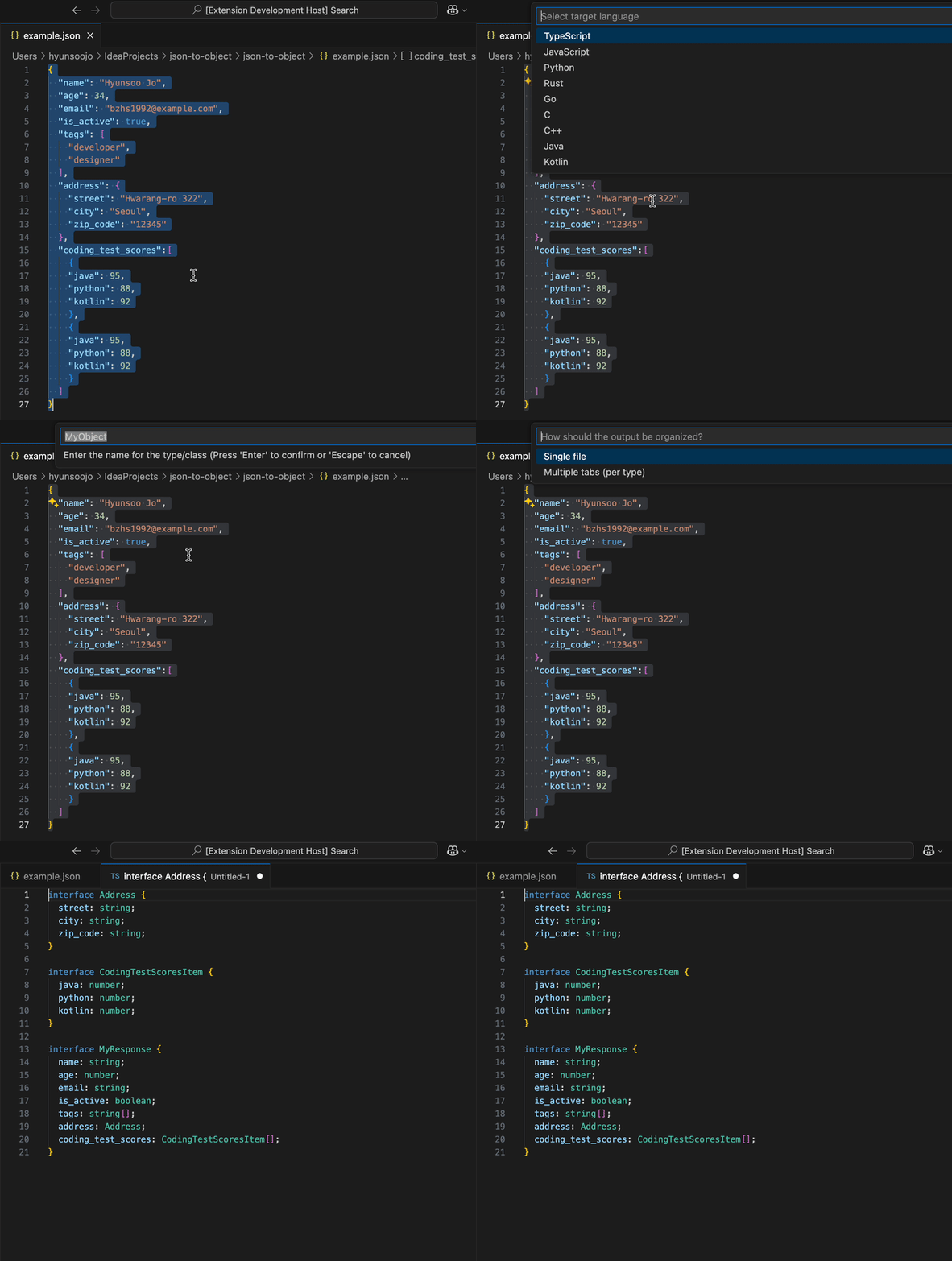
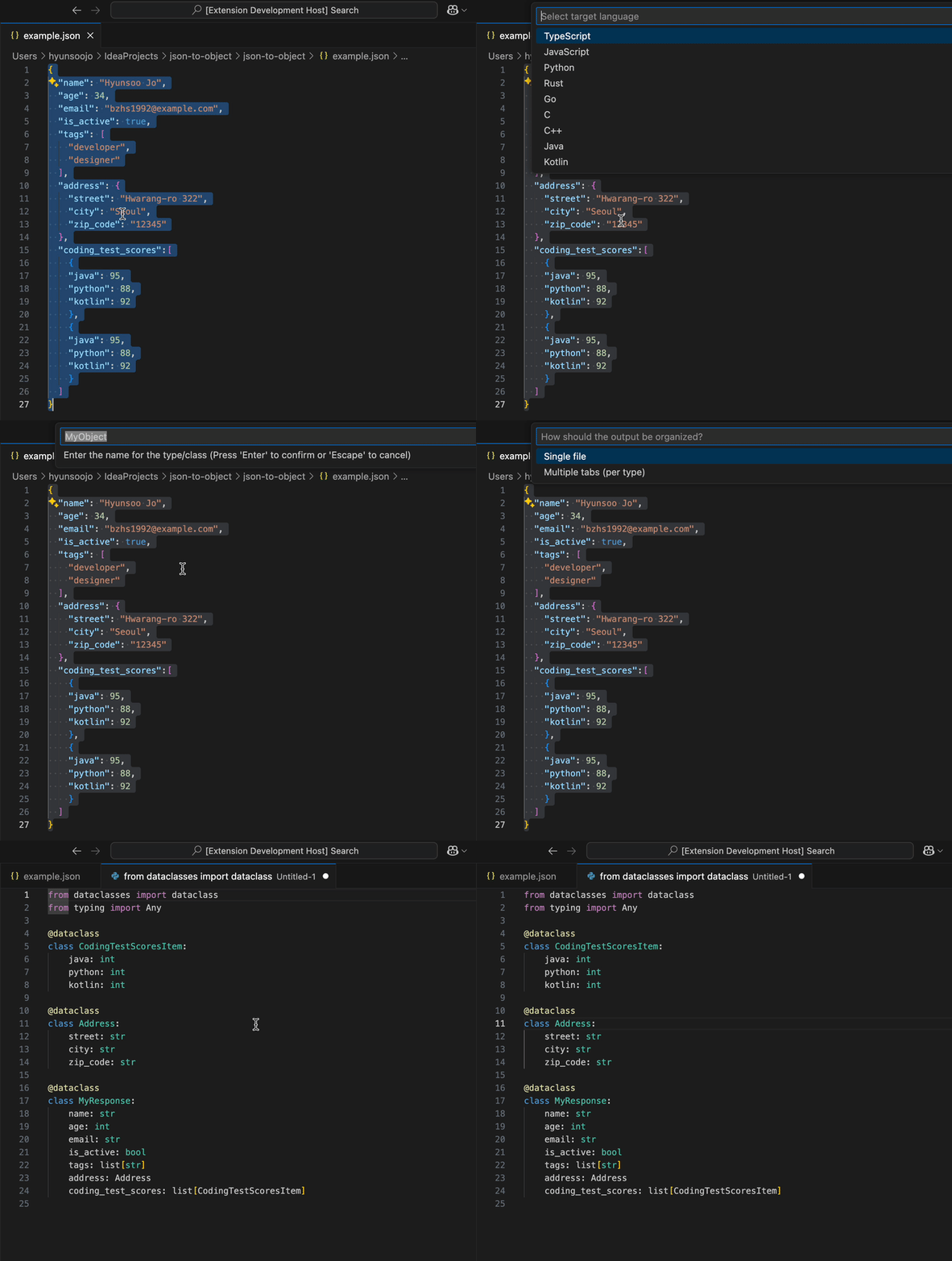
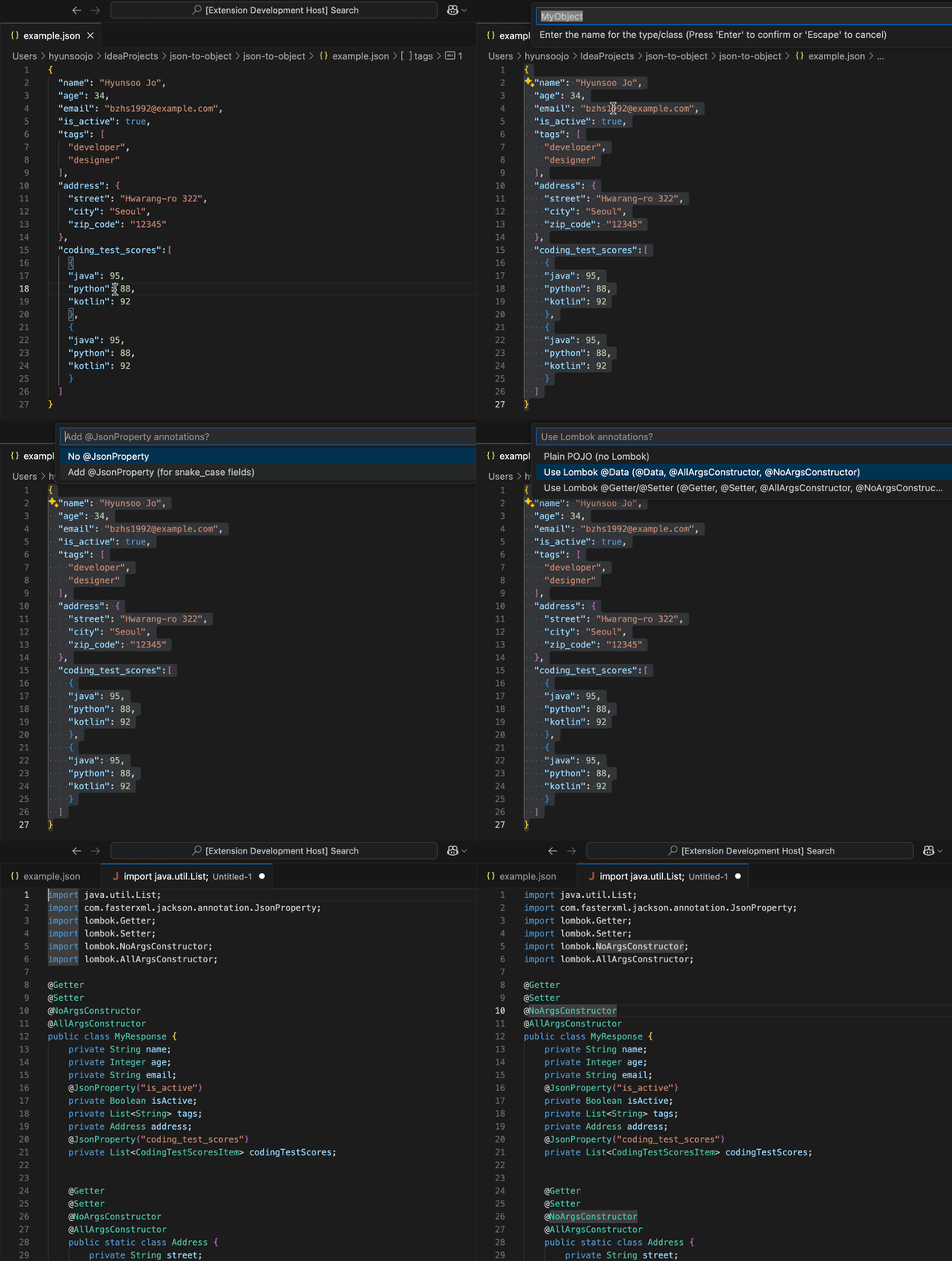
Supported Languages
- TypeScript - Interface
- JavaScript - JSDoc + Class
- Python - Dataclass
- Java - Record or Class with @JsonProperty, Getters/Setters/Constructor + Lombok
- Kotlin - Data Class with @JsonProperty
- Go - Struct with JSON tags
- Rust - Struct with Serde
- C - Typedef Struct
- C++ - Class
Features
- Automatic nested object handling (generates separate classes/structs)
- Array element type inference
- Language-specific naming conventions (PascalCase, snake_case, etc.)
- Output Mode: Single file or multiple tabs (per type)
- Java Options:
- Class or Record (Java 14+)
- Lombok support (@Data, @Getter/@Setter)
- Constructor generation (NoArgs + AllArgs)
- Getter/Setter methods
- Inner class or separate classes
- Java/Kotlin: @JsonProperty annotation support
Usage
- Select JSON text in your editor
- Right-click → "Convert JSON to Object" (or
Cmd+Shift+P → "Convert JSON to Object")
- Choose your target language
- Enter the type/class name
- Select output mode (single file or multiple tabs)
- Configure language-specific options (if applicable)
- Generated code opens in new tab(s)
Examples
{
  "name": "John Doe",
  "age": 30,
  "email": "john@example.com",
  "isActive": true,
  "tags": ["developer", "designer"],
  "address": {
    "city": "Seoul",
    "zipCode": "12345"
  }
}
TypeScript Output
interface Address {
  city: string;
  zipCode: string;
}

interface User {
  name: string;
  age: number;
  email: string;
  isActive: boolean;
  tags: string[];
  address: Address;
}
Python Output
from dataclasses import dataclass
from typing import Any

@dataclass
class Address:
    city: str
    zip_code: str

@dataclass
class User:
    name: str
    age: int
    email: str
    is_active: bool
    tags: list[str]
    address: Address
Java Output
import java.util.List;

public class User {
    private String name;
    private Integer age;
    private String email;
    private Boolean isActive;
    private List<String> tags;
    private Address address;

    // getters and setters...

    public static class Address {
        private String city;
        private String zipCode;
        // getters and setters...
    }
}
Go Output
type Address struct {
	City    string `json:"city"`
	ZipCode string `json:"zipCode"`
}

type User struct {
	Name     string   `json:"name"`
	Age      int64    `json:"age"`
	Email    string   `json:"email"`
	IsActive bool     `json:"isActive"`
	Tags     []string `json:"tags"`
	Address  Address  `json:"address"`
}
Rust Output
use serde::{Deserialize, Serialize};

#[derive(Debug, Serialize, Deserialize)]
pub struct Address {
    pub city: String,
    #[serde(rename = "zipCode")]
    pub zip_code: String,
}

#[derive(Debug, Serialize, Deserialize)]
pub struct User {
    pub name: String,
    pub age: i64,
    pub email: String,
    #[serde(rename = "isActive")]
    pub is_active: bool,
    pub tags: Vec<String>,
    pub address: Address,
}
Installation
From Marketplace
Search for "Json to Objects (9 languages)" in VSCode Extensions.
Local Development
# Install dependencies
npm install

# Test locally (F5 in VSCode)
# Or package and install:
npm install -g @vscode/vsce
vsce package
code --install-extension json-to-object-1.0.1.vsix
License
MIT