Overview
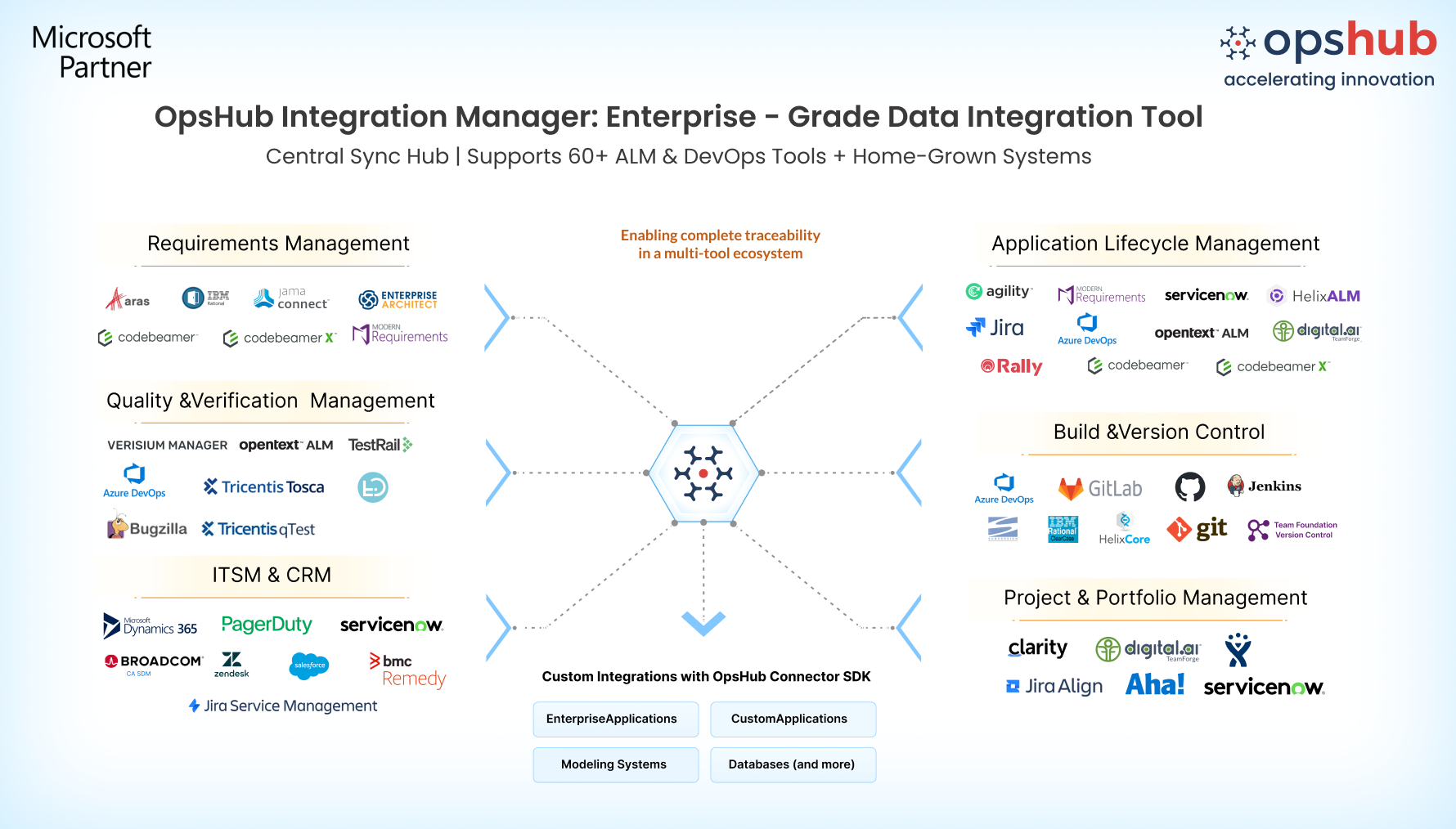
QA and dev teams need to streamline testing across complex, distributed environments. Without robust integration, they face tool silos, manual data transfers, and limited visibility, causing inefficiencies and delays. Leverage OpsHub Integration Manager (OIM), an enterprise-grade sync tool to unify data, eliminate silos, enhancing cross-functional collaboration for faster, more reliable releases.
Learn more about OIM-driven Tosca-ADO integration.
Why Integrate Azure DevOps and Tricentis Tosca with OIM?
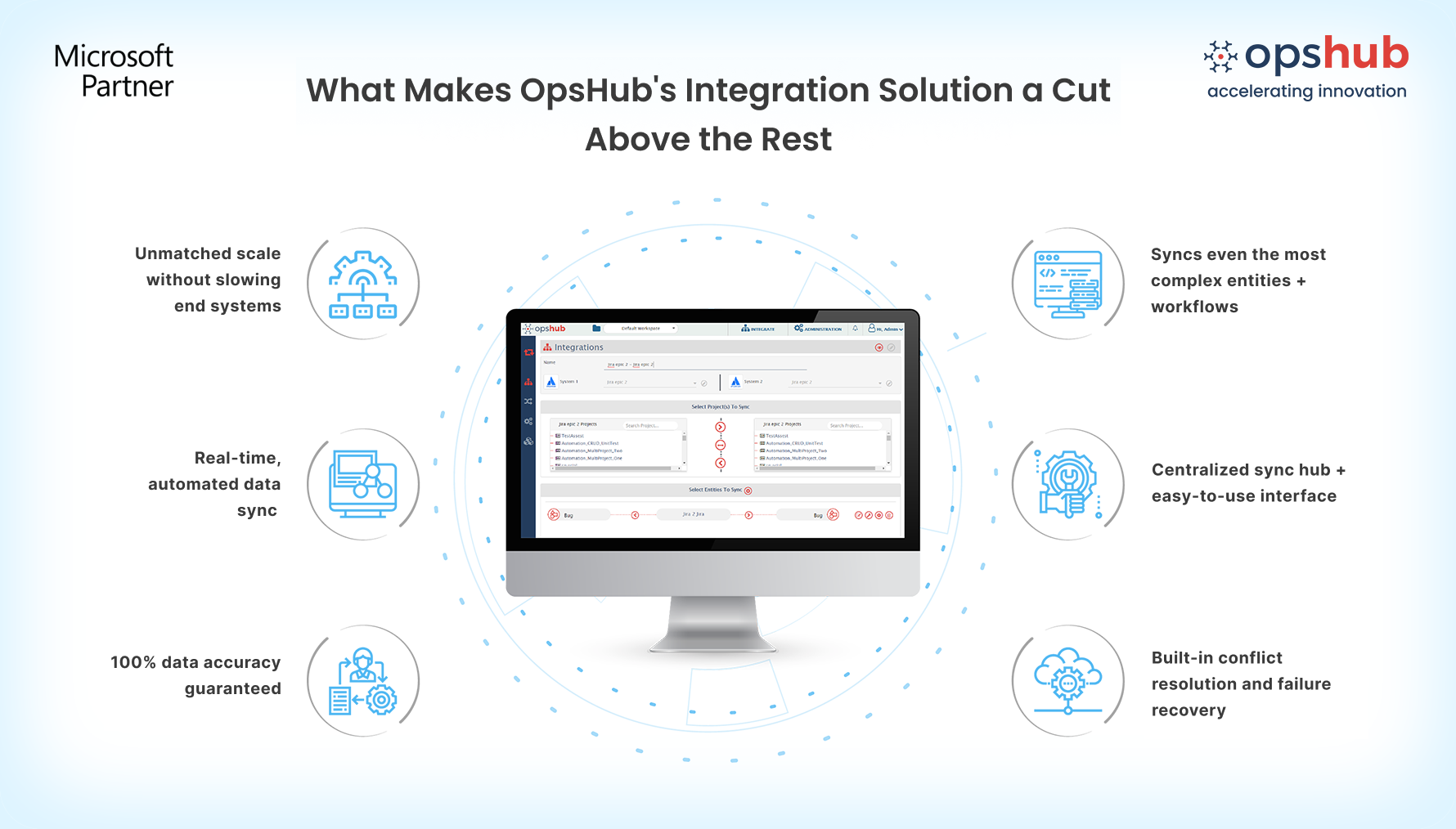
Truely Bidirectional Sync: Achieve real-time, two-way synchronization of test entities across systems, eliminating manual errors and duplication. Stay updated and track progress from your work tools without switching platforms.
Large-scale Testing: Amplify the platform’s continuous testing capabilities, enabling modern enterprises to scale their testing across 1000+ projects and growing teams with ease.
Full-Context Data Synchronization: Beyond test cases and execution results, ensure rich data sync, including attachments, comments, links, inline content, and images. This ensures that teams always have complete test context, reducing miscommunication and rework.
Seamless Project & Work Item Movement: Move projects and work items effortlessly while preserving attachments, comments, and history.
User-Friendly Interface: Configure Tosca-ADO integration through a drag-and-drop, GUI-based setup, offering full sync control for both technical and non-technical users.
Built-in Fault Tolerance: OIM’s eventual consistency model ensures every entity and update reaches the target system as expected. It includes mechanisms to handle downtime, failures, and conflicts, guaranteeing smooth synchronization.
Automated User Mapping: Match users by email or name automatically, removing the need for manual mapping.
Enterprise-Grade Security:: Ensure compliance with robust data encryption and user access controls.
Flexible Deployment: Deploy OIM on-premise or in the cloud to suit your business needs.
Book a free demo slot to see how OIM facilitates Tosca and Azure DevOps bidirectional integration.
Popular Use Cases
OIM takes care of the following:
Centralized Defect Management: Defects detected during testing in Tosca are automatically created and updated as work items in Azure DevOps, ensuring developers get immediate visibility and can address them without delays.
Requirements Traceability: Linking requirements between Tosca and Azure DevOps for impact analysis and comprehensive reporting.
Seamless Test Management: Sync updates in test plans, executions, and results across both platforms without data loss.
Integrate Azure DevOps and Tricentis Tosca in 5 Easy Steps
Configure ADO and Tosca systems.
Select project(s) to be integrated.
Select entity(s) to be integrated.
Select sync direction and sync filter.
Click and map fields to be integrated.
Make your Tosca and ADO systems work as one. No rework. No delays. Just clean, reliable integration. Try OpsHub for Free.
Connect with our Integration Engineer to discuss the use case.
Frequently Asked Questions (FAQs)
Q1) How does the Tricentis Tosca and Azure DevOps integration via OIM work?
Ans 1) The integration works by incrementally polling changes from Tosca and Azure DevOps using their REST APIs, so only updated data is processed instead of running heavy full scans.
The extracted data is passed through OpsHub’s transformation engine, which maps and converts information between both systems based on the configured integration rules. During this process, it intelligently handles differences in time zones, field formats, users, attachments, relationships, and other system-specific data structures.
Once transformed, the data is synchronized to the target system through its APIs while maintaining context and consistency. The integration continuously processes changes in near real time, ensuring both systems stay aligned without manual effort.
Q2) What are the main benefits of integrating Tricentis Tosca with Azure DevOps?
Ans 2) The main benefit is removing the gap between testing and development. Without integration, teams work in separate tools, leading to outdated data, duplicated effort, and slower feedback. With integration:
- Test cases, defects, and execution results stay automatically in sync
- Developers get immediate visibility into test outcomes
- Release confidence improves with shared, up-to-date data
- Manual updates are reduced, saving time
Q3) What data can be synced between Tosca and Azure DevOps?
Ans 3) The integration supports bidirectional sync of key testing entities, including:
- TestCase: test definitions and properties
- ExecutionEntry: planned test executions
- ExecutionTestCaseLog: test run logs and outcomes
- TCFolder: test case organization structure
- Requirement: requirements linked to tests
- RequirementSet: grouped requirements for traceability
- Module: reusable test modules
This ensures end-to-end traceability from requirements to execution results across both systems.
Q4) What challenges can arise when integrating Tosca CI with Azure DevOps?
Ans 4) Key challenges in integrating Tosca with Azure DevOps
Complex entity mapping and traceability : Tosca entities like TestCase, ExecutionEntry, ExecutionTest CaseLog, Requirement, RequirementSet, Module, and TCFolder do not directly align with Azure DevOps work items, tests, and pipelines. Maintaining accurate mappings while preserving relationships and traceability across both systems becomes challenging as data evolves.
Handling execution data at scale : Tosca generates detailed execution logs and results that need to be reflected in Azure DevOps pipelines and dashboards. At scale, syncing large volumes of test and work item data without delays or inconsistencies becomes difficult.
Retaining folder and module hierarchy : Tosca organizes tests using folders and modules, while Azure DevOps does not follow the same hierarchical structure. Preserving this hierarchy during bidirectional synchronization requires robust data modeling to ensure structure and context are not lost.
Enterprise grade integration solutions like OpsHub Integration Manager (OIM) help address these challenges by managing mappings, handling execution data, preserving hierarchy, and ensuring reliable synchronization across both systems.
Q5) Does Tosca integrate with Azure DevOps in real time?
Ans 5) Yes. Updates between Tosca and Azure DevOps sync in near real time, usually within seconds to a few minutes.
With OpsHub OIM, test results, defects, and updates are automatically reflected in Azure DevOps, helping teams stay aligned without manual effort or tool switching.

