Set SSIS variables from data flow column values — no Script Task required.
Pick any upstream column and assign its value to an SSIS variable using one of seven modes:
Set, Increment, IncrementByBuffer, IncrementByColumnValue, Append, AppendAndReplacePlaceholders,
or SetWithReplacePlaceholders. Build multi-row strings with headers and footers, count rows,
sum column values, and handle NULLs gracefully — all without writing a single line of code.
Part of ZappySys SSIS PowerPack — this component is FREE.
Recommended starting point
Pro Tip: The Visual Studio download installs a basic extension.
Use the guide above to install and run the full SSIS PowerPack (all connectors & UI).
Compatibility: SQL Server 2012–2025+ (32/64-bit) | Azure Data Factory / Azure-SSIS IR Ready
⚡ Key Benefits
- No-Code Variable Assignment — Set SSIS variables from upstream column values without a Script Task
- Multiple Set Modes — Choose from 7 modes including Set, Increment, Append, and placeholder replacement for flexible variable manipulation
- Row-by-Row Accumulation — Use Append mode with custom headers, footers, and separators to build strings across all pipeline rows
- Increment & Count Support — Increment variables by a fixed number, by buffer size, or by upstream column value to count or sum rows
- NULL-Safe Operation — Configure a custom fallback value when upstream column data is NULL
📸 Visual Overview & Setup
|
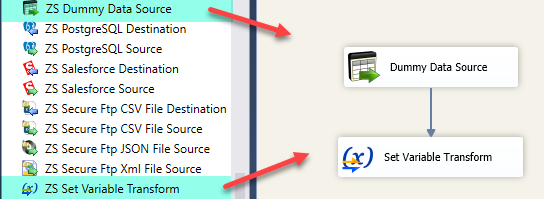
1. Drag & Drop from Toolbox
|
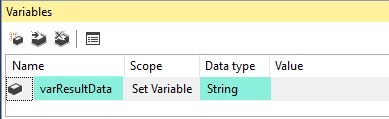
2. Create SSIS Variable
|
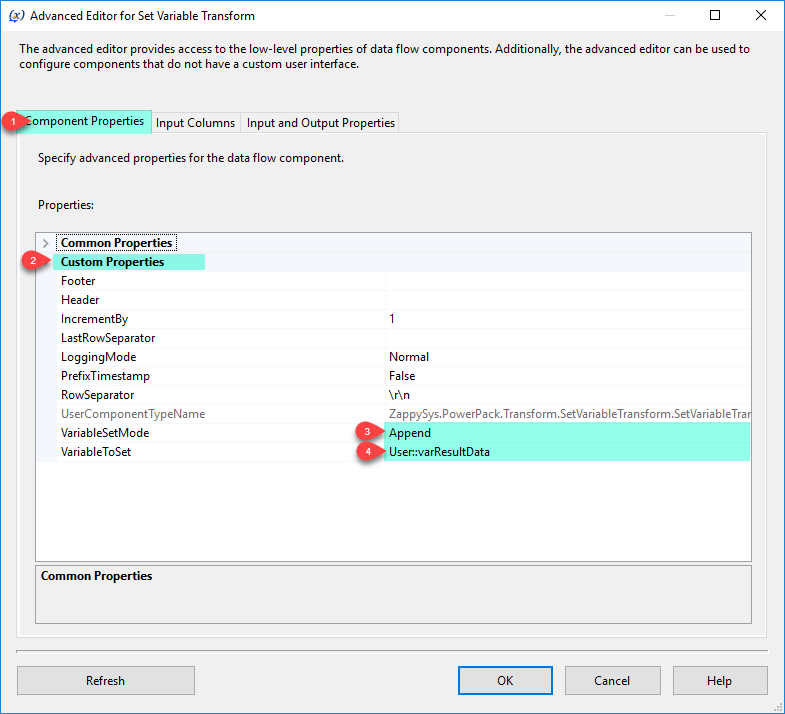
3. Configure Transform & Set Mode
|
|
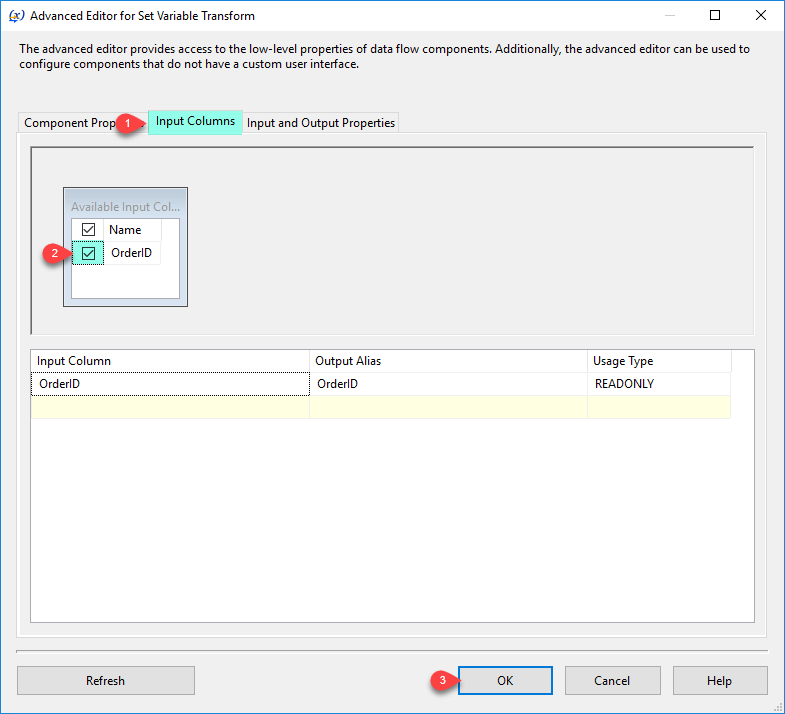
4. Select Input Column
|
5. Execute & Verify Variable Value
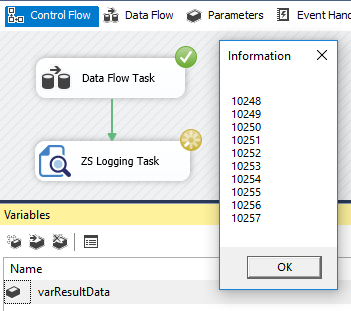
|
6. Advanced Settings UI
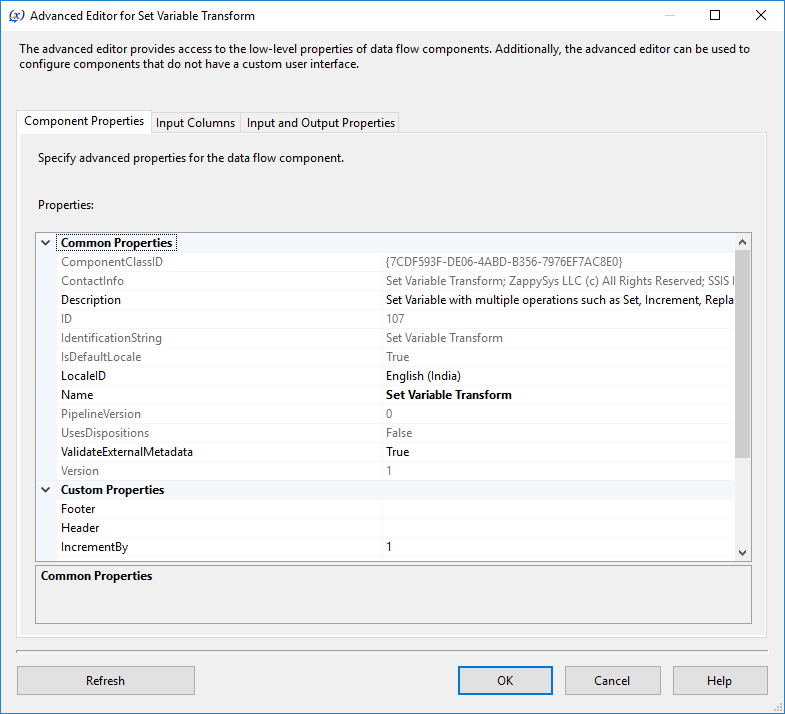
|
🔧 Key Features
Variable Set Modes
- Set — Assign the upstream column value directly to the variable
- SetWithReplacePlaceholders — Inject the column value into a template string using the
<%value%> placeholder
- Append — Concatenate each row's column value to the variable across all pipeline rows
- AppendAndReplacePlaceholders — Append with placeholder-based template support
- Increment — Add a fixed positive or negative number to the variable each row
- IncrementByBuffer — Increment the variable by the total row count of each buffer
- IncrementByColumnValue — Add the upstream column's numeric value to the variable (e.g., running sum)
Append Mode Options
- Configurable Row Separator (supports
\r\n, \t, \n)
- Separate Last Row Separator for clean list termination
- Optional Header and Footer strings around the accumulated result
Placeholder Support
- Use
<%value%> to inject upstream column value into a template string
- Reference other SSIS variables inline using
{{User::MyVar}} or {{System::PackageName}}
NULL Handling
- Enable
UseCustomValueForNull to substitute NULL inputs with a custom string
- Defaults: NULL strings → blank, NULL numeric types →
0
Diagnostics
- Logging level: Normal, Medium, Detailed, Debugging
- Optional timestamp prefix on log messages
Important Usage Note
- Connect to a downstream component (e.g., ZS Trash Destination) or set
RunInOptimizedMode=false on the Data Flow task — otherwise SSIS Engine may skip the unattached transform during optimized execution
💡 Common Use Cases
Common real-world scenarios where this transform eliminates the need for a Script Task:
-
Row Counting: Increment a counter variable per row to track pipeline throughput.
Example: Use IncrementByBuffer mode to count total rows processed.
-
Building Delimited Lists: Accumulate column values into a comma-separated string.
Example: Append customer IDs with a comma separator for use in a downstream SQL query.
-
Capturing Last Row Value: Overwrite the variable each row to retain the final value from a sorted dataset.
Example: Capture the latest timestamp from a sorted source for incremental load tracking.
-
Running Totals: Sum a numeric column across all rows without a Script Task.
Example: Use IncrementByColumnValue to accumulate a revenue column.
-
Building Dynamic Strings: Inject column values into a JSON or SQL template per row.
Example: Build a JSON array body for a downstream REST API call.
🎯 Summary
Replace Script Tasks with a simple, configurable transform that sets SSIS variables from data flow column values.
Count rows, build lists, capture last values, and inject column data into templates — all with zero code.
Trusted by Developers & IT Teams Worldwide
- Built for SSIS Workflows: Purpose-built for high-performance ETL and complex integration scenarios.
- Expert Technical Support: Direct access to engineers via email and remote screen-share sessions.
- Proven Enterprise Scale: Trusted by 3000+ teams across 90+ countries, including Fortune 500.
|
SSIS PowerPack
Includes SSIS Set Variable Transform

Read reviews on Capterra →
|
Start Automating Workflows with SSIS PowerPack
Includes connectors for APIs, databases & cloud apps. Build robust ETL workflows without custom scripting.
Full functionality is FREE for development within Visual Studio
| |

