Time in State for Calculating Azure DevOps Work Item StatesTime in State calculates how long work items stay in each status of your workflow. By analyzing state change history, it measures the exact duration spent at every stage - from creation to completion. As a result, you can:
Click the image below ⬇️ to watch a short overview video and explore the main features of the extension in action.
The extension works with all Azure DevOps processes - Basic, Agile, Scrum, CMMI, and fully supports custom workflows and custom states, adapting to your existing setup without requiring process changes. 🚀 What is Time in State?Time in State is your all-in-one tool for analyzing workflow in Azure DevOps.
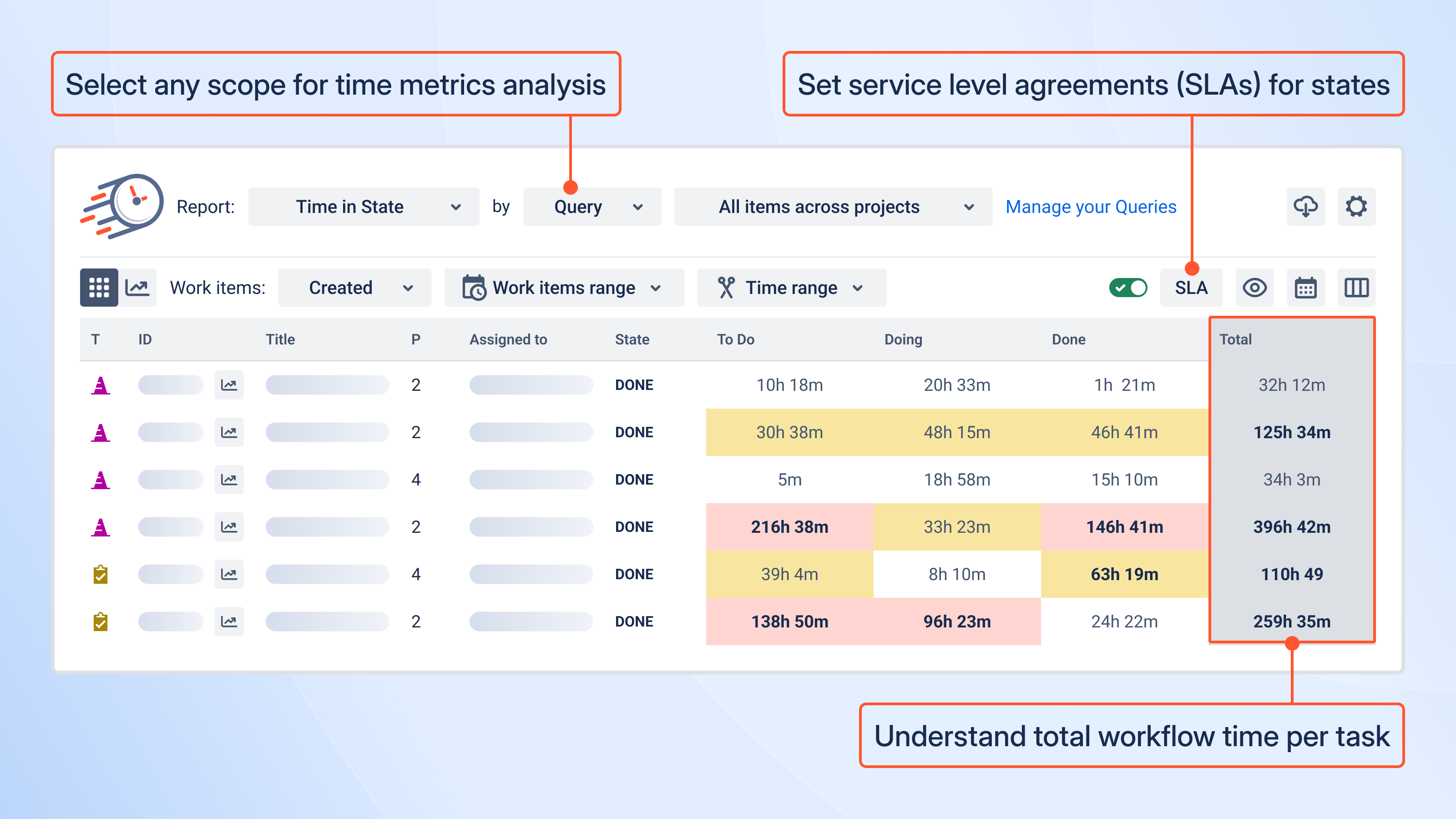
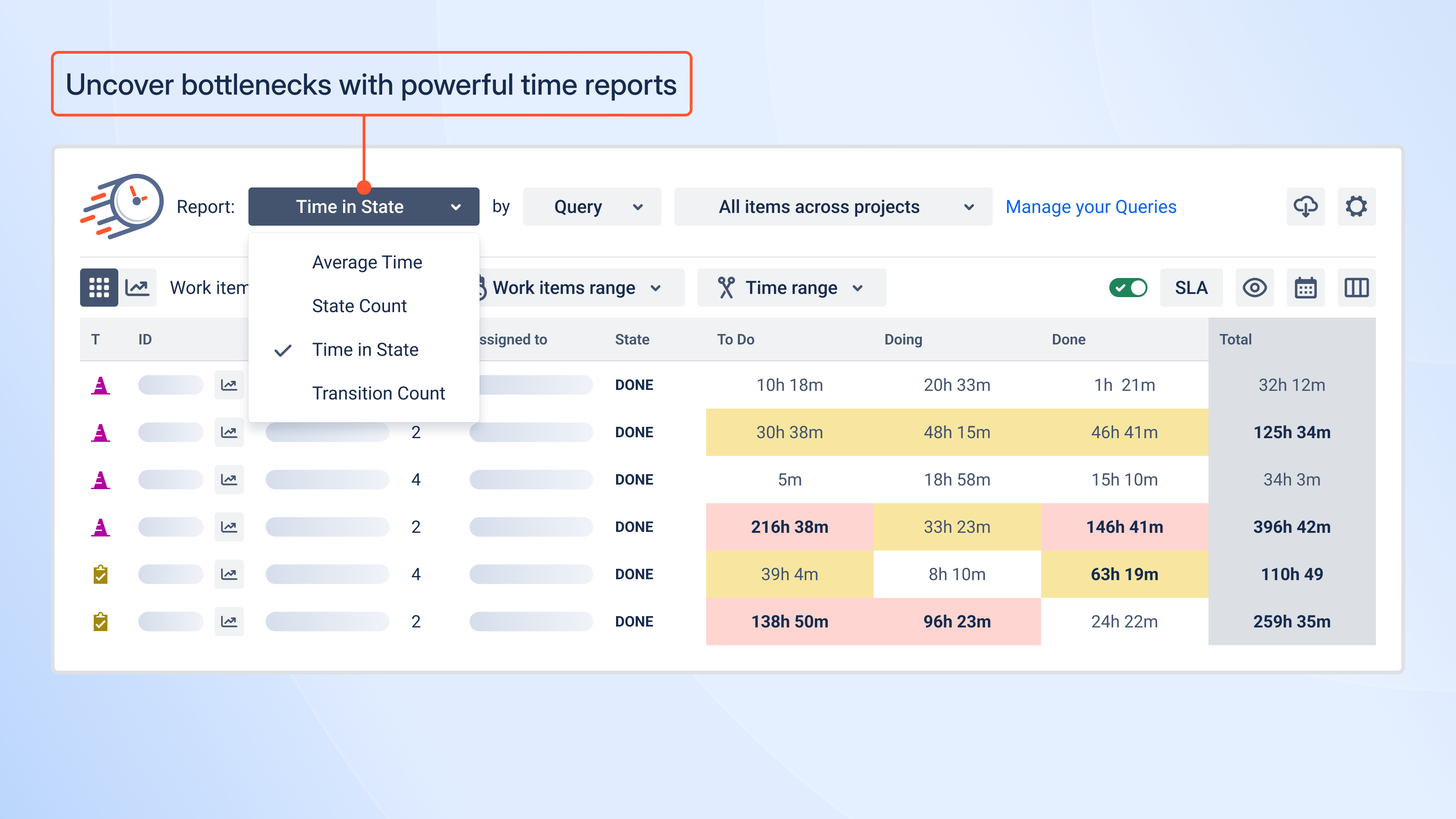
1. Detailed Time Reports for Workflow Optimization
Together, these metrics help teams evaluate workflow efficiency, detect delays, and improve process predictability.
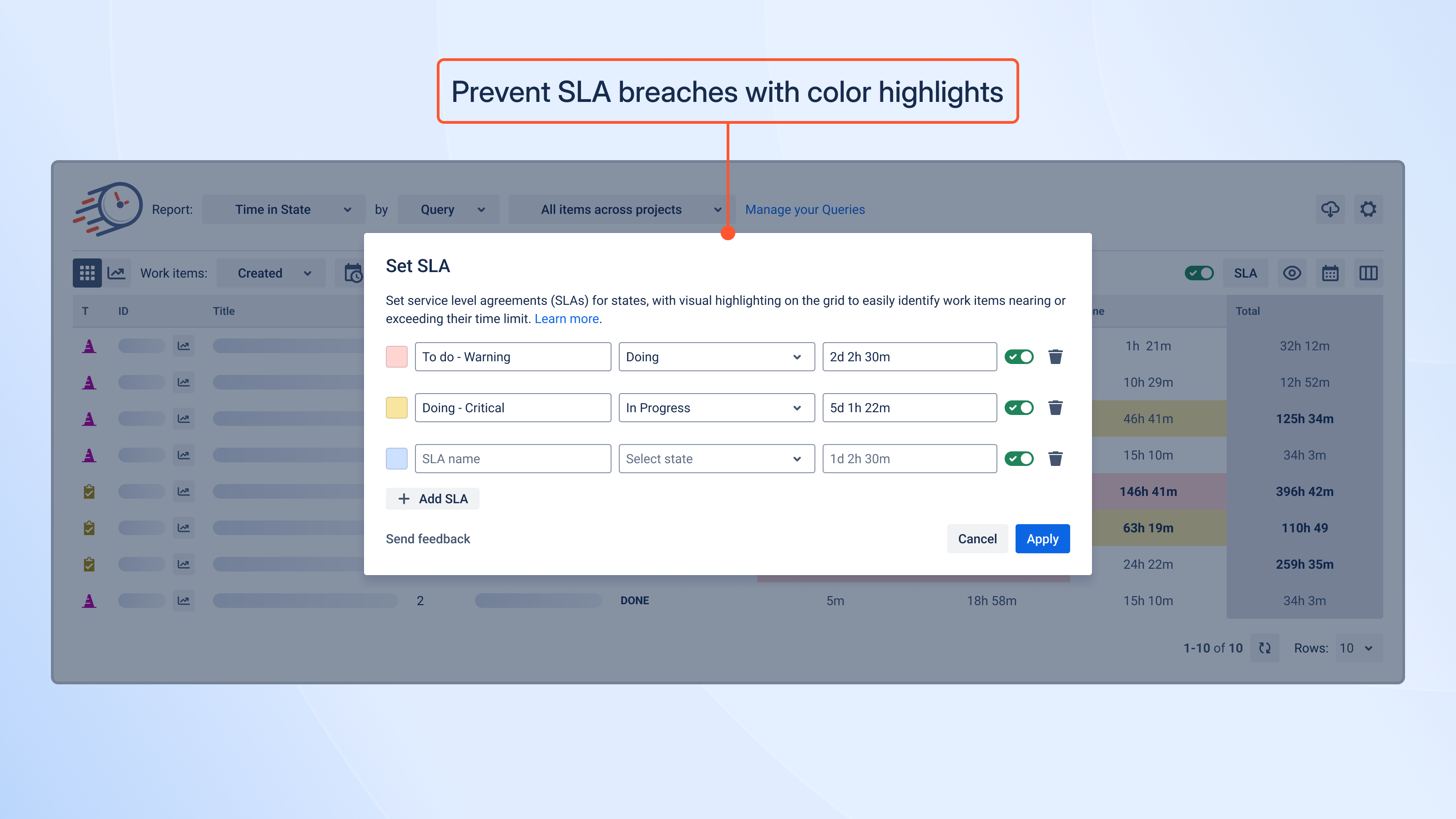
2. Define SLA Goals for Time in StateWith the SLA feature, you can visually highlight work items that are approaching or exceeding defined time limits. By setting time thresholds for specific workflow states, the report automatically marks items with color indicators, helping you quickly identify risks and delays.
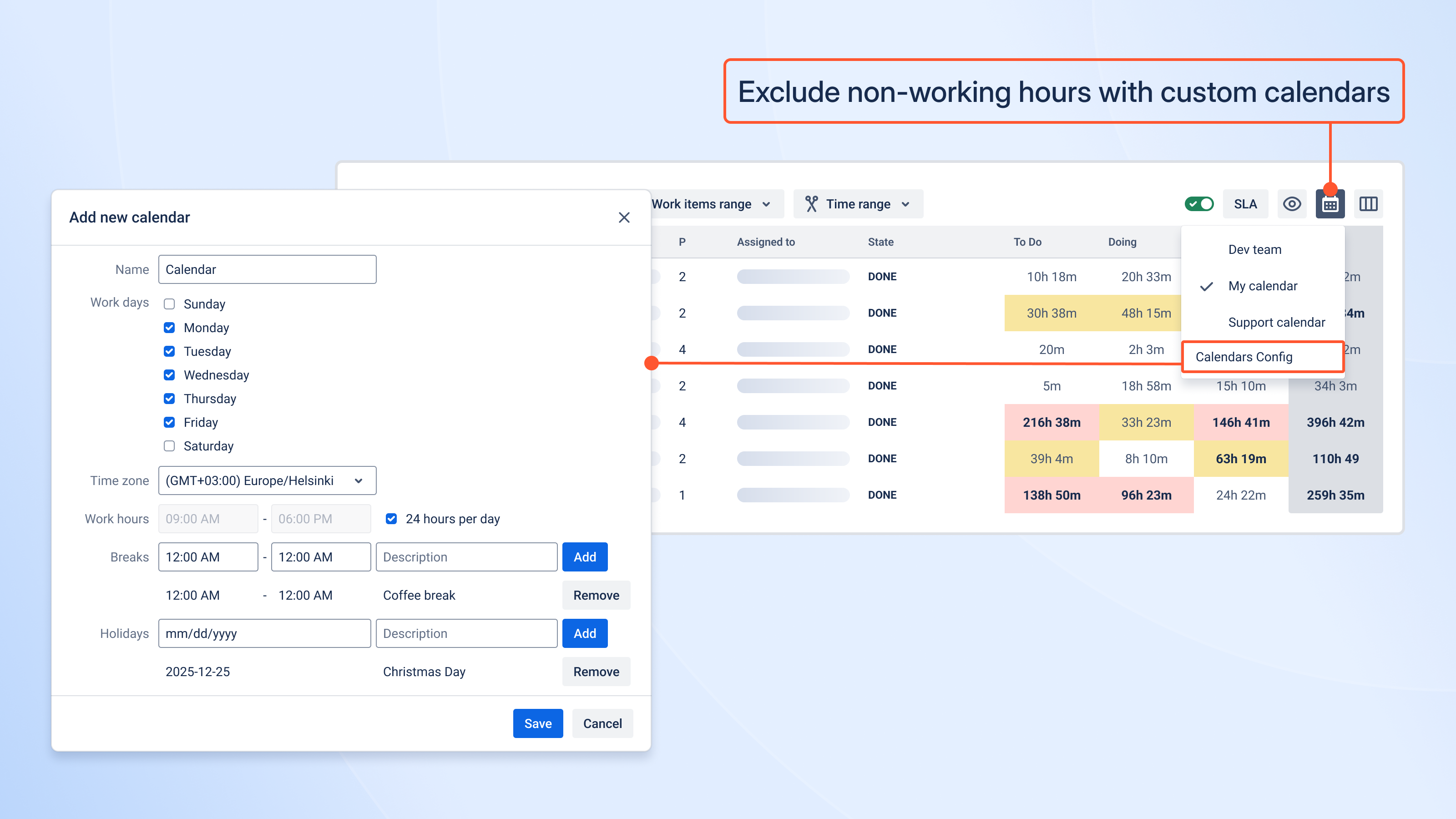
3. Tailor Your Work Hours for Accurate ReportsTime in State allows you to configure custom working calendars to ensure accurate time calculations. Configure your team’s schedule to ensure accurate time tracking and reporting to avoid inflated or misleading time metrics.
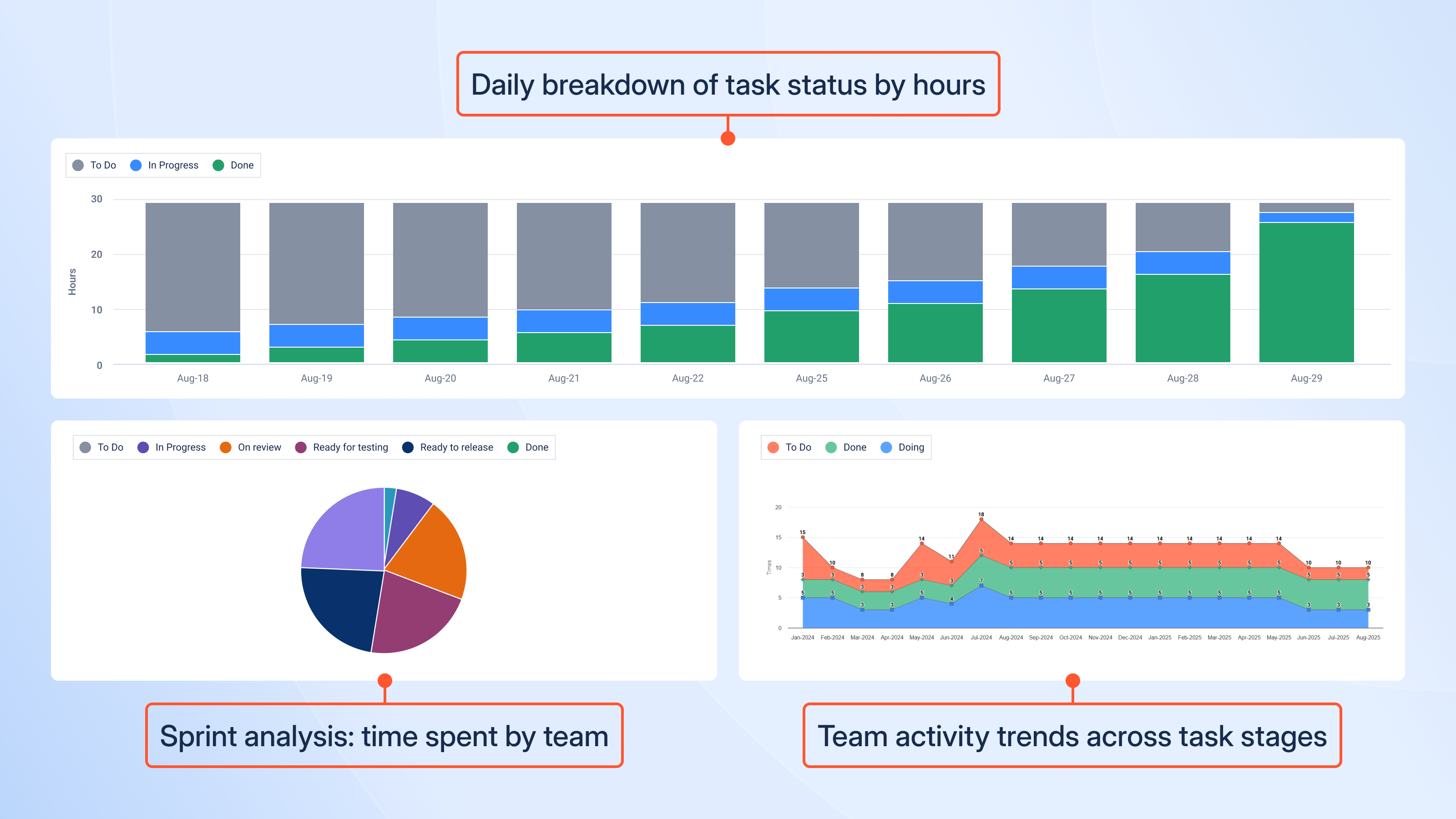
4. Workflow Insights Through Clear Data VisualizationUsing the collected data, you can easily visualize workflow insights and share them with your team.
Use visuals in reports, presentations, and stand-ups to support continuous improvement with data insights.
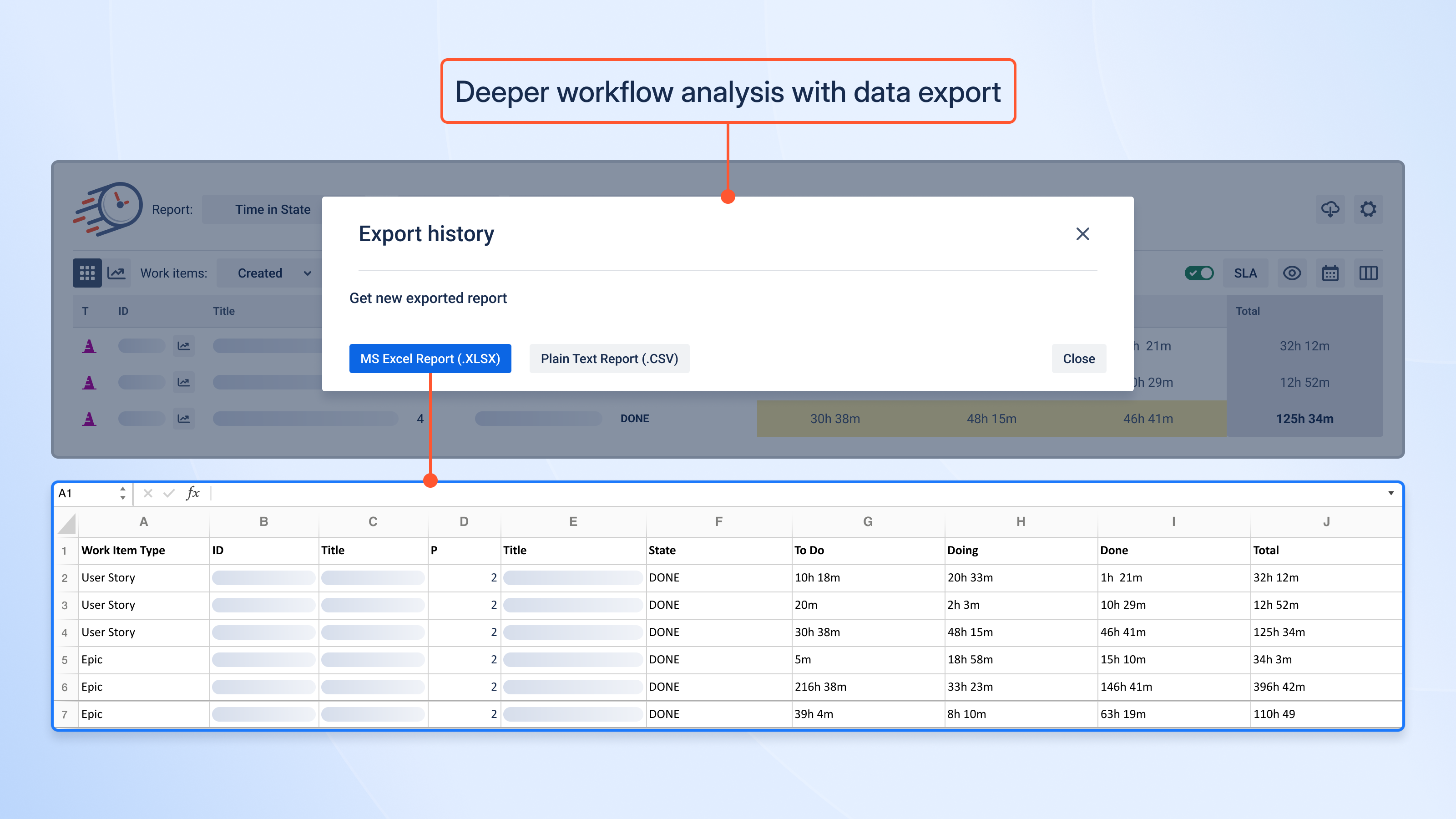
5. Export Time in State Data for Deeper AnalysisTime in State allows you to export report results for further analysis and reporting outside Azure DevOps. This gives teams greater flexibility in evaluating workflow performance and building custom insights.
Use Case: Track Work Item Time in Each State During a SprintJohn, a project manager, needs to track how long each user story spends in various workflow states — from development to testing to production — throughout a sprint. Steps to gain insights with Time in State:
Result John receives a clear report showing how long each user story stayed in every state during the sprint. This enables better sprint planning, highlights workflow bottlenecks, and helps prevent delivery delays. Related Use Cases:
Support & Security You Can Count On🛠 Support — First response time ≤ 4 hours For assistance, visit our Support Center or contact us at support@saasjet.com 🔒 SOC 2 Type II Compliant — Built with security and transparency in mind 🛡 We don’t store your confidential data — All data stays within your Azure DevOps environment Need help getting started? Our team can assist with onboarding, configuration, and best practices tailored to your process. 👉 Book a personalized onboarding call Resources & Next Steps📘 Explore our Docs — Step-by-step guides to configure and use Time in State efficiently 🎓 Get Started Guide — Practical instructions to onboard your team 💻 Book a Demo — Personalized walkthrough tailored to your use case Feature requestsWe love to hear from you! Is there a feature you’ve been waiting for? Send us a Feature Request in our support center. SaaSJet BlogTips, updates, and best practices. 🔗 Read more |