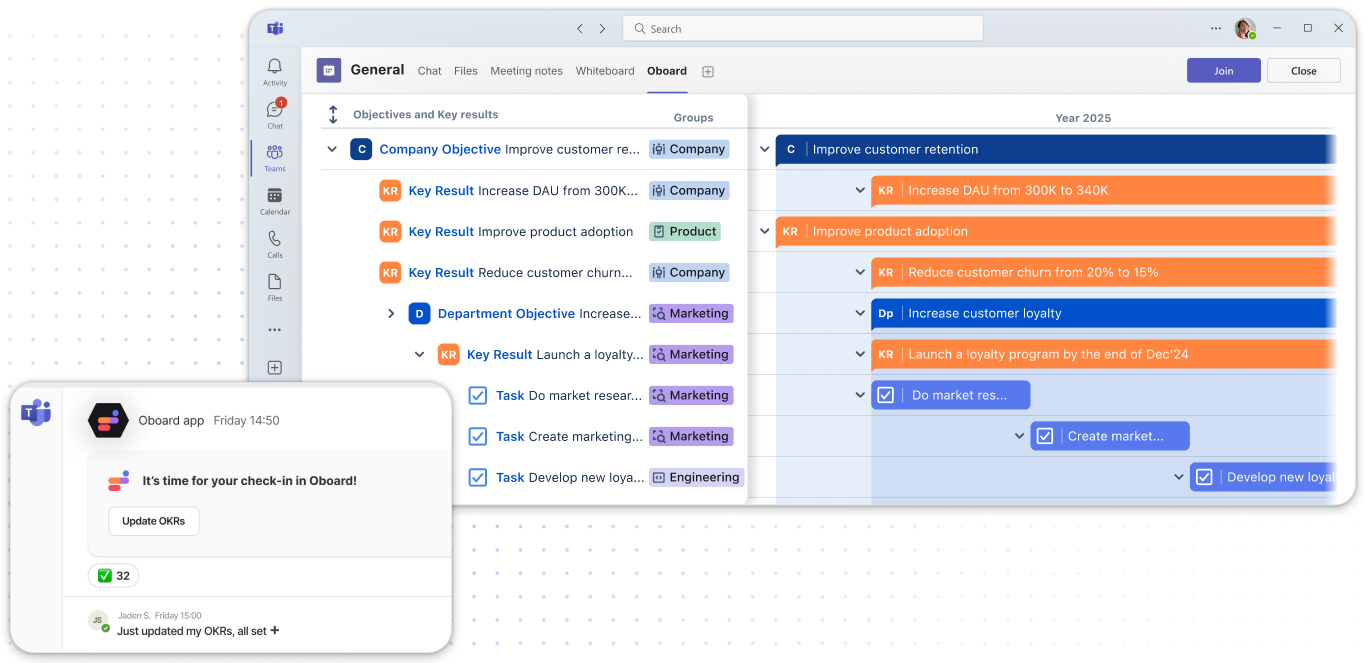
Oboard OKR Software for Azure DevOpsOKR tool for Microsoft Azure DevOps. Connect your strategy execution: from goals and success metrics to Azure Boards work. Run automated check-ins through Microsoft Teams. |

Oboard OKR Software for Azure DevOpsTurn company strategy into actionable goals and success metrics, linked straight to the Azure Boards work your teams already manage. Oboard for Azure DevOps keeps the full goal hierarchy, from company strategic goals down to work items, in one place. If your teams already work in Microsoft Azure DevOps, you need an OKR tool that lives right there. Oboard tracks Objectives and Key Results where the work already happens — no separate goal-management platform, no added complexity.
🎯 How Oboard OKR Software helps teams in Microsoft Azure DevOpsOboard's goal-management software helps teams plan and execute across all levels: from strategy to work items in Azure Boards. It gives you:
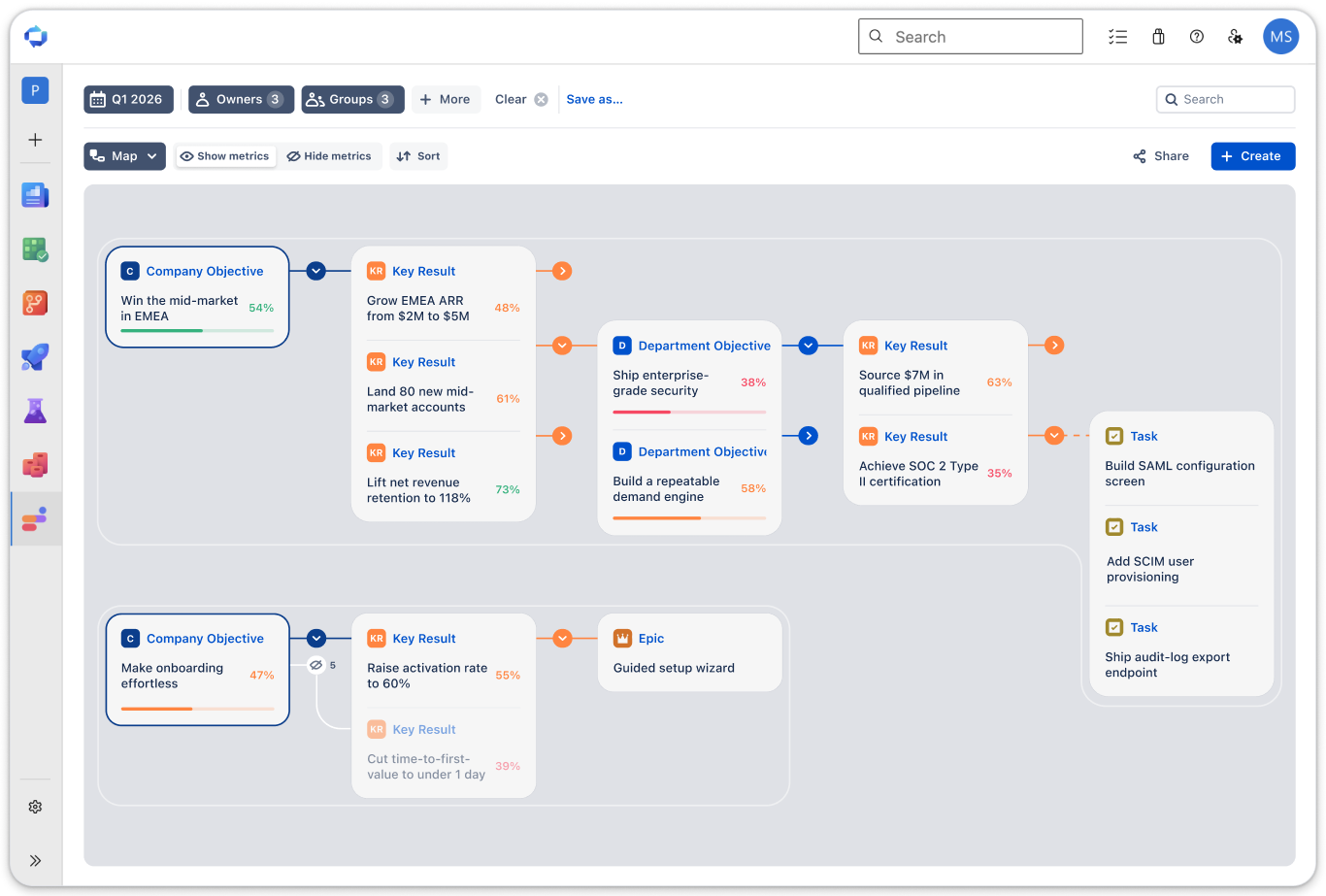
1. Give every team a clear connection to strategyAlign company, department, and team objectives in one structure. Plan annual priorities and quarterly goals, and organize them into workspaces. Customizable components let you define your own objective levels and track key results, KPIs, and initiatives in your organization's language.
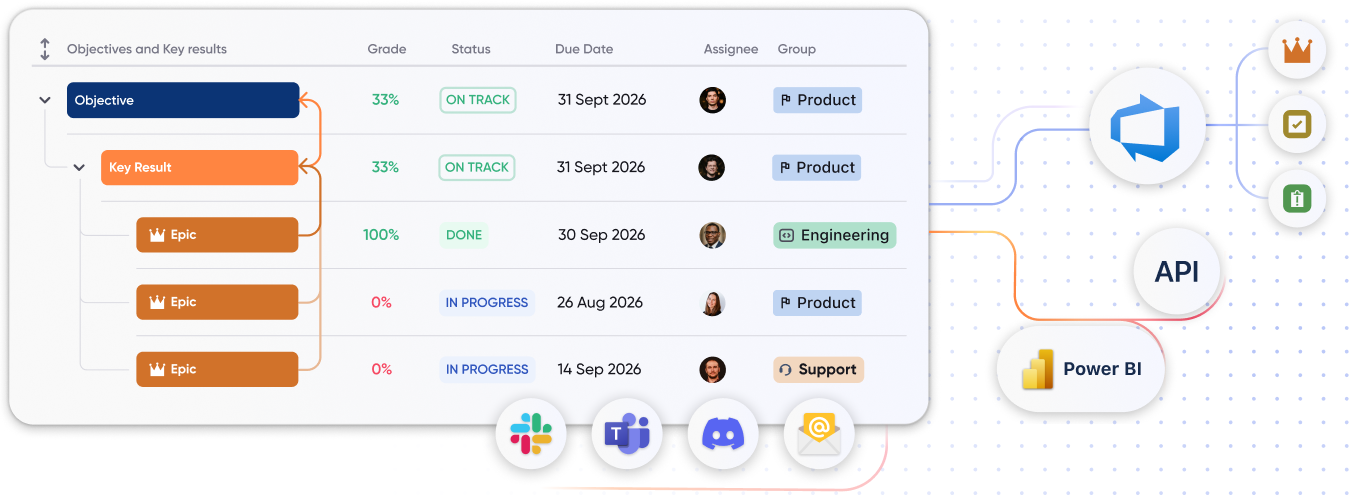
2. Automate your updates from work items, Power BI, or via APILink Azure DevOps work items directly to objectives or key results — individually, or in bulk using a WIQL query. Your existing work gains a clear strategic purpose while your teams continue managing it in Azure Boards. Choose how linked work contributes to progress:
Not every measurable result lives in Azure Boards. Connect Power BI or use Oboard's public API to pull data from your analytics stack into Oboard and automate metric updates, so business metrics stay current without manual entry.
3. Bring your team into the appInvite colleagues directly from your Azure DevOps user list, and import Azure groups in bulk to bring whole teams into Oboard at once. Give people the right level of access, from viewing goals to managing the app. 4. Keep goals moving with regular check-insCheck-ins combine progress, status, and a written update: what changed, what is blocked, and what happens next.
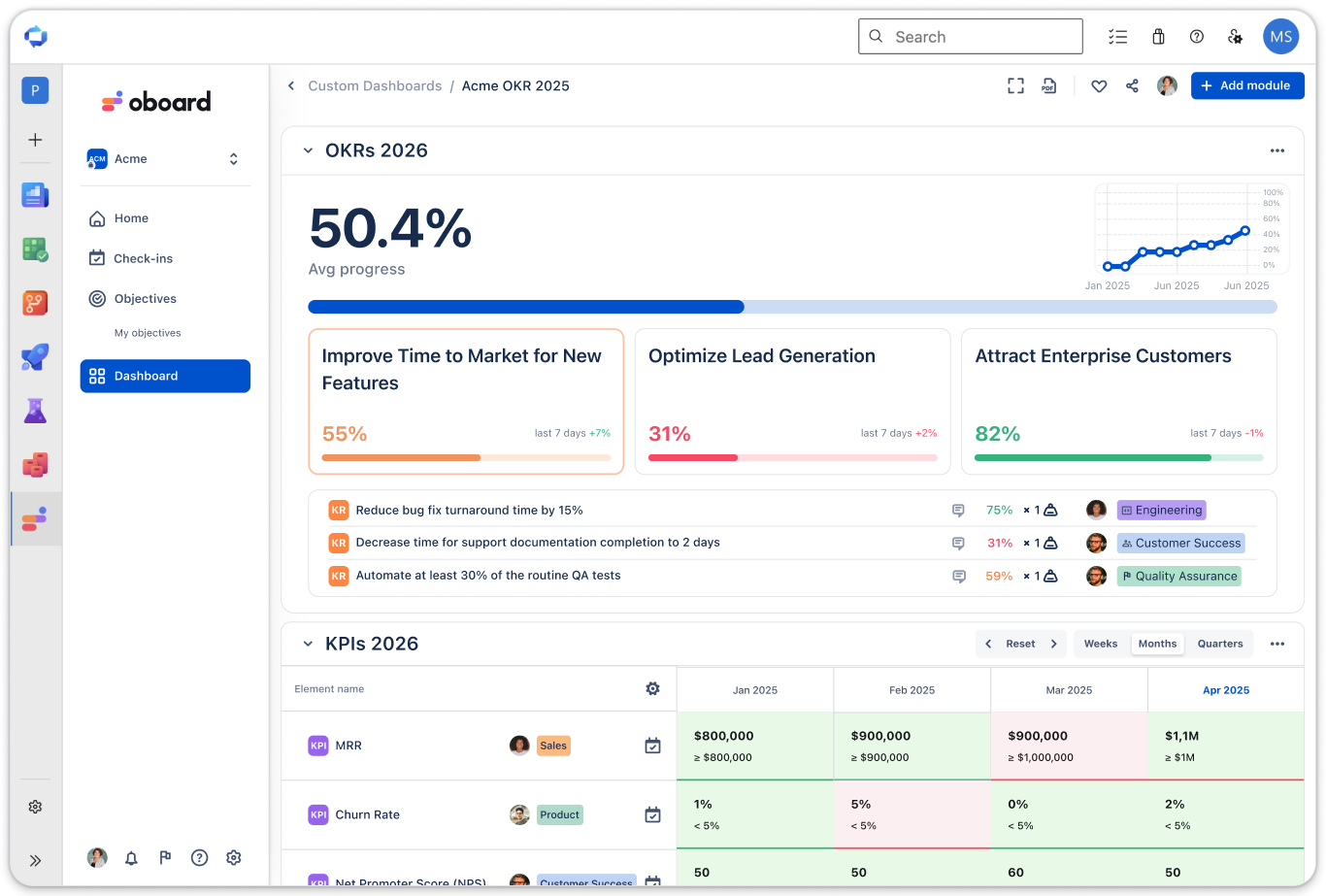
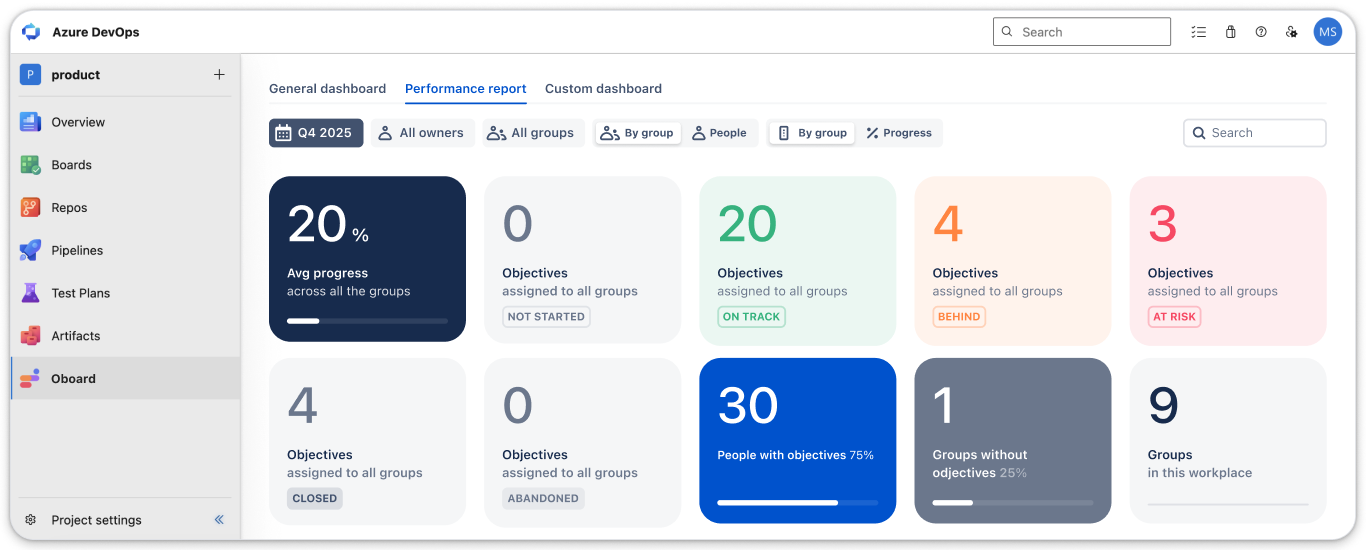
Clear statuses and actual-versus-expected progress help you spot goals that need attention before the quarter ends.
5. Turn progress into useful conversations and decisionsChoose the view that fits the review:
Use case: running a quarterly OKR cycle in Azure DevOpsMaria, a delivery lead, needs her teams' sprint work to visibly ladder up to the company's quarterly objectives, without asking engineers to update goals in a second tool. Steps:
Result: Maria gets one view connecting strategy to delivery. Engineers keep working in Azure Boards exactly as before, and the quarterly review runs from live data instead of a hand-assembled slide deck. Getting started
Security and support
|