EditorConfig Language ServiceLanguage service for .editorconfig files with IntelliSense, validation and more. Supports .NET specific rules and severities |


EditorConfig Language Service
Download this extension from the Visual Studio Marketplace or get the CI build. Provides full language support for .editorconfig files in Visual Studio, including IntelliSense, validation, and formatting. The EditorConfig Project helps developers define and maintain consistent coding styles between different editors and IDEs. Visual Studio natively supports .editorconfig files, but it doesn't provide rich language support for editing those files. This extension fills that gap with IntelliSense, validation, formatting, and more.
See the change log for changes and road map. Need help getting started? Check out Microsoft's EditorConfig documentation for details and examples of coding styles available. Features
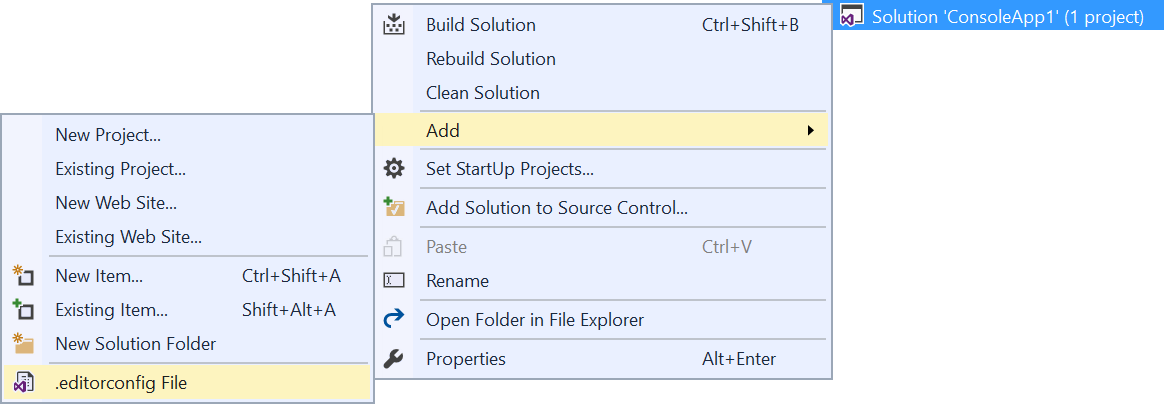
Create .editorconfig FilesTo make it really easy to add a .editorconfig file, you can now right-click any folder, project, solution folder and hit Add -> .editorconfig File
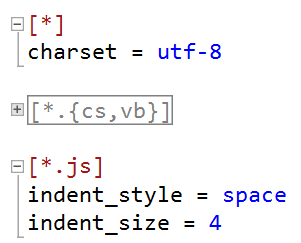
Syntax HighlightingFull colorization of the full .editorconfig syntax.
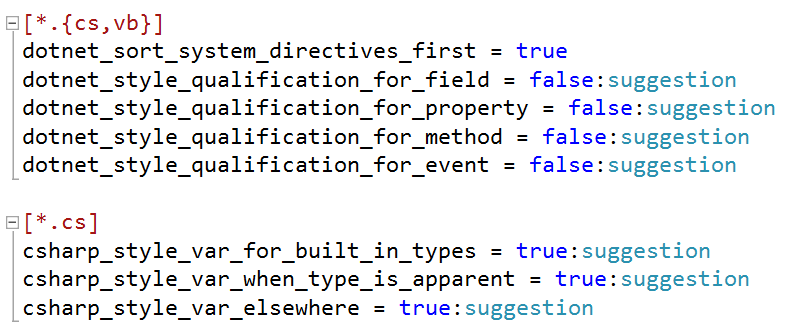
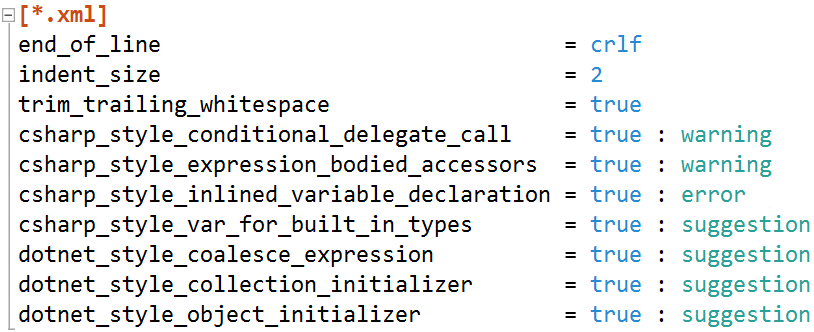
C#, VB.NET, and C++ Style AnalyzersVisual Studio lets you add C#, VB.NET, and C++ specific rules to the .editorconfig file. In addition to enabling various rules, a severity is also added to control how Visual Studio is going to handle these rules.
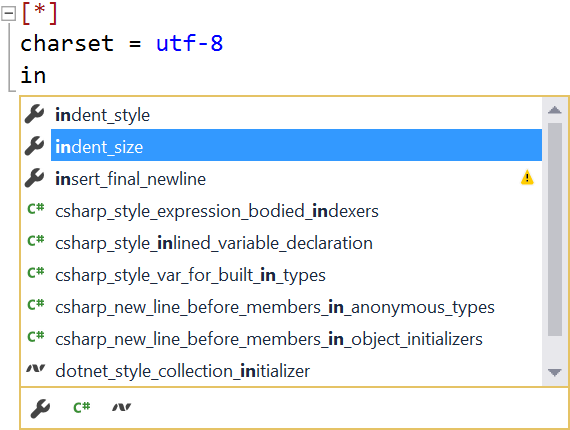
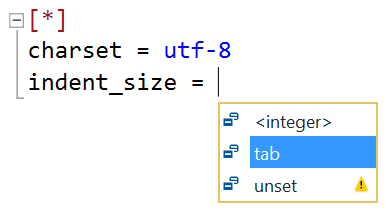
Each severity is clearly marked by an icon to make it easy to identify. C++ SupportThe extension provides full IntelliSense and validation for C++ EditorConfig properties, including indentation, formatting, and code style options. IntellisenseThe extension provides Intellisense for both keywords and values.
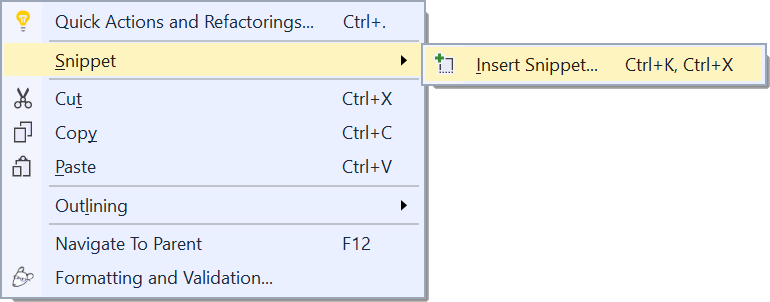
Code SnippetsVarious code snippets have been added to make it easier to work with .editorconfig files. To insert a snippet, right-click inside the editor or hit Ctrl+K,Ctrl+X.
This will show a list of available snippets to insert.
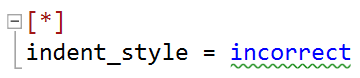
ValidationError squiggles are shown for invalid values.
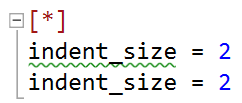
Properties that are being overridden by a duplicate property in the same section is easy to identify.
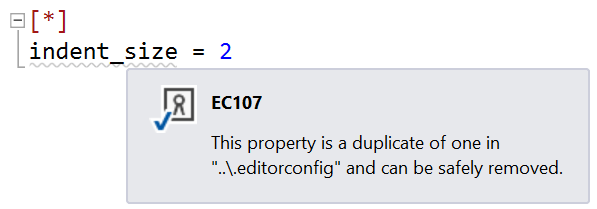
If a parent document contains the exact same property and value in a section with the same globbing pattern, a suggestion shows up to remove it.
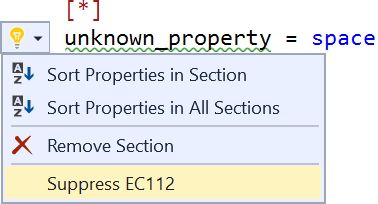
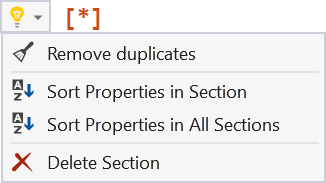
See the complete list of error codes. To suppress any error in the .editorconfig document, use the light bulb feature:
That will add a special comment at the top of the file to let the validator know what error messages to suppress.
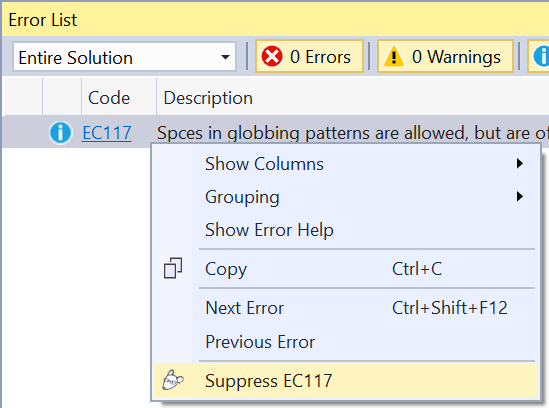
Another way to suppress the error is by right-clicking the error in the Error List.
Third-Party Property SupportMany third-party tools like ReSharper, Rider, and Roslynator add their own properties to .editorconfig files. By default, the extension ignores properties with these common prefixes to avoid false validation errors:
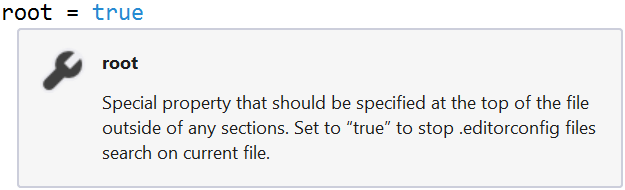
You can customize the ignored prefixes in Tools → Options → Text Editor → EditorConfig → Validation → Ignored property prefixes. Hover TooltipsHover the mouse over any keyword to see a full description.
Light BulbsSorting properties, deleting sections, and adding missing rules is easy with the commands being shown as light bulbs in the editor margin.
Code FormattingTyping
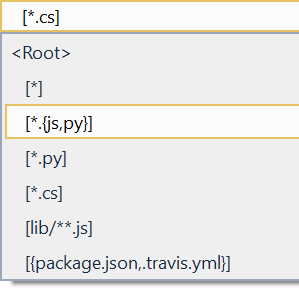
Navigational Drop DownsDropdown menus at the top of the editor makes it easy to navigate the document.
Inheritance VisualizerA project can have multiple .editorconfig files and the rules in each cascades from the top-most and down. It is based on folder structure. The inheritance visualizer is located at the bottom right corner of the editor window and makes it easy to see this relationship.
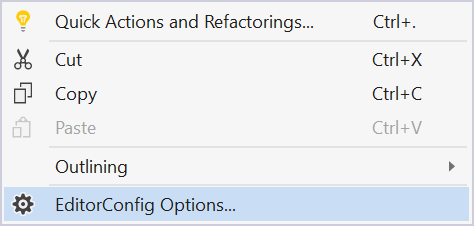
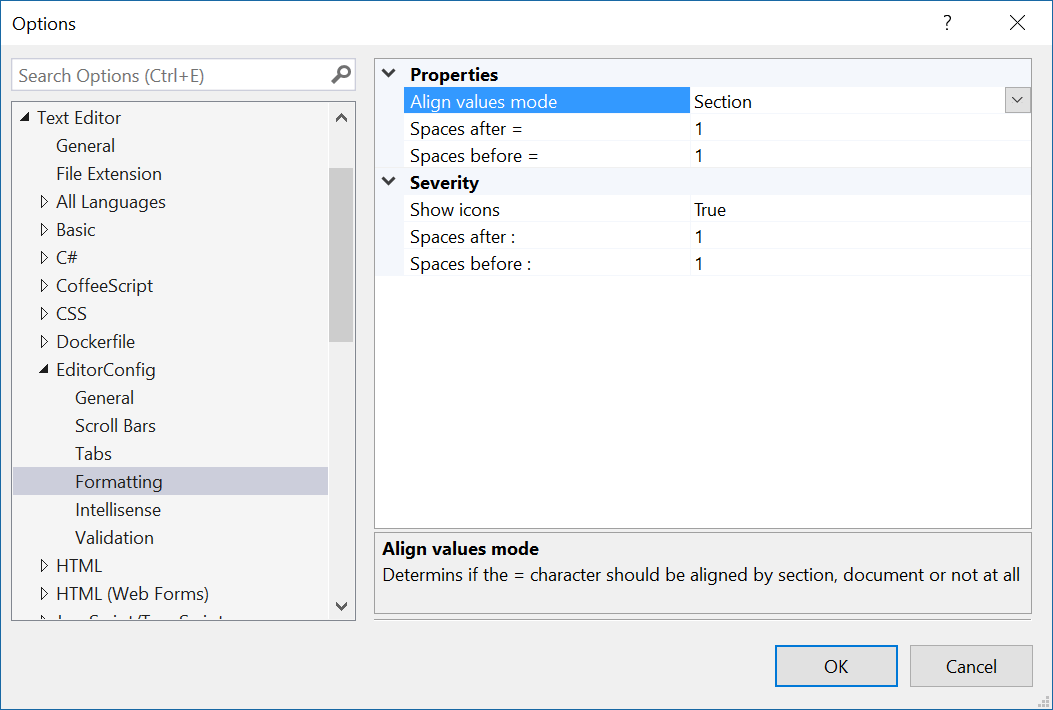
You can navigate to the immediate parent document by hitting F12. You can change the shortcut under Tools -> Options -> Environment -> Keyboard and find the command called EditorConfig.NavigateToParent. Note, the inheritance visualizer is only visible when the current file isn't the root of the hierarchy or by specifying the SettingsChange the behavior of the editor from Tools -> Options or simply by right-clicking in the editor.
ExtensibilityCustom Schema Support for Extension AuthorsOther Visual Studio extensions can contribute their own EditorConfig properties that will be recognized by IntelliSense and validation. This is useful for extensions that introduce custom analyzer rules or tool-specific settings. Extensions that integrate with this feature include: To register a custom schema, add the following to your extension's
The schema JSON file should follow the same format as the built-in schema, with a Schema Property Fields
Moniker FormatThe
Precedence Rules
ContributeTo build this project locally:
References to available formatting/code options directly from Roslyn codebase: License |